
Around 5 p.m., the first weather alert buzzed across phones: “Severe winter weather warning – heavy snow expected later tonight.” In the grocery store, people stopped in their tracks, glancing at their screens and then at each other. A man, basket full of pasta in hand, half-jokingly whispered, “Guess we’re not going anywhere tomorrow.” Outside, the sky was already thickening, a heavy gray lid pressing down on the town.
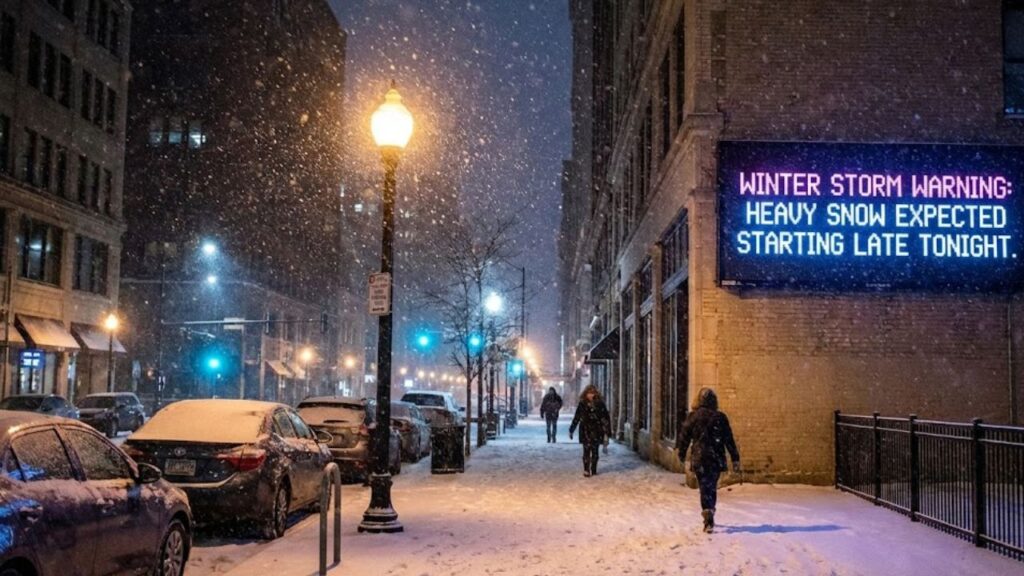
Traffic slowed, not due to snow, but because of the rumors of it. That quiet sense of panic, unspoken but felt, started to take hold.
By nightfall, the forecast wasn’t a maybe anymore. It was official. And it was coming quickly.

When “Official” Really Means Something
The weather alert from earlier wasn’t one of those vague “chance of flurries” warnings. It was clear and time-stamped: heavy snow expected late tonight, continuing into tomorrow. Meteorologists use this direct language when they stop hedging and start issuing real warnings.

The radar loops showed a wide band of moisture approaching, with cold air already locked over the region. This is the classic setup for a long, heavy snowfall – less of a picturesque snow globe, more of a thick white wall moving toward your street.
If you’ve lived through winter storms before, this setup might feel familiar. People are already comparing it to the major storms of 2010 and 2018 – the ones that stranded cars and turned streets into makeshift ski runs.
The storm began the same way: a calm evening, a firm forecast, and then a slow, relentless white-out. Early predictions today called for 10–15 cm of snow. By late afternoon, updated projections doubled that for some areas, with “locally higher amounts” mentioned in the fine print. That phrase often means one unlucky town is under a stubborn snow band.
Meteorologists aren’t guessing here. They’ve been tracking the collision of a moist Atlantic system with cold Arctic air moving southward. As these meet overnight, the temperature profile of the atmosphere will decide everything.
Right now, that profile is cold enough to turn nearly all the incoming moisture into snow, not freezing rain. That’s good news for power lines, but bad news for shovels and your back. The timing – late evening through the early morning commute – is what turns a “pretty snowfall” into a real disruption. And that’s exactly what authorities are preparing for.
What to Do Before Midnight: Simple Steps for Tomorrow
If there’s one crucial window to prepare, it’s the hours between now and bedtime. Consider it your pre-snow routine. Clear your car now, not at 7 a.m. in a snowdrift. Fill the gas tank, top up windshield washer fluid, and park off the street to allow plows to do their work by morning.
- Charge your devices and gather essentials like batteries, a working flashlight, and non-perishable food.
- Think through tomorrow’s schedule – can appointments be rescheduled? Will you be able to get your kids to school or work remotely?
- Move your car off main roads to ensure plows can clear your street effectively.
- Prepare for potential delays in public transport and school schedules.
These small actions will make tomorrow easier when the snow starts falling. Think about tomorrow’s rhythm and make adjustments now to avoid the chaos of a surprise snowstorm.

The Heaviest Snow: Late Tonight Through Early Morning
The most intense snow will fall late tonight into the early morning, with the worst visibility expected during pre-dawn hours.
Risk zones will include higher elevations and inland areas, with wet, heavy snow nearer the coast. This can lead to slippery roads, delays or cancellations of public transport, and slower emergency response times.
Authorities are urging people to prepare now for travel disruptions. “If you can stay home, plan for that ahead of time, not when the snow is already falling,” advised one forecaster.
What This Snowstorm Really Asks of Us
As you head to bed tonight, the first flakes will likely begin to fall, their soft glow illuminating the streets. Hours later, while you sleep, the snow will continue to accumulate, quietly and persistently.
When you wake up, the familiar landscape of your day – the driveway, sidewalk, or office hallway – might seem like someone else’s world. Snow has a peculiar ability to disrupt our routines, revealing just how fragile they were to begin with.
Some will see this storm as a threat, while others may welcome it as an unexpected break. The same snowstorm that causes stress for a delivery driver could offer a rare chance for a night nurse to rest, or bring neighbors together as they help clear each other’s cars.
There’s a quiet solidarity that emerges during these storms: someone clears the snow for an elderly neighbor, a stranger shares their Wi-Fi when yours cuts out, or a person walks instead of driving to reduce the number of cars on the road.
This evening’s official warning isn’t just about snow depth or wind gusts. It’s about reorganizing your day and embracing the slower pace. It’s about realizing that the world doesn’t stop spinning if an email waits or a plan is postponed.

Key Takeaways for the Snowstorm
- Timing of snowfall: Snow expected to begin late tonight, peaking overnight and early morning – essential for planning travel and work.
- Evening prep: Take small steps like clearing your car, charging devices, and rethinking your plans to avoid morning chaos.
- Community mindset: See the storm as an opportunity to slow down, support vulnerable neighbors, and experience the shared solidarity that comes with weather disruptions.
