Across the UK and US, many households are seeking ways to feel genuinely warmer indoors without pushing the thermostat too high. Physics offers a few surprisingly effective strategies: block heat leaks, direct warmth into living spaces instead of walls, and make smarter use of the heat you already generate.
Why your home feels chilly even with the heater on
Feeling cold at home is not just about the thermostat reading. Comfort depends on three key factors: the air temperature, the warmth of surrounding surfaces, and how much air is moving. Thin windows, gaps under doors, and icy floors force your body to work harder to stay warm. Your skin senses cold surfaces and draughts as a threat, signaling you to put on extra layers or increase the heating.
By understanding the three main ways heat moves—conduction, radiation, and convection—you can increase comfort by several degrees without adjusting the boiler.

Three low-tech ways to boost warmth
These simple methods do not require magic—they prevent heat from escaping too quickly, redirect warmth you already pay for, and add small but cumulative heat sources.
1. Seal leaks to keep heat inside
Heat escapes easily through cracks around windows, warped doors, and floorboard gaps. In older homes, studies suggest that up to a third of heat loss occurs through these tiny leaks. Warm air meets cold surfaces or slips outside, forcing your boiler to replace the lost warmth repeatedly.
Quick, low-cost fixes
- Apply self-adhesive foam or rubber seals around leaky windows and exterior doors.
- Use draught excluders or rolled towels at the base of doors, especially at night.
- Hang thick curtains over windows and doors for extra thermal protection.
- Place rugs on bare or tiled floors in rooms where you spend the most time.
Even small changes have a big sensory impact. A thick rug can raise perceived floor-level warmth by a couple of degrees, making you feel comfortable without raising the thermostat. Draught-proofing can make a room feel warmer long before you see a change in temperature readings.
Important: Never block purpose-built ventilation grilles for gas appliances, boilers, or stoves—these are essential for safety.
2. Reflect radiator heat back into the room
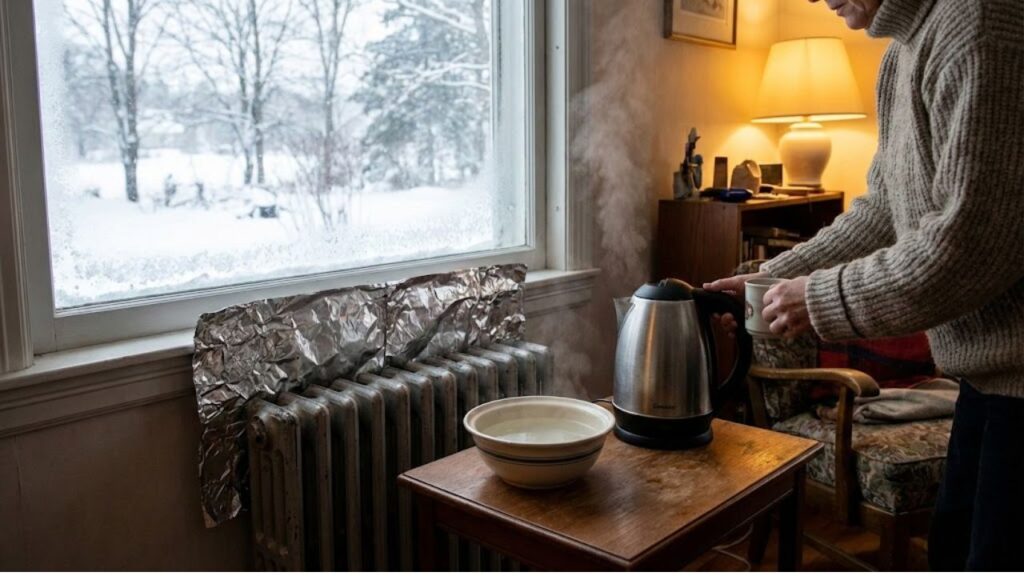
Radiators do more than radiate; they also heat air flowing around them. Much of that warmth, however, is lost into the wall behind them, especially in older brick houses. Shiny aluminium foil reflects heat back into the room, reducing loss and making the space feel warmer.
DIY heat reflector
- Measure the radiator section facing the wall.
- Cut cardboard slightly smaller than this area.
- Wrap the cardboard in aluminium foil, shiny side outwards.
- Slide it behind the radiator, leaving a small gap for air circulation.
This simple reflector can reduce heat lost through external walls and push more warmth into living areas without changing boiler settings. Commercial panels work on the same principle and are more durable.
When it works best
- Radiators on uninsulated external walls
- Narrow rooms with radiators close to seating or beds
- Older hot-water radiators at moderate to high temperature
Situations to avoid:

- Modern low-temperature radiators with built-in reflectors
- High-humidity rooms like bathrooms
- Foil touching electrical elements or obstructing valves
Always keep foil and cardboard away from direct flame or electrical elements. The goal is to redirect heat safely, not create a fire hazard.
3. Make the most of human and household heat
Every person quietly sitting in a room produces around 80–100 watts of heat. Cooking and multiple people in one space also contribute. The key is to keep that warmth where it’s needed rather than letting it dissipate.
Focus activities in core rooms
- Close doors to unused rooms to concentrate heat where you are.
- Spend time in one or two main rooms heated to comfort.
- Use throws and cushions near external walls to reduce cold wall effects.
By gathering people and heat-generating activities in a few rooms, temperatures can rise by a couple of degrees over an evening.
The kettle trick
Hot drinks provide dual benefits: warming your hands and core while adding small amounts of heat to the room. Efficient electric kettles use up to a third less energy than traditional stove methods if you only heat the water you need.
Keep efficiency high by:
- Filling only the required amount of water
- Descaling regularly to prevent element insulation
- Using hot water immediately for tea, soup, or pre-warming mugs
Leaving boiled water to cool wastes energy, while immediate use makes the heat work for you.
Combined impact of these tactics
No single trick transforms a draughty old house into a low-energy haven. The benefits come when these methods are combined:
| Action | Typical Benefit |
|---|---|
| Draught proofing windows and doors | Reduces cold air movement; perceived warmth increase of 1–3°C |
| Foil behind radiators on external walls | More heat directed into the room; reduced boiler runtime |
| Grouping activities + efficient kettle use | Local temperature boost and improved personal warmth from hot drinks |
Stacking these low-tech interventions can make your home feel significantly warmer and more comfortable without raising energy costs.