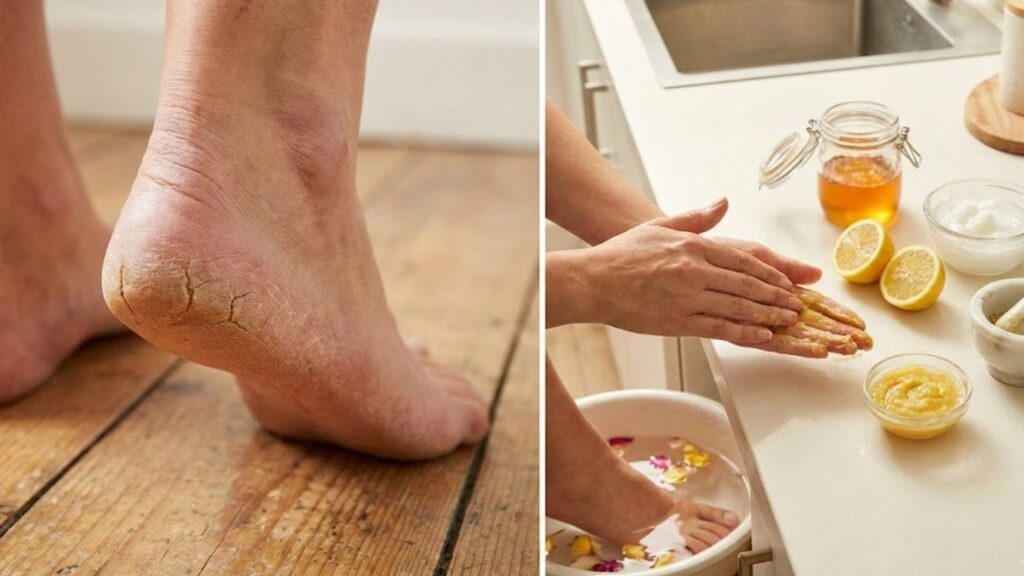
The first signs of cracked heels are often subtle. Fine, pale lines appear across the heel, resembling a dried riverbed pattern. At this stage, they are easy to dismiss. You might assume they come from walking barefoot indoors or wearing open sandals too often. Over time, however, those shallow lines deepen. One morning, as you step out of bed, the floor may feel rough, followed by a slight sting or pulling sensation. The cracks can become sore and may even catch on socks, turning a minor issue into daily discomfort.
A Simple and Fast Approach to Heal Dry Heels
Eventually, a quiet realization sets in that your heels need care. Dry, cracked heels tend to develop slowly, often going unnoticed until discomfort appears. Each step becomes a reminder that your feet have been neglected. The reassuring part is that healing does not require costly products or complex routines. Many effective solutions already exist in your home. Common items stored in your kitchen can help restore softness. Using natural oils, honey, milk, and salt allows you to care for your heels gently while creating a calming end-of-day routine that supports gradual healing.
What Your Heels Reveal About Daily Stress
Your heels absorb significant pressure throughout the day. They strike the ground first and support your weight while standing or walking for long hours. Because they are often covered, they receive little attention. You may notice roughness during a shower and plan to address it later, only to forget. Cracked heel skin usually signals repeated friction, pressure, and lack of moisture. Walking barefoot on hard floors or wearing thin-soled shoes contributes to the problem. Over time, dryness reduces flexibility, causing the skin to split instead of bend.
 Collarbone-Length Hair Is the “Universal Safe Cut” - Stylists Say It Flatters Almost Everyone
Environmental factors also play a role. Hot showers, cold weather, and indoor heating draw moisture from the skin. Although heel skin is naturally thick for protection, excessive dryness makes it brittle. The encouraging news is that skin constantly works to repair itself. With consistent moisture, gentle exfoliation, and protection, the healing process can begin sooner than expected.

Turning Your Kitchen into a Natural Care Station
Your kitchen holds more than ingredients for meals. It also contains simple remedies that support skin health. Olive oil and coconut oil provide deep hydration for rough areas. Honey helps draw moisture into cracked skin while calming irritation. Milk and yogurt gently soften dryness, while sugar or salt combined with oil creates an effective exfoliant. These familiar ingredients feel comforting because they require no complicated instructions. Understanding how each one works allows you to use them confidently as part of a natural heel care routine.
Common Kitchen Ingredients and Their Benefits
- Olive Oil or Coconut Oil: Deep hydration and softening for hardened skin
- Honey: Moisture retention and skin-soothing support
- Milk or Yogurt: Gentle softening through natural lactic acid
- Sugar or Salt: Removal of dead skin and smoothing texture
- Banana or Avocado: Vitamin-rich nourishment for very dry heels
A Calm Evening Routine for Healing Cracked Heels
This routine works best as a quiet evening ritual. Taking just fifteen minutes allows your feet to recover while your day winds down.
Step 1: Warm Milk and Salt Soak
Fill a basin with warm water that feels soothing. Add half a cup of milk, one to two spoons of salt, and a small amount of olive oil. Soak your feet for ten to fifteen minutes. The warm water relaxes the skin, milk softens dryness, and oil begins restoring lost moisture.

Step 2: Gentle Exfoliation for Rough Areas
Create a thick paste using sugar or fine salt mixed with olive or coconut oil. Massage it onto your heels using slow, circular motions. Focus on rough patches without applying excessive pressure. Gentle exfoliation removes dead skin while protecting sensitive areas. Rinse thoroughly with warm water.
Step 3: Honey and Yogurt Repair Mask
Combine one tablespoon of honey with one tablespoon of thick yogurt and a few drops of oil. Apply the mixture generously to cracked areas and leave it on for ten to fifteen minutes. This mask delivers deep moisture and soothing relief. Rinse gently and pat dry with a towel.
Overnight Oil Care for Lasting Softness
Before bed, warm a small amount of olive or coconut oil and massage it into your heels for several minutes. Cover your feet with clean cotton socks to lock in moisture overnight. By morning, your heels often feel noticeably softer and less tender, making walking more comfortable.
Daily Habits to Keep Heels Smooth
Maintaining healthy heels requires simple daily habits. Apply moisturizer after showers, avoid overly hot water, rotate footwear, and stay well-hydrated. Address dryness as soon as it appears. These small preventive steps help stop cracks from returning and protect your feet long term.
When Professional Care Becomes Necessary
If heel cracks become deep, begin bleeding, or fail to improve with regular care, professional advice may be needed. Certain health conditions can slow healing, and a podiatrist or doctor can recommend appropriate treatment. While home remedies offer effective relief in most cases, medical guidance ensures proper recovery. With patience, warmth, oils, and consistent care, your feet can remain comfortable and ready to support you every day.