
The first time you notice them, they look like a strange kind of street art. Plastic bottles filled with cloudy liquid dangle from balcony railings, swaying gently like makeshift wind chimes. Some catch the sunlight, others reveal a few dark specks floating inside. On the sidewalk below, passersby glance up, puzzled.
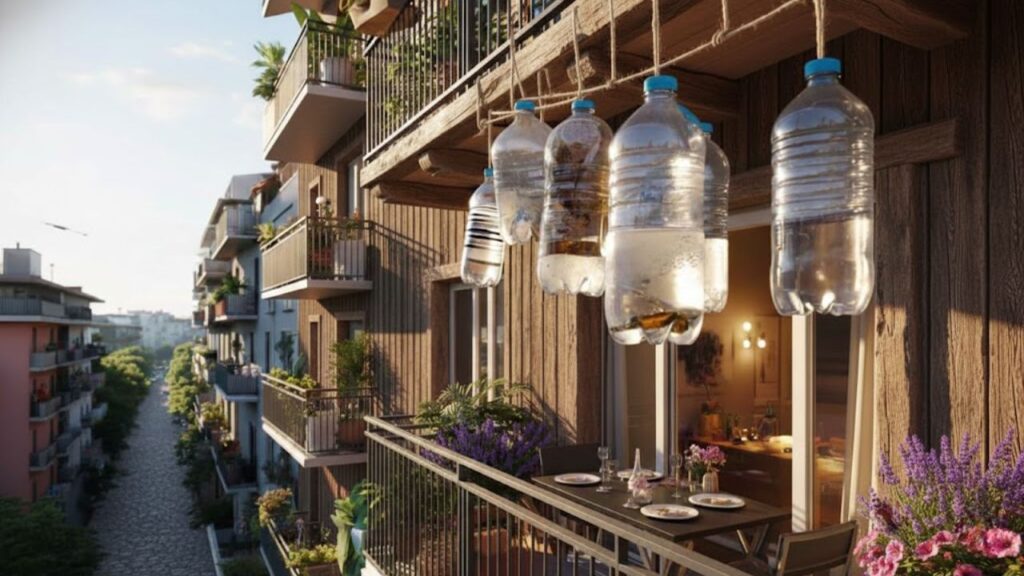
Once you spot one, you begin seeing them everywhere. Old soda bottles, water jugs, even glass containers, all tied with string or wire. Some balconies display a single bottle, others line up five or six along the edge, as if carefully arranged.
It naturally raises a question: is there a hidden reason behind this?
Why People Hang Bottles Filled With Water and Vinegar
At first, the setup seems improvised. A reused bottle, water, vinegar, and a bit of twine. But ask the residents, and the answers come quickly. Flies, mosquitoes, pigeons, wasps, unpleasant odors. Everyone has a version of the same explanation, often learned from a neighbor or remembered from childhood.

This is balcony folklore in action. A blend of habit, observation, and shared tips. One building claims the bottles scare pigeons with reflections. Another insists they trap fruit flies during summer. Depending on who you ask, the method is either brilliant or pointless.
The truth usually sits somewhere in between.
Summer Evenings, Shared Tricks, and Small Wins
Picture a warm July evening. Windows are open, lights are on, dinner sits half-finished. The balcony feels inviting, but so do the mosquitoes. A neighbor hangs two bottles filled with water and vinegar, confident they “repel everything,” pointing to a few insects at the bottom as proof.
Across the courtyard, another family copies the idea, adding a pinch of sugar to attract flies. Days later, they claim fewer insects hover around their meals. No measurements, no tests, just the feeling that things are slightly better.
This kind of advice spreads faster than any official guideline.
The Simple Logic Behind the Bottles
Behind the stories, there is some logic. Vinegar has a sharp, acidic smell that many insects dislike. It can mask the scents of food, drinks, or trash that usually attract them. When water and vinegar mix, they create a mild repellent effect, especially when the bottle moves and releases scent into the air.
Change the recipe, and the goal changes. Add sugar or fruit juice, and the bottle becomes an insect trap. The smell attracts flies or gnats, the narrow opening traps them, and they eventually drown. The same bottle serves two opposite purposes.
 Goodbye Hair Dye for Grey Hair: The Conditioner Add-In That Gradually Restores Natural Colour
How These Balcony Bottles Really Work
The Repellent Method
For a repellent setup, use a plastic bottle and cut a few small holes near the top. Fill it halfway with a 50/50 mix of water and white vinegar. Hang it on the outer side of the railing so the scent drifts outward rather than inside.
A light breeze helps spread the smell, slightly confusing insects as they search for food or people. Place two or three bottles along a medium-sized balcony, spaced apart. The goal is to make the area less appealing, not overpowering.
The Trap Method
The trap version works differently. Mix equal parts water, vinegar, and fruit juice or beer. Add a teaspoon of sugar if targeting flies or fruit flies. Cut off the bottle’s neck, flip it upside down like a funnel, and secure it.
Insects enter easily but struggle to escape. However, results depend on maintenance. If the liquid isn’t refreshed every few days in hot weather, it loses effectiveness. Placement also matters, and small adjustments often change the outcome.
What Affects Results the Most
Effectiveness depends on what you’re trying to stop. For pigeons and doves, the bottle’s movement and reflections may matter more than the liquid inside. Birds dislike unfamiliar shapes and shimmering surfaces near their usual landing spots.
Many residents combine methods. A few repellent bottles, one trap near trash, and better food storage. There is rarely one perfect solution.
- Decide your goal: repel or trap, not both.
- Place bottles strategically near food, plants, or landing areas.
- Refresh mixtures often during hot weather.
- Test different recipes to see what works best.
- Combine with basic hygiene like covered food and sealed trash.
What These Bottles Say About Balcony Life
These hanging bottles tell a quiet story about shared urban living. The balcony is a small outdoor refuge, used for meals, plants, laundry, or a brief escape. It’s also a space shared with mosquitoes, flies, pigeons, and wasps.
Hanging a bottle filled with water and vinegar is a simple way of claiming that space, even temporarily. It’s practical, low-cost, and imperfect. It reflects summer evenings, neighborly advice, and small everyday compromises.
So next time you see bottles swaying above the street, they’re not random clutter. They’re small, homemade attempts to enjoy the balcony just a little longer.

| Key point | Detail | Value for the reader |
|---|---|---|
| Repellent effect | 50/50 mix of water and white vinegar hung along the railing | Helps reduce insects hovering around food and seating areas |
| Trap version | Vinegar, water and sweet liquid in a funnel-shaped bottle | Catches flies, gnats and some wasps for low cost |
| Placement & upkeep | Bottles outside the rail, refreshed every few days in warm weather | Improves efficiency and limits bad smells or stagnant liquid |
