
The woman in the salon chair was scrolling on her phone, zooming into a photo of a 20‑something influencer with a sharp, glassy bob. “Like this,” she told the hairstylist. “But… I’m 47. Is that going to look weird?” The stylist – who’d clearly heard this a thousand times – smiled, tilted her head, and gently started rearranging the photo with her finger. “Let’s talk about your jawline, your neck, and your hairline,” she said. You could feel the air shift. This wasn’t about age in a negative way. It was about reality… and what actually flatters a face after 40.
We’ve all been there, that moment when a “trendy” cut suddenly feels brutal under the bathroom light.
There’s a reason some bob haircuts quietly work against us after 40 – and one pro hairstylist has started calling them out.
The list may surprise you.
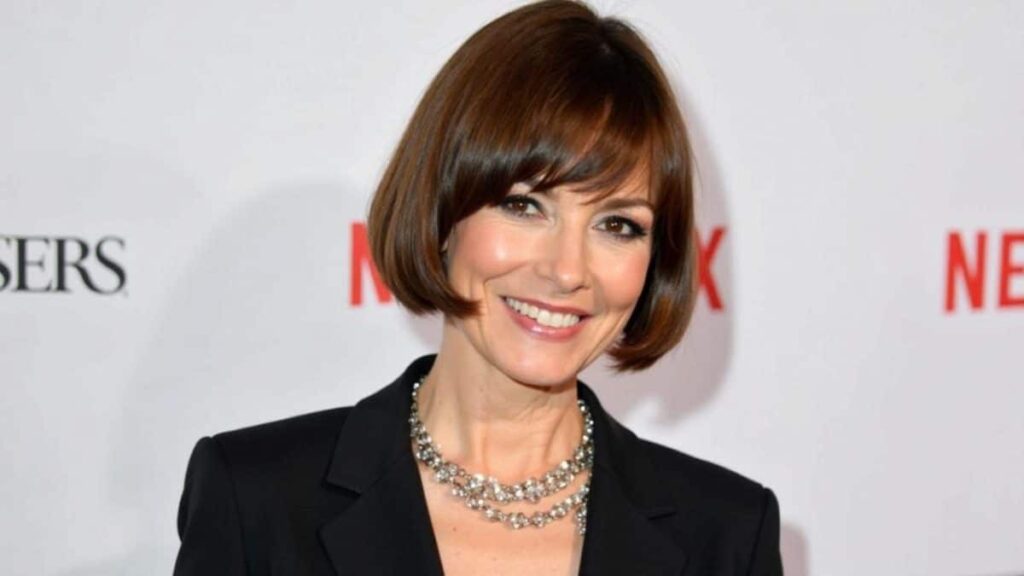
The 5 bob haircuts this pro says quietly “age” you after 40
The hairstylist – let’s call her Claire, 20 years in Paris and London – says the biggest trap is *copy‑pasting* a bob from Instagram, without thinking about what time has gently changed in our faces.
Faces soften. Necks lose a bit of sharpness. Hair texture shifts from dense and heavy to lighter, frizzier, or flatter. A bob that looked chic at 28 can, at 45, suddenly drag everything down.
Her firm belief: some bob cuts emphasize exactly the zones we’d rather soften.
Not because we’re “too old” for them, but because they were never designed with midlife geometry in mind.
First on her blacklist: the ultra‑blunt, jaw‑length bob with no layers. The classic “helmet bob”. On a twenty‑something with tight skin and thick hair, it can look graphic and powerful. On a face with softer contours, it tends to create a harsh horizontal line right where many women start to feel insecure: the jaw and lower cheeks.
Claire told me about a client, 52, who came in saying, “Why do I suddenly look… square?” The cut hadn’t changed. Her face had.
The bob was slicing her features in two, like a ruler pressed against a photo.
 Forget the French bob, this bob haircut will be the trendiest in 2026 according to experts
Second cut on the list: the chin‑clinging bob with a hard middle part. On social media it’s everywhere. In real life, it can be ruthless. When hair ends line up exactly at the widest part of the face – chin or jowls – they spotlight every millimeter of volume there. The same goes for the razor‑sharp A‑line bob that’s dramatically shorter at the back and long at the front.
Visually, these shapes pull the face down and out. Instead of lifting, they create weight and tension near the mouth and neck.
Claire’s explanation is simple: a flattering bob after 40 needs at least one element of softness or movement, otherwise the result is just… unforgiving.

How to choose a bob that actually lifts your face after 40
When Claire cuts a bob on a woman over 40, she starts with three checkpoints: jawline, neck, and hairline. She literally traces them with the comb. Then she asks the client to smile, then relax, then turn in profile. “I’m looking for where gravity starts to win,” she laughs. Not cruelly, just factually.
Her method is surprisingly concrete. She avoids ending the bob exactly at the “heaviest” point of the face and instead lifts the line slightly higher or lets it fall a bit lower.
Think: just above the jaw for lift, or softly grazing the collarbone for a more elongated, flowing effect.
She also refuses to do the hyper‑straight, flat‑ironed bob on hair that’s already thinning or frizz‑prone. “You’ll spend your life chasing a finish that evaporates with one raindrop,” she tells clients. Let’s be honest: nobody really does this every single day.
Instead, she introduces invisible layers, tiny texturizing cuts near the ends, or a subtle side part that breaks the severity of the line.
These micro‑adjustments don’t scream “layered bob”, yet they stop the hair from sitting like a block around the face.
Claire is very clear on the five “least flattering” bobs she sees again and again on women over 40:
1. The jaw‑length, blunt “helmet” bob
2. The chin‑hugging bob with a dead‑straight middle part
3. The ultra‑short, boxy bob that exposes the entire neck from behind
4. The heavy, one‑length bob with no movement on very thick hair
5. The dramatically angled A‑line bob that dives down at the front
She calls them “amplifiers” – they amplify exactly what most clients want to soften.
Here’s how she summarizes her approach:
- Lift the line away from the heaviest facial point.
- Add at least a whisper of texture or movement.
- Use the parting (side, soft off‑center) as a built‑in face lift.
- Respect natural texture instead of fighting it daily.
- Think neckline and posture, not just cheekbones.
What really changes after 40 – and why your bob should, too
Talking to Claire, you realize the real subject isn’t age, it’s architecture. Bones stay, but everything around them evolves. A bob that once looked edgy can start to look strict. One that used to say “fresh” can suddenly say “tired” if the length and density crowd the mouth and chin.
She’s noticed another factor: lifestyle. At 45, many of her clients have kids, careers, aging parents… and way less time. The perfectly styled “editorial bob” that needs a brush, a round‑brush blow‑dry, a straightener and a shine spray? That belongs to a different life chapter.
A good bob after 40 works with imperfection, with half‑air‑dried hair, with rushed mornings and real humidity.
There’s also the emotional side no one talks about. A drastic bob cut often arrives after a break‑up, a job change, or a “I need to feel like myself again” moment. Claire sees it all the time. She doesn’t refuse the makeover, but she gently redirects. “We can cut,” she says, “but let’s cut in a way that supports the woman you are now, not the girl you were at 25.”
Sometimes that means keeping the length slightly longer, around the collarbone, and building softness around the face.
Sometimes it means shortening the back but keeping some curtain pieces in the front so the client doesn’t feel overexposed.
The plain truth is: a flattering bob after 40 is less about chasing trends and more about negotiating with light, lines and daily life.
Claire’s favorite compliment from her clients isn’t “I love my hair today.” It’s “I woke up, did nothing special, and people told me I looked rested.”
You might not think of a bob as a gentle, forgiving cut, but when the line, the part, and the texture are chosen with your current face and routine in mind, it becomes exactly that – a quiet, loyal ally rather than a strict geometry lesson.
 Grey Hair Is the “New Facelift” and the Anti-Ageing Industry Hates It - The Truth Is Spreading Fast
| Key point | Detail | Value for the reader |
|---|---|---|
| Rethink blunt jaw‑length bobs | They create a harsh horizontal line at the jaw and highlight lower‑face heaviness | Helps avoid cuts that visually “square” the face or add years |
| Use length and parting as a lift | Ending the bob slightly above the jaw or near the collarbone and softening the part | Gives a more lifted, elongated look without invasive tricks |
| Work with real texture and lifestyle | Subtle layers, movement and air‑dry‑friendly shapes | Delivers a bob that looks good on busy, imperfect days, not just salon days |
FAQ:
- Which bob is most flattering after 40?A softly layered bob that ends just above the jaw or around the collarbone, with a gentle side or off‑center part, tends to suit the largest number of faces and lifestyles.
- Can I still wear a blunt bob over 40?Yes, but ask your stylist to soften it: slightly round the corners, add invisible layers, or break the line with a side part so it doesn’t look rigid or severe.
- Is a very short bob a bad idea after 40?Not automatically. It can be stunning if your neck is long and your jaw is defined. The “least flattering” version is the boxy, square short bob that exposes all the neck and stiffens the silhouette.
- How often should I trim a bob at this age?Every 6–8 weeks keeps the shape clean and avoids that heavy, droopy phase where the bob starts to pull the face down visually.
- What if my hair is thinning?Skip super‑blunt, ultra‑straight styles. Ask for light layering, a soft part, and airy volume at the crown so the bob looks fuller without needing tons of product or heat.
