Forty-five minutes beneath bright lights, a towel resting on her shoulders, and that familiar chemical scent that gently stings the eyes. She scrolls through her phone and pauses on a photo from a decade ago. The same smile, the same eyes, but her hair looks different now—flat, uniformly brown, lacking light and movement.
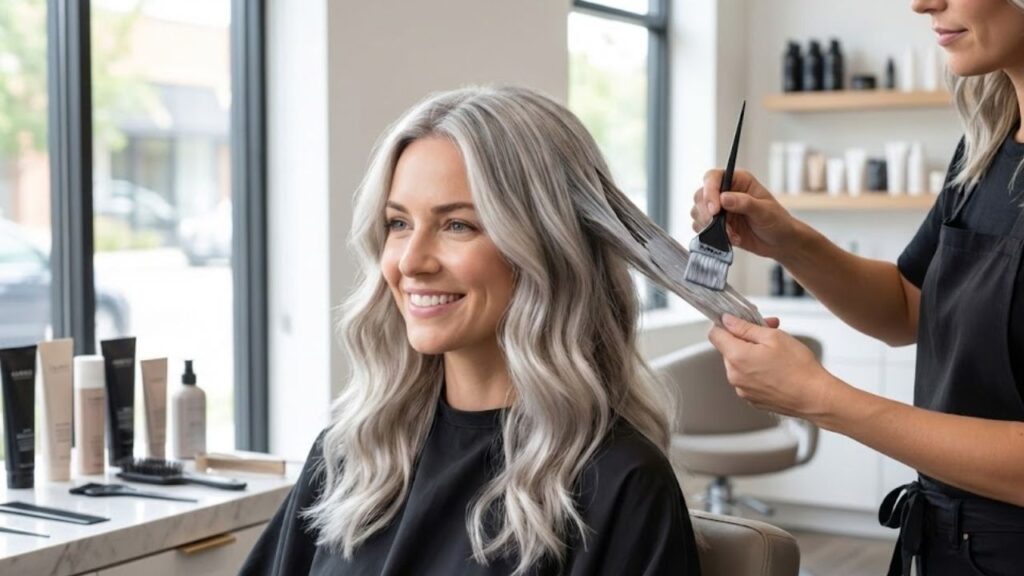
Her colorist steps closer, lifts a strand, and softly suggests, “We could try something else. Less dye. More… you.” She hesitates, fingers instinctively reaching for the silvery roots she has battled every four weeks. A quiet pause fills the space, the kind that signals a small revolution. The foils stay untouched. The bottles remain sealed.
On the mirror shelf, among brushes and clips, sit a slim wand and a tiny jar of tinted powder. That’s where everything shifts.
Moving Away From Full Hair Dye, Quietly
The old routine was straightforward: spot a grey hair, book a color appointment, erase it completely. Today, a different approach is taking hold in salons and bathrooms. People are keeping their natural base and addressing only what truly bothers them. Grey coverage is becoming precise, not overwhelming.

Instead of saturating hair with permanent dye, clients now request glosses, tinted masks, and subtle root techniques that blur the line between grey and pigment. The language has changed too—less “I want my dark brown back,” more “I just want to look rested.” Full-color sessions are quietly giving way to quick refreshes and soft updates. The aim is no longer perfection, but believability.
Why Subtle Grey Blending Is Taking Over Salons
Colorists from New York to Berlin tell the same story. Box dyes are gathering dust, while small, subtle tools sell fast. Temporary grey-blurring products—root powders, tinted sprays, mascara-style wands, and demi-permanent glazes—have moved from afterthoughts to center stage, stacked near salon counters like everyday essentials.
In a London salon, booking data shows the shift clearly. Before 2020, more than 70% of clients scheduled full dye appointments every six to eight weeks. Last year, refresher services such as glosses, toners, and root camouflage nearly matched that number, accounting for almost half of all color bookings. This isn’t limited to age either. Women in their early thirties now ask for “micro-coverage” to soften their first scattered silver strands.
Search Trends and the Desire for Control
The same pattern appears online. Searches for “root touch-up powder” and “grey blending” continue to rise, while interest in full-coverage dye slowly declines. People aren’t necessarily trying to hide ageing. They simply don’t want their hair to announce it before they’re ready.
There’s also a practical reason behind the shift. Permanent dye locks people into a strict maintenance cycle—monthly roots, color corrections, and damage control as hair weakens. Temporary grey-blurring offers a way out. It lets people slow down, spend less, and keep more of their natural color.
Soft Coverage Instead of a Full Makeover
Rather than committing to a complete color change, people soften contrast where it stands out most—at the temples, along the hairline, and at the part. A few strokes of a wand, a quick spray before a meeting, or a gloss every few months keeps hair looking fresher without shouting “just left the salon.”
The effect is subtle. It’s closer to the look of a good night’s sleep than a full face of makeup. Allowing some grey to remain, gently blended into natural color, feels less aggressive than erasing it entirely. Ageing hair becomes a negotiation, not a fight.
How This New Approach Works at Home and in Salons
This method isn’t about one product. It’s a mindset built on spot-treating, softening, and blending. The focus starts where the eye lands first—the parting, the front hairline, and the grey streaks at the temples. The overall color stays intact while the most distracting areas are toned down.
At home, root powders and pens offer the fastest fix. Powders are brushed onto dry hair like eyeshadow along the part, while wands coat individual hairs in seconds. In salons, colorists rely on demi-permanent glazes and tonal baths that add shine and gently tint greys, allowing light to pass through instead of covering everything in opaque color.
What Makes Grey Blending Look Natural
Several patterns make this approach wearable rather than gimmicky. Going slightly softer than your original shade creates a more forgiving blend. A stark black line against white roots looks harsh, while a cooler soft brown glaze with hints of grey appears intentional. Many professionals recommend lifting the base one or two levels and letting grey strands act as natural highlights.
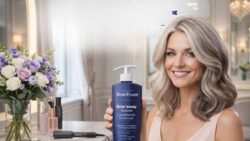 Goodbye Hair Dye for Grey Hair: The Conditioner Add-In That Gradually Restores Natural Colour
Placement matters just as much. For scattered greys, an all-over gloss paired with root powder at the part may be enough. Heavier silver at the front often benefits from professional grey blending using foils and lowlights to mix warmer strands among the white. Irregularity is the goal. Nature does it effortlessly, and good blending imitates that effect.
Lighter Maintenance, Fewer Appointments
Maintenance becomes easier too. Instead of strict six-week visits, many stretch appointments to eight, ten, or even twelve weeks, refreshing at home in between. Soyons honnêtes : personne ne fait vraiment ça tous les jours. The routine adapts to real life rather than demanding constant upkeep.
Common Mistakes That Undermine the Look
Greater freedom comes with a few pitfalls. One of the most frequent errors is choosing the wrong shade. A root powder that’s two tones darker than natural hair can sit on top like chalk and reflect harsh office lighting. Going too warm on cool-toned skin can also backfire, turning soft greys into a brassy halo.
Overuse is another issue. Sprays and powders are designed for small areas. When applied too heavily, hair can look stiff and dusty, and fabrics may stain. Many people dismiss the method as ineffective, when the real problem is excess product. A thoughtful colorist will often advise, “Use it only where it truly bothers you, and let the rest breathe.”
The Emotional Side of Letting Grey Exist
Emotion plays a role too. On rushed mornings, a new silver strand can feel overwhelming. On better days, the same streak looks like character. On a tous déjà vécu ce moment où l’on fixe un détail dans le miroir comme si tout se jouait là. This approach encourages a gentler response, rather than panic at every new grey hair.
Paris-based colorist Anaïs Dupont explains, “The goal isn’t to erase your age. It’s to make sure your hair and face tell the same story. When everything is too dark and flat, it looks false. Softly blended grey just makes people say you look well.”
Practical Guidelines for Grey Blending Success
- Choose root products in natural daylight rather than harsh bathroom lighting.
- Test new shades on a small section near the ear before committing.
- Start with minimal product and build only where grey stands out.
- Consult a professional once to define your ideal tone, then replicate it at home.
These habits turn grey blending from a messy experiment into a quiet, dependable routine.
What This Shift Says About How We Age
The move from full dye to grey blurring is more than a beauty trend. It’s a quiet refusal to treat ageing as all or nothing. People want to look like themselves, just a version that’s rested, hydrated, and maybe recently back from a holiday. Perfection is giving way to plausibility, and that trade feels freeing.
It also changes the private mirror moment. Instead of asking how to hide something, the question becomes what to soften today. Some days it’s the temple streak. Other days, nothing at all. Hair becomes a conversation rather than a disguise.
A Subtle Change With Real Emotional Weight
There’s a social effect too. Colleagues notice you look fresher without knowing why. Friends comment on shine, not shade. Partners often say nothing, which can be the greatest compliment. This ambiguity creates space. You control when ageing becomes a topic, not when a root line announces it. That control carries real emotional weight.
So the woman in the salon chair lowers her phone. The stylist dips a fine brush into a soft demi-permanent glaze and paints only the front sections, leaving the rest nearly untouched. Later, under her kitchen light, the same silver threads remain, but they’re quieter now—less harsh, more integrated. She runs her hand through her hair and feels something she hasn’t felt in a while.