
On a Tuesday evening in Barcelona, the supermarket oil aisle looks a little like a breakup scene. Bottles of extra virgin olive oil sit in their usual proud row, but they’re no longer the automatic choice. A middle‑aged woman picks one up, winces at the price, then reaches for a cheap, plain bottle of rapeseed oil instead. She hesitates, almost guilty, like she’s cheating on a long-term partner.
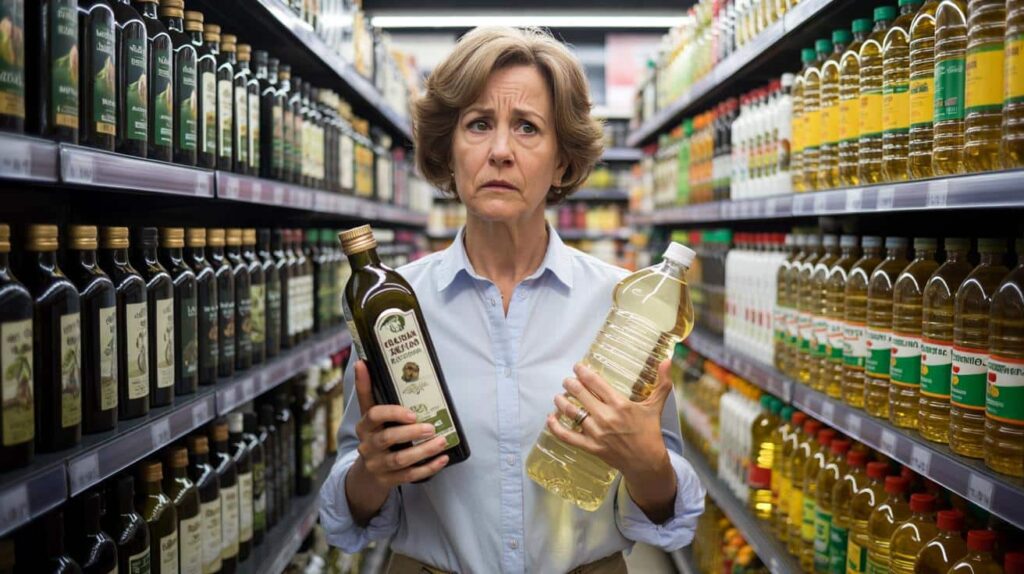
She’s not alone. Across Europe and the US, people raised on the story that olive oil is almost medicine in a bottle are quietly switching to a low-cost, low-glamour rival that nutrition scientists now say may be just as good – or in some tests, *even better*.
The Mediterranean dream is starting to crack.

When the “liquid gold” halo starts to slip
For years, olive oil was untouchable. It was the glossy hero in every story about the “Mediterranean diet”, the supposed secret behind long life, glowing skin, and enviably slim grandparents in seaside villages. You didn’t just cook with olive oil, you signalled that you were someone who “ate healthy”.
Then came two shocks at once. First, the brutal reality of prices: droughts, crop failures and speculation sent extra virgin olive oil costs soaring by 50–100% in many countries. Second, newer studies began saying that what really matters is not so much “olive oil” itself, but the balance of fats and how processed they are. Suddenly, **a boring, cheap bottle of canola or rapeseed oil** started looking like a pretty rational choice.
Take the latest wave of nutritional trials: when scientists put different everyday oils head to head, low-cost, refined rapeseed oil often lands in the “heart-friendly” camp, rich in monounsaturated fats and omega‑3, and low in saturated fat. In some studies on cholesterol and inflammation markers, it edges past olive oil by a nose. Not by magic, just by its fatty acid profile.
At the same time, investigative reports keep exposing olive oil fraud: blends sold as “extra virgin” that are anything but, oxidised oils, mislabelled origins. You fork out three times more, and you might still be cooking with something that lost much of its health benefit in a warehouse months ago. The feeling that starts to spread is not just disappointment. It’s betrayal.
Nutritionists are quietly repeating a simple message: the Mediterranean miracle was never just about one oil. It was about a whole pattern of life – vegetables, beans, fish, walking to the market, small portions, long meals, low ultra‑processed food. Olive oil was the most visible symbol, so it became the star.
Strip the myth down to the numbers and the story changes. What truly matters is that most of your fat comes from unsaturated sources, that your oils are stable when heated, and that you’re not drowning everything in deep‑fried batters. When you look at it this way, **cheap rapeseed or canola oil suddenly fits the script almost perfectly**. The cultural romance gets blurry, but the health logic gets clearer.
How to rethink your pan, your plate and your bottle
So what does this actually mean when you stand in front of your stove tonight? A realistic strategy many dietitians use at home looks like this: one neutral, affordable oil for daily cooking, and a smaller, genuinely high‑quality extra virgin olive oil reserved for drizzling and tasting. The workhorse oil can be rapeseed/canola, sunflower high‑oleic, or another unsaturated fat with a good heat tolerance.

You fry your eggs, stir‑fry your veg, sear your tofu or chicken in the cheap oil. Then, when you really want that peppery, green, “Mediterranean” hit – on salads, soups, grilled fish – you reach for the good extra virgin and use a modest spoonful. Less romance, more precision. It’s a small kitchen shift, but over a year it can save hundreds of euros and still tick every health box that actually matters.
A lot of people feel almost ashamed to admit they’ve swapped their daily olive oil for a budget bottle. It can feel like you’re “downgrading” your lifestyle, especially if you spent years being told that extra virgin is non‑negotiable for heart health. We’ve all been there, that moment when your bank account and your beliefs collide at the checkout.
Here’s the plain truth: **most of us were using way more olive oil than any traditional Mediterranean grandmother ever did**. They spooned it, we poured it. They stretched a bottle, we emptied one in a week on everything from toast to roasting trays. Health doesn’t come from flooding your food with a pricey fat. It comes from balance, portions, and the stuff that surrounds the oil on your plate.
“People feel they’re ‘betraying’ the Mediterranean diet if they switch away from olive oil,” says Dr. Laura Herrera, a cardiologist who studies food patterns. “But the real betrayal happened when marketing reduced a whole culture to one luxury ingredient.”
- Choose one main cooking oil that’s low in saturated fat and affordable enough to use without anxiety.
- Keep a small bottle of extra virgin olive oil for flavour, not for every single frying pan.
- Focus on the rest of the Mediterranean pattern: vegetables, legumes, nuts, whole grains, less ultra‑processed food.
- Rotate oils sometimes: rapeseed this month, high‑oleic sunflower the next, to vary your fat profile.
- Read labels and dates: a fresh, mid‑range olive oil beats a dusty “premium” bottle that’s been on a bright shelf for two years.
The end of a myth… or the start of a more honest one?
What’s happening right now is bigger than a simple price switch on supermarket shelves. It’s a quiet test of how we deal with food myths that shaped a generation. Many people feel fooled: by romanticised “nonna on a hill” marketing, by vague advice that blurred science with lifestyle aspiration, by influencers drizzling half a bottle of green gold on a single salad and calling it wellness.
At the same time, there’s a strange sense of relief. If a no‑logo, low‑cost oil can be just as heart‑friendly as the fancy one, the door opens to a more democratic idea of healthy eating. You don’t need a Tuscan budget to protect your arteries. You need decent fats, real food, and a life that doesn’t revolve around ultra‑processed snacks.
So the question is less “Is olive oil cancelled?” and more “What stories about food are we ready to let go of?” For some, that means keeping a beloved bottle of extra virgin on the table, but dropping the moral halo around it. For others, it means embracing rapeseed oil in the pan without feeling like you’ve gone cheap on your health.
The Mediterranean myth isn’t dying, it’s shifting. From one precious ingredient to a set of everyday habits anyone can borrow, wherever they live, whatever they earn. That shift might hurt the pride of olive oil purists. Yet for ordinary eaters staring at their shopping lists and their lab results, it might be the most liberating twist the story has seen in decades.

| Key point | Detail | Value for the reader |
|---|---|---|
| Olive oil isn’t the only “healthy” fat | Rapeseed/canola oil often matches or beats olive oil on fat profile and some heart markers | Reduces pressure to buy expensive oils just to eat well |
| Use different oils for different jobs | Neutral oil for cooking, extra virgin olive oil for flavour and finishing | Balances health, taste and budget in a realistic way |
| The real Mediterranean benefit is the pattern | Vegetables, legumes, fish, movement, low ultra‑processed food matter more than one oil | Helps readers focus effort where it truly improves long‑term health |
FAQ:
- Is rapeseed/canola oil really healthier than olive oil?Not always “healthier”, but often just as good: it’s rich in monounsaturated fat, has some omega‑3, and low saturated fat. In a lot of heart-health tests, results are very similar.
- Should I stop buying extra virgin olive oil altogether?No. Use it as a finishing oil for flavour and salads, where its antioxidants and taste really show, rather than as your default frying fat.
- What about the smoke point and cooking at high heat?Refined rapeseed/canola and high‑oleic sunflower oils tend to have higher smoke points than extra virgin olive oil, which makes them practical for stir‑fries and searing.
- Is the Mediterranean diet a myth then?The benefits are real, but they come from the whole lifestyle pattern, not from a single “magic” oil. The myth was in the oversimplified marketing.
- What’s one simple change I can make this week?Pick one affordable, unsaturated cooking oil for everyday use and add one extra serving of vegetables or legumes to your plate most days. Let’s be honest: nobody really does this every single day, but doing it often already moves the needle.
