
Many homeowners now admit something they once avoided saying out loud: the traditional kitchen island was never as practical as it looked. It disrupted movement, collected clutter, and turned everyday cooking into an obstacle course. As 2026 approaches, a calmer, more intelligent design mindset is taking over. The focus has shifted from flashy centrepieces to layouts that actually function on a normal weeknight. Slimmer, lighter, and more social alternatives are replacing the bulky block in the middle. Once you notice the change, the old island suddenly feels strangely out of place.
When a Beautiful Island Stops Working
One winter evening, as daylight faded, Emma realised her kitchen island was sabotaging her gathering. Ten friends were over, wine bottles open, music ready, yet the room felt divided. A thick quartz island split everyone into two groups. She cooked on one side while guests balanced awkwardly on stools on the other, shouting conversations across dirty dishes. The island looked stunning, but it failed its purpose. Months later, it was removed. A long, slim counter replaced it, stretching gently from the wall. The room felt instantly warmer, more connected, and far more inviting. The island, it turned out, had never truly served them.
Why Kitchen Islands Are Losing Popularity
Designers increasingly agree that kitchen islands grew too large for their role. What began as extra workspace slowly evolved into a status symbol, dominating renovation plans. Families found themselves constantly walking around it, bumping into corners, and piling everyday items on top. School bags, parcels, and paperwork all landed there. The feature meant to simplify life became an expensive clutter magnet, quietly working against how homes are actually used.

Design Data Tells the Same Story
Recent kitchen trend surveys from 2024 in both the US and UK reveal a clear pattern. Interest in large central islands has stalled, while demand for peninsula layouts and wall-attached social counters continues to rise. Younger homeowners, in particular, favour adaptable spaces over fixed, oversized blocks. Many clients abandon island plans after marking the footprint on the floor, realising how much movement they lose. Lighter layouts feel more open, encouraging interaction instead of acting as a physical barrier.

The Practical Limits of the Traditional Island
The classic island always had a flaw: it assumes generous space. Proper circulation requires clear access on all sides, plus floor plumbing or electrics and enough width to be useful. In average homes and apartments, this often leads to compromises that homeowners silently regret. By 2026, the shift reflects a simple truth. Instead of a large box in the centre, people want smart edges. Long, lean counters along walls or extending from them offer flexibility without overwhelming the room.
The 2026 Alternative: Social Peninsulas and Kitchen Tables
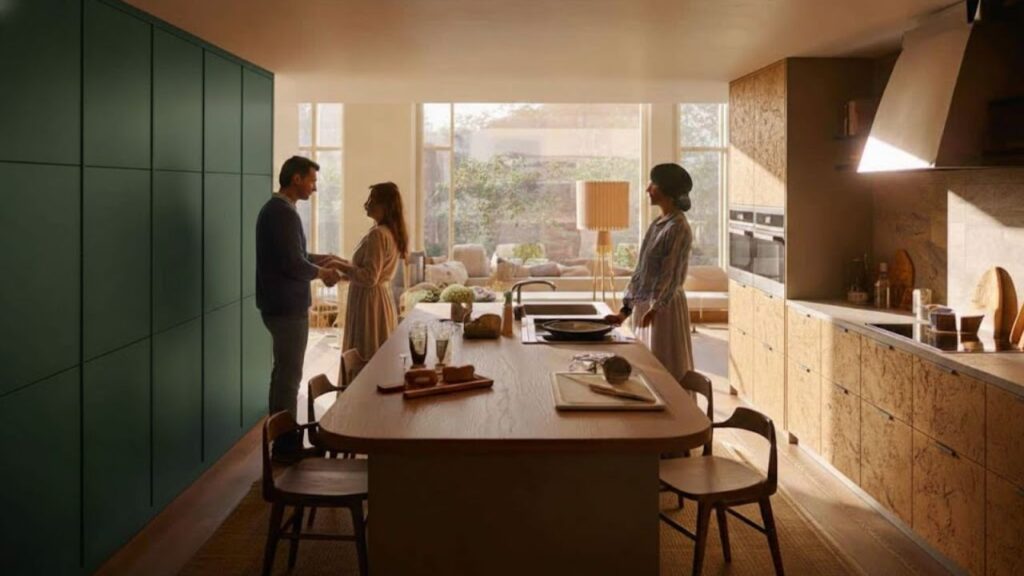
The rising replacement blends a peninsula with an oversized kitchen table. Rather than a freestanding block, the counter extends from cabinetry or a wall, remaining open and visually light. This design restores natural flow. Cooking happens on one side, conversation on the other. Chairs slide in easily, and the space adapts throughout the day. It functions as a dining table, prep area, and workspace, without dominating the room.
A Real-Life Example of the New Layout
In a Milan apartment, owners removed a heavy marble island and installed a slim oak-topped peninsula extending from the back wall. At just 80 cm deep, it served as a laptop-friendly workspace during the day and a dining spot by evening. The cook faced the room, staying part of the conversation. Although the footprint was smaller, the kitchen felt larger, more connected, and better integrated with the living space.
Designing Kitchens Around How People Live
This shift goes beyond aesthetics. Open-plan homes remain popular, but many households now seek flexibility and warmth over rigid centrepieces. Peninsula-style counters solve multiple needs at once. They attach to storage, avoid wasted space, and adapt to different uses throughout the day. Because they sit off-centre, the room breathes more easily. The focus returns to people, with the layout quietly supporting daily life rather than demanding attention.
 Never Cut a Child’s Bangs While Hair Is Wet - The “Shrinkage” Effect Can Make Them Way Too Short
Making the New Layout Work in Real Homes
The most effective change is moving workspaces toward the edge of the room. Start with cabinets along a wall, then extend a slim counter outward. Keep it deep enough for plates and laptops, but not so wide it becomes another obstacle. Allow comfortable legroom on the social side and maintain a clear cooking zone. Keeping sinks and hobs on the main wall simplifies plumbing and lets the peninsula remain a flexible, dry surface.
Common Mistakes Designers See Every Week
Many homeowners copy magazine layouts without considering room size. The result is cramped seating, blocked doors, and lost natural light. Designers often end up shrinking or relocating islands to restore balance. The emotional frustration is real, especially after investing heavily in a feature that sees little actual cooking use. As one architect joked, clients often admit they imagined the island would transform their lives, only to eat on the sofa while it gathers clutter.
- Allow 90–100 cm of clear circulation for comfortable movement.
- Use rounded corners in tight spaces or family homes.
- Mix counter heights for comfort rather than uniform bar levels.
- Choose warm materials so surfaces feel welcoming, not clinical.
- Limit visible power outlets to preserve visual calm.
A Kitchen That Reflects Real Life
Seen through this lens, modern kitchens reveal more human moments. People lean casually against slim counters instead of circling bulky blocks. Children arrive with homework and stay for dinner. Guests refill glasses because everything happens in one shared zone. The layout stops performing and starts supporting daily routines, allowing life to unfold naturally.
From Showpiece to Shared Space
Stepping away from monumental islands also means stepping away from performance. For years, kitchens felt staged, with the island as the star. Now, homes reflect more honest living. Meals are informal, work happens where people eat, and spaces adapt throughout the day. A wall-attached counter suits this reality far better than a stone monument designed to impress.
Why This Shift Matters as 2026 Approaches
Most people know the feeling of a room that almost works, except for one expensive feature that quietly gets in the way. Letting go of the traditional kitchen island isn’t about chasing trends. It’s about recognising that it rarely matched everyday life. The kitchens defining 2026 will prioritise easy movement, blended dining and prep areas, and natural connection. This subtle move from monument to motion is reshaping how homes truly function.

Key Takeaways for Homeowners
- Kitchen islands are declining: bulky central blocks often disrupt flow and collect clutter.
- Peninsulas and kitchen tables are rising: attached counters offer flexible, social solutions.
- People-first design matters: comfort, circulation, and adaptability create warmer, future-ready kitchens.
