The real estate agent paused in the doorway and laughed. “Where’s the island?” The couple exchanged a glance, half nervous, half proud. In the middle of the kitchen, there was no bulky slab of quartz, no heavy block dividing the space. Instead, a long, light surface traced the wall, easing into the dining area as if it had always belonged there. The agent walked the room, testing movement, sliding out a stool, miming dinner prep. After a moment, she nodded. “This feels easier,” she said. No one said it aloud, but the idea was clear: the era of the oversized kitchen island might be fading, replaced by something quieter and smarter.
Why homeowners are quietly moving away from kitchen islands
Step into almost any home built in the 2010s and you’ll find the same feature: a massive island planted in the center, a monument to open-plan living. It looked incredible on Instagram and still shines in listing photos. But talk to people who actually live with these islands, and another story emerges. They mention bumping into each other while carrying hot pans, backpacks piling up where dinner prep should happen, and cooks stuck facing cabinets while guests sit awkwardly across a stone divide. Once a symbol of the “dream kitchen”, the island is increasingly seen as a traffic jam at the heart of daily life.
What designers are seeing in real homes
Designers noticed the shift early. An informal survey shared by several U.S. kitchen firms revealed that nearly four in ten remodels during 2023–2024 replaced a traditional central island with a peninsula, worktable, or wall-focused layout. The emphasis has moved from a block in the middle to flow along the edges. This change shows up more in lived-in homes than glossy magazines, because daily use is where the limits of islands become impossible to ignore.
 Collarbone-Length Hair Is the “Universal Safe Cut” - Stylists Say It Flatters Almost Everyone
What’s actually changing in kitchen design
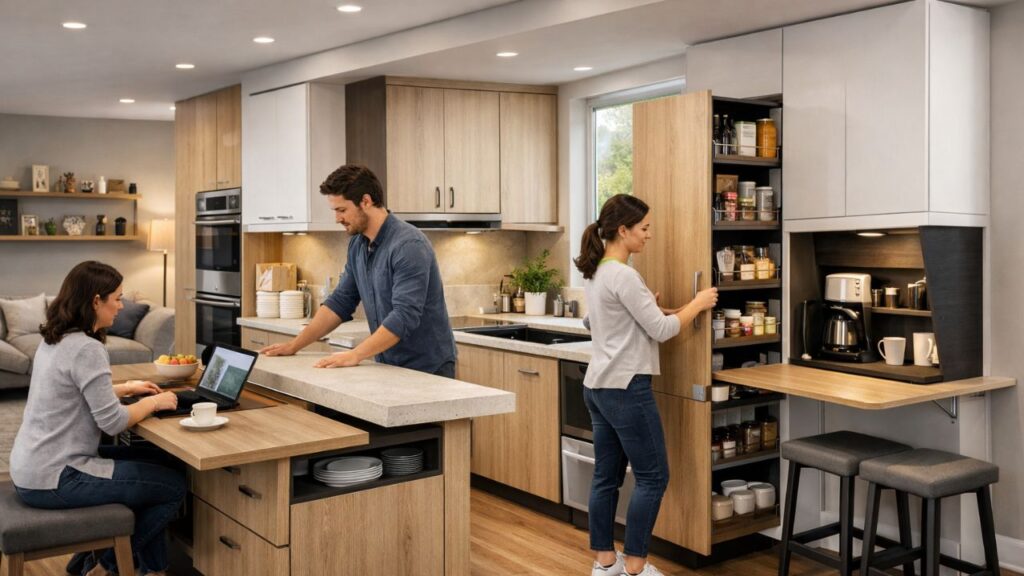
The alternative many homeowners are choosing isn’t a single new feature, but a different way of thinking. Instead of one fixed centerpiece, they’re opting for flexible, perimeter-based layouts. Peninsulas that double as dining spots, slim tables on legs, integrated benches, and long counters along the walls are taking over. The goal isn’t to chase trends. It’s to reclaim space to move, talk, and live without feeling boxed in by a stone rectangle.
 Heal Painful Cracked Heels Faster at Home Using Powerful Kitchen Ingredients That Actually Work
The smart alternatives replacing the classic island
The most obvious replacement is the kitchen peninsula. Attached to a wall or cabinet run, it forms an L or U shape rather than standing alone. It keeps the appeal of bar seating while opening a clear path through the room instead of cutting it in half.
How peninsulas change everyday flow
In a small 1950s home in Manchester, one family removed a bulky island that forced everyone into a narrow corridor. They installed a slim peninsula extending toward the dining nook. Suddenly, there was a clean route from the back door to the living room. Breakfast still happened on stools, but now the cook could turn, chat, and pass plates without asking anyone to move every few seconds.
The return of the worktable
Another clear favorite is the worktable. Unlike a heavy built-in island, this is a table-height or counter-height piece on legs, sometimes with wheels. It offers prep space when needed and open floor space when not. Occasionally, it even becomes a homework desk or a casual bar during gatherings.
The quiet power of perimeter counters
Long, uninterrupted counters along the walls are also making a strong comeback. With smart storage and fewer upper cabinets, they serve as prep areas, coffee stations, and serving ledges all at once. They may not photograph as dramatically as a central island, but in many remodels, they’re what truly makes the kitchen function better.
What these options share is a simple idea: prioritize movement, open sightlines, and flexibility over a single static centerpiece. As many homeowners admit privately, the kitchen often acts more like a hallway than a showroom. Traffic flow matters more than the thickness of stone.
Designing a no-island kitchen that still feels high-end
Skipping the island can feel risky. Years of home shows have taught us that luxury equals a massive island. The key is to identify what you actually valued about it. Extra prep space, casual seating, storage, and a landing zone for groceries can all exist without one surface trying to do everything.

Assigning each function its own zone
Prep space can shift to a long counter near the sink. Seating can live on a peninsula facing the living area. Storage can tuck under a window bench or inside a tall pantry. Instead of crowding everything onto one slab, each task gets a clearer, calmer place.
Why circulation matters more than features
Mapping how you move through the kitchen reveals a lot. Paths from door to fridge, stove to sink, or table to bin often collide around a central island. Designers usually aim for at least 100 cm (around 40 inches) of clear walkway around work zones. Without an island, those paths naturally widen, allowing multiple people to move comfortably. On busy evenings, that ease outweighs another drawer of neatly stacked bakeware.
Designing for real life, not staged perfection
Many homeowners quietly agree on one truth: real life is messy. Homework, half-folded laundry, parcels, and rushed lunches don’t belong on a styled centerpiece. A no-island kitchen works best when it includes designated mess zones. A drop spot near the entrance for bags and mail, a charging shelf for devices, and a specific counter section near the fridge that can handle chaos without disrupting cooking.
The emotional difference is subtle but powerful. You walk in, and the kitchen doesn’t immediately broadcast the day’s clutter on a central stage. It feels more like a room for living and less like a set you’re failing to style.
What homeowners notice after removing the island
One homeowner in Austin summed it up simply: “We removed the island, and I felt like I could breathe again. We didn’t lose function, we lost friction.” Similar reactions are becoming common. People also notice conversations changing. Without a physical barrier, family members tend to stand beside each other or at gentle angles, rather than facing off across a counter like customers at a bar.
Practical principles to keep in mind
- Include one generous stretch of uninterrupted counter for serious cooking.
- Keep seating within easy talking distance of the main prep area.
- Protect a clear circulation path that never runs directly behind a hot stove.
A kitchen without an island can still be the heart of the home
On an ordinary Tuesday evening, this kind of kitchen doesn’t look like a design statement. It looks like a teenager spreading books along a narrow peninsula while someone prepares dinner nearby. Friends move in and out without getting stuck at a stone barrier. On a sunny weekend morning, a slim worktable might roll closer to the window, pancakes moving smoothly along the perimeter. The space feels less rigid, more adaptable, and easier to live in.
Kitchen islands aren’t disappearing everywhere. Large rooms can still benefit from a central block. But the quiet move away from default islands reflects a broader shift: less performance, more ease, more conversation, and more flexibility. When you imagine the same beautiful finishes paired with a peninsula and a movable table, the result often feels calmer and more human. That’s the smart alternative many homeowners are choosing, even if it doesn’t always make the cover photo.

Key takeaways for homeowners
- Perimeter-focused layouts using peninsulas, worktables, and long counters can replace bulky islands without sacrificing function.
- Designing around movement and daily habits helps kitchens feel calmer and more practical.
- Flexible zones beat fixed centerpieces, creating spaces that adapt to real life and future needs.