
She pauses, examining the thin silver streak at her temples reflected back at her from the mirror. On her phone, a paused TikTok clip shows a woman confidently wearing a soft salt-and-pepper blend, no harsh dye line, no obvious roots. The stylist catches her eye and smiles. “We can work with your greys now,” she says gently. “You don’t have to hide them anymore.”
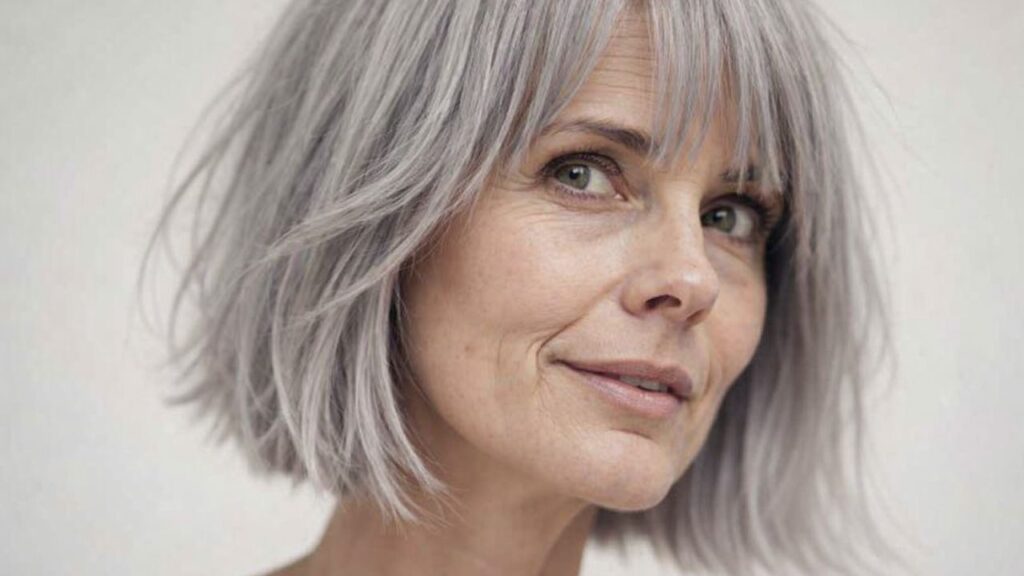
Step outside and you notice it too. There’s less helmet hair, fewer heavy blocks of flat brown or jet black. In their place: shimmering, textured, lived-in color. People look their age, yet somehow lighter, brighter. They’re no longer coloring their hair the old way. They’re blending it, glazing it, glossing it. A quiet shift is happening in how we show up as we age.
And it begins with letting go of the belief that every grey strand must disappear.
 Bold Architectural Haircuts Signal High Confidence at Work, Experts Say - Here’s Why People Notice
From Hiding to Harmonizing: A Quiet Hair Color Shift
Spend time in a busy salon and listen closely. The conversation has changed. It’s no longer just “I need to cover my greys.” Now it’s “I want them to blend,” “I want dimension,” or “I want to look like myself, just more rested.” The new approach isn’t about denying grey hair exists. It’s about using those silver strands as natural highlights and turning them into an advantage.
 Silk Pillowcase Sleep Habit Can Reduce Hair Breakage Overnight and Prevent Morning “Bed Head”
Colorists talk far less about traditional grey coverage and far more about grey blending, soft transitions, and low-maintenance lightening. There’s less dye packed onto the scalp and more thoughtfully placed tones that melt into the natural base. The result is subtle in photos and effortless in real life: brighter around the face, softer at the roots, and no sharp line as hair grows.
This change didn’t appear overnight. It’s driven by both style and exhaustion. People are tired of constant root touch-ups, tired of spotting a single white millimeter and feeling instantly undone. They’re weary of the idea that looking polished means fighting their own biology.
On social media, hairstylists share striking transformations: heavy box-dyed black hair with stark white roots becomes smoky brown threaded with cool silver ribbons. The captions repeat a theme: “We respected her greys.” “We softened the line.” “We let the texture shine.” That language matters.
This trend isn’t only visual. It’s emotional. When the hard line between “young color” and “old roots” fades, the shame often attached to grey hair begins to fade too.
The Modern Color Toolkit: Working With Grey, Not Against It
The biggest change is a move away from aggressive, all-over permanent dyes. Instead, colorists rely on semi-permanent glosses and glazes that coat the hair with sheer pigment rather than saturating it. Think of it as a tinted top layer, not a full repaint.
A gloss can soften bright white strands into pearl or champagne tones. On darker hair, cool-toned glazes help neutralize the dull yellow cast that greys can develop, creating a cleaner, more refined shimmer. Many of these formulas also boost shine and smoothness, which instantly makes hair look more vibrant. Even grey hair reads as youthful when it’s glossy.
Placement has become just as important as product. Instead of coloring every strand, stylists weave in lowlights between grey sections, creating movement rather than a solid block of color. Around the face, hair is often kept slightly lighter to lift features. A successful blend intentionally leaves some grey visible. That restraint is what makes the look feel current.
For those dealing with heavy grey at the roots and darker lengths, the popular approach is gradual. Over several months, highlights and lowlights break up the harsh band. A soft root smudge blurs the grow-out. A shadow root gently connects darker lengths to lighter roots. Over time, natural grey occupies more space, but never feels abrupt.
At home, the philosophy stays the same. Instead of frequent permanent dye, people stretch appointments with tinted masks, purple shampoos, and occasional root sprays. It’s less about perfection and more about consistency. Small efforts, done regularly, prevent that feeling of being suddenly “undone.”
This blend of professional techniques and realistic home care is what gives the trend staying power. It’s not about abandoning color altogether. It’s about using it more thoughtfully and more gently.
 A Styling Product Mistake Can Turn Grey Hair Yellow - Here’s How to Keep Silver Looking Bright
How to Transition Gracefully Without Panic or Damage
The most effective strategy is also the simplest: don’t try to fix everything at once. A smooth transition usually takes six to eighteen months, depending on hair growth and starting color. While that may sound long, many people feel a shift in how they see themselves after just a couple of appointments.
Ask your colorist for a soft grow-out plan. This often includes delicate highlights around the face and parting, paired with lowlights that sit a few shades lighter than your previous color. The goal is to reduce contrast between new grey growth and older dye. For some, going slightly lighter overall helps greys appear intentional rather than unfinished.
At home, maintenance becomes about protection. Use a color-safe shampoo and rotate in a gentle silver or purple shampoo weekly to prevent yellowing. Hydration matters more than ever, since dry hair makes greys stand out and frizz more noticeable. A simple, consistent routine works better than an elaborate one.
Many worry that allowing grey to show will instantly age their face. In reality, overly dark, flat color can drag features down. A cooler, lighter blend near the face often lifts cheekbones and brightens the eyes. Stylists frequently pair grey blending with a cleaner, sharper cut to keep the look fresh.
There’s also a practical benefit. Fewer harsh chemical processes mean less breakage and healthier hair, especially important as hair naturally becomes finer with age. Emotionally, not scheduling life around your roots feels freeing. Missing a salon visit no longer feels like failure.
At its core, grey blending is about choice and control. You decide where to soften and where to keep depth. You can pause, adjust, or reverse course at any time. It’s not a one-way commitment.
As one London colorist put it: “Covering grey is hiding. Blending grey is editing. You’re still in charge of the story.”
Simple Guidelines to Stay Grounded During the Transition
- Take photos before each appointment to track progress objectively.
- Bring reference images that show real roots and texture, not only filtered finishes.
- Be honest about budget and maintenance so the plan stays realistic.
The Emotional Shift: Choosing Softness Over the Illusion of Youth
We’ve all seen it: harsh lighting, an unforgiving mirror, and suddenly those new greys at the front catch the light. The instinct is immediate concealment. This new approach asks a different question: what if they don’t have to be the enemy?
Something changes when you stop fighting every silver strand. You still care. You still tone, gloss, and refine. But the energy moves from panic to curation. Many people describe feeling lighter after the first appointment where grey is left visible on purpose. Instead of thinking “I failed to cover it,” the narrative becomes “We placed it.”
This shift isn’t about rejecting vanity or celebrating aging for its own sake. It’s about finding a more honest middle ground. You can want your hair to flatter your face while accepting that both have changed. Some days you’ll feel radiant. Other days, nostalgic for your old color. That tension is normal.
The people who truly glow in this grey-blending movement aren’t chasing perfection. Their hair simply makes sense for who they are right now. Their roots grow without drama. Their greys shimmer instead of shouting. And when the stylist asks, “Same as last time?” they can answer calmly, without that old, quiet sense of failure.

| Key point | Details | Why it matters to readers |
|---|---|---|
| Start with grey blending, not full coverage | Ask for babylights, lowlights and a softer root color instead of an all-over permanent dye. Leave some natural grey visible, especially around the crown where it grows fastest. | Reduces that obvious “root line” and lets you stretch appointments to 8–12 weeks instead of every 3–4, saving money, time and stress. |
| Use glosses and glazes to add shine | Opt for semi-permanent gloss treatments that add sheer tone and reflection. They can cool down yellow greys, add a pearly cast, and smooth frizz without heavy pigments. | Shiny, reflective hair instantly looks healthier and more youthful, even when the color is naturally grey or salt-and-pepper. |
| Adjust your cut and styling to match the new color | Pair softer color with a more defined shape: blunt bobs, long layers with movement, or curtain bangs that frame the face. Use lightweight serums instead of heavy oils. | A sharper haircut and lighter styling products stop greys from looking wiry or “tired” and give the whole look intention rather than resignation. |
