
The woman staring back at you isn’t exactly who you remember from five years ago. The hairline hasn’t changed, the smile is familiar, yet fine threads of silver flash under the bathroom light, quietly demanding attention. You tilt your head, pull a strand forward, inspect it from every angle. One part of you admires the shine. Another part only sees the word “older.”
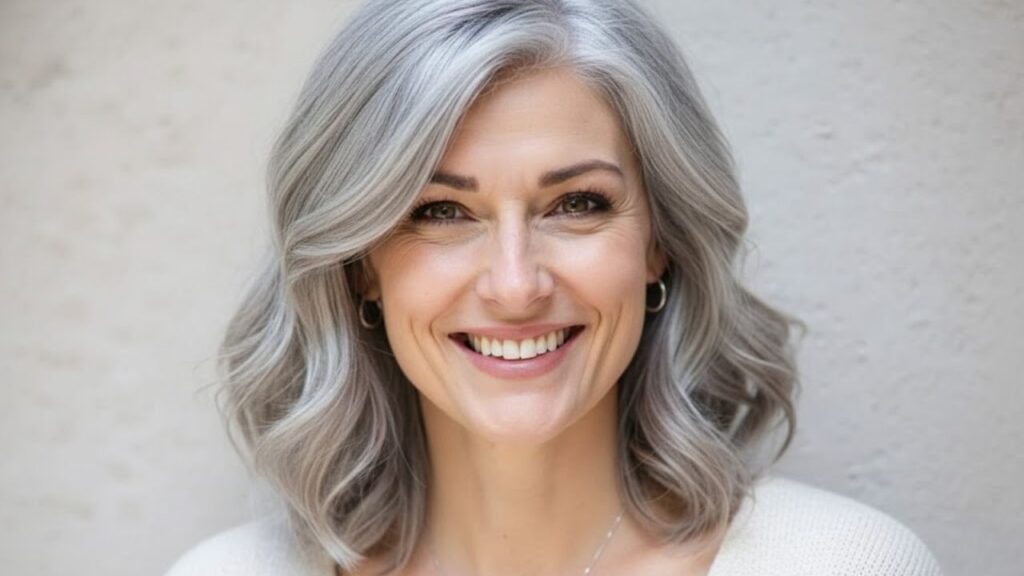
Your hand pauses between the same trusted box dye and… nothing at all. Lately, your feed is filled with women who don’t dye or hide, yet somehow look brighter, sharper, more youthful. No harsh regrowth, no dull blocks of colour. Just soft, blended hair where grey looks deliberate, not accidental.
Stylists murmur about it in salons, brands rename it with elegant terms, and TikTok calls it a “glow-up without dye.” This quiet shift has already arrived.
The Subtle Rise of Grey Blending and Soft Ageing
In a lively London salon on a rainy Thursday, chairs are full, but boxes of ammonia dye sit untouched. Clients no longer ask to “cover the grey.” Instead, they say things like “soften it” or “blend my white streaks so I look fresh, not artificial.”

The movement now has a name: grey blending, also known as soft ageing. Rather than erasing silver, colourists layer ultra-fine highlights and lowlights that echo your natural base, allowing grey to appear in controlled, flattering zones. The result doesn’t announce itself. It suggests healthy hair, good rest, and ease.
On Instagram, the transformations are striking. Same woman. Same age. A completely different relationship with her reflection.
Data mirrors the visual proof. A 2023 UK consumer survey from a major haircare brand revealed that women aged 35–55 reduced traditional all-over dye use by nearly 30%. At the same time, bookings increased for toning, glossing, and refresh services.
A Paris-based stylist shared that grey-blending appointments in her salon have tripled in two years, while full root-coverage visits declined. Spending hasn’t vanished; it’s simply shifted. Fewer aggressive colour sessions, more subtle upkeep focused on shine, softness, and structure.
Behind these numbers is always a moment. Someone rereads the ingredient list on their dye box and pauses. Someone notices thinning around the hairline and starts connecting dots. Then, one day in the salon chair, they ask, “What if we tried something else?”
The reasoning is disarmingly simple. Full-coverage dye looks flawless for about two weeks. Then the roots emerge, the line sharpens, and upkeep turns into a cycle that never ends. Grey blending, glossing, and toning reverse that pattern.
By working with natural colour instead of against it, stylists create a gentle transition. As grey grows, there’s no harsh divide. Light simply catches different strands. The eye sees dimension and texture, not a reminder that it’s time for another appointment.
There’s also a skin effect. Flat, opaque colour can harden features and deepen shadows. Soft, multi-tonal hair reflects light around the face, subtly diffusing fine lines. It’s less about hiding age and more about directing attention.
How Modern Anti-Grey Routines Really Work
The process usually begins with one bold move: pausing full-coverage root dye. Not forever, just long enough to understand what’s actually happening. A skilled colourist maps your greys—whether they gather at the temples, scatter across the crown, or form a natural streak.
From there, micro-highlights, lowlights, or babylights are applied to mirror that pattern instead of fighting it. It’s closer to editing a photograph than repainting it. A gentle gloss or toner follows, often cool or neutral, to neutralize yellow tones and create a smooth, glass-like finish.
The real advantage appears over time: even as it grows out, it still looks intentional.
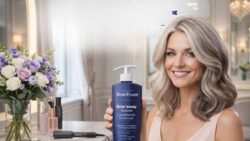 Goodbye Hair Dye for Grey Hair: The Conditioner Add-In That Gradually Restores Natural Colour
Home care evolves as well. The routine favors purple or blue shampoos once a week to prevent brassiness, lightweight masks to keep grey strands soft, and clear or subtly tinted glosses every few weeks. Harsh box dyes are replaced with semi-permanent, low-commitment colour for anyone wanting minimal coverage without a stark regrowth line.
Many people are surprised to find they need less styling once their colour is blended. A quick blow-dry, a drop of serum on the ends, and the natural texture does the rest. On a busy weekday morning, that’s more than a beauty win. It’s relief.
Let’s be honest: almost no one follows elaborate hair rituals every day. This trend works precisely because it respects reality. Even if you wash twice a week, skip treatments, or sleep with your hair half-tied, grey blending still holds up.
A common misstep is jumping straight from dark, full-coverage dye to pure silver. That dramatic reveal rarely translates well off social media. Hair can be fragile, contrast too stark, and the mirror shock overwhelming. A slower transition—using lowlights, babylights, and toners over months—is gentler on both hair and mindset.
Another frequent regret is choosing shades that are too warm. Strong copper or gold tones can emphasize redness and uneven skin. A colourist who studies your undertone, eye colour, and even freckles makes all the difference.
“Grey hair isn’t the issue,” says London colourist Maya Rhodes. “The issue is when the hair and the person’s energy don’t align. My job isn’t to make someone look 25. It’s to make 52 look luminous, confident, and fully lived-in.”
Are You Ready for a Softer Approach?
- You feel controlled by your root schedule and dread the moment regrowth appears.
- Your hair feels drier, rougher, or more fragile after frequent colouring.
- You like the idea of grey, but not the flat salt-and-pepper effect you see now.
- You want to look fresher, yet full-cover colour feels like a disguise.
- You’re curious about what your real hair actually looks like.
A New Relationship with Your Reflection
This trend is often discussed as if it’s only about technique—foils, toners, salon language. In reality, it’s also about a quiet decision made in front of the mirror: whether silver is a flaw to erase or material to work with. On a tired Sunday evening, that choice can feel significant.
Grey blending, glossing, and soft face-framing light don’t erase time. They soften its edges. They allow hair to move, reflect light, and tell a story that isn’t about panic touch-ups every four weeks. On others, that story is easy to admire. On yourself, it requires a bit more courage.
We’ve all had moments when an unforgiving selfie or video call makes us want to buy everything on the shelf. This new approach suggests something else: maybe the answer isn’t more layers of concealment, but a smarter way to reveal what’s already there.
For many, the realization feels quietly radical. You can leave traditional dyes behind without giving up a youthful look. You can keep softness, shine, and a fresh outline while allowing silver threads to exist peacefully. A well-shaped bob with blended grey and bright ends often looks far fresher than a heavy, overdyed block of colour.
Somewhere between the salon and the street, something changes. You stop checking your roots in every mirror. You start noticing how many others carry that same subtle shimmer of blended grey. It no longer feels like defeat. It feels like belonging.
Perhaps that’s the real shift underway—not a single haircut or formula, but a new agreement with ourselves. Less hiding, more refining. Less fighting time, more working with it. A gentler, wiser way to own the years we’ve lived, without letting go of that spark that still looks forward.

Key Takeaways
- Grey blending: A mix of micro-highlights, lowlights, and toners that merge silver with natural colour for a softer, younger look.
- Gentle maintenance: Purple shampoos, glosses, and nourishing masks replace constant full-dye sessions, reducing damage and stress.
- Soft ageing mindset: Embracing natural change instead of fighting it helps align your appearance with how you feel long term.
