The café windows were clouded with breath and drizzle, a classic grey London morning that usually promises nothing more than damp shoes and weak coffee. Yet every nearby conversation kept looping back to the same uneasy thought: “Do you feel like the weather is… broken?” A woman in a navy blazer flicked through photos of last summer’s wildfires on her phone. A delivery rider laughed while shaking rain from his jacket, joking about needing a canoe for rush hour.
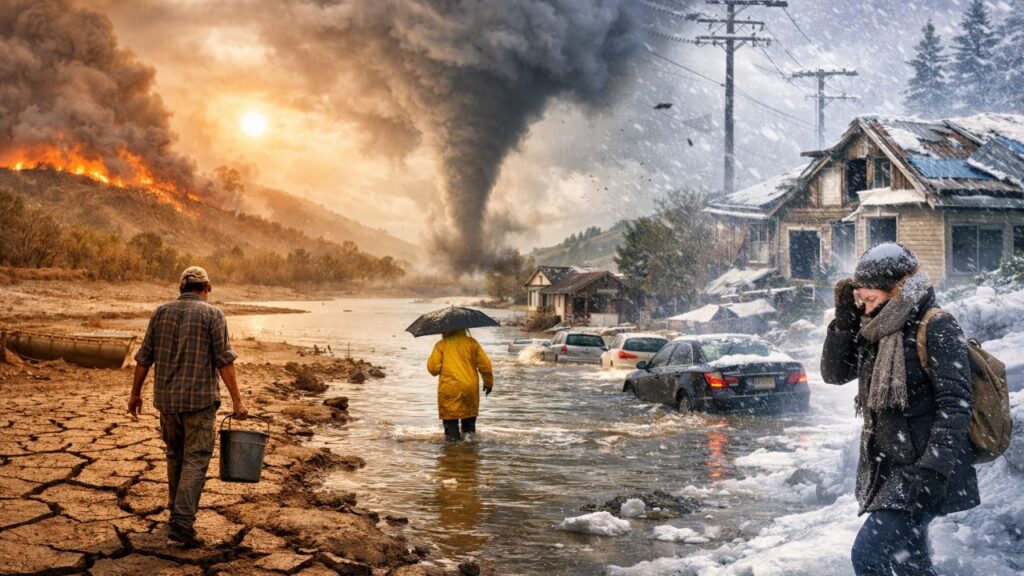
Outside, the calendar insisted it was early autumn. The air felt like high summer. And the forecast on everyone’s screen looked less like science and more like chance.
The unsettling truth is that researchers say this confusion isn’t a temporary glitch. It’s the new operating system. And it has only just started running.
 Collarbone-Length Hair Is the “Universal Safe Cut” - Stylists Say It Flatters Almost Everyone
Goodbye to the Comfort of “Normal” Weather
For years, we treated the weather like a slightly unreliable friend. Some days disappointed, most days behaved, and the seasons usually arrived more or less on schedule. That mental model is breaking down. Climate scientists now speak less about a stable climate and more about long-term variability — slow trends that bend quietly before snapping hard.
 Heal Painful Cracked Heels Faster at Home Using Powerful Kitchen Ingredients That Actually Work
What feels like random disorder on the ground becomes, when plotted on a chart, a pattern with a dangerous lean. The baseline keeps rising, the swings grow wider, and it’s at the extremes where people suffer.
Europe’s summer of 2023 offers a clear example. One week, cities in the south pushed past 45°C, rails warped, and emergency rooms overflowed with heat exhaustion. Weeks later, violent storms hit the same regions, flooding streets and tearing through rooftops.
In the United States, farmers saw months of drought end in a single afternoon of flash flooding that stripped away soil built up over years. They didn’t say “we’ve never seen this” casually. Many kept weather journals passed down through generations, filled with rainfall totals and frost dates. Recent notes have become blunt and brief: “Wrong month.” “Too much.” “All at once.”
Scientists describe the system in calmer language, but the message is just as severe. Warming oceans, shifting jet streams, and shrinking ice are loading the dice. Events once labeled “once in a century” are quietly becoming more likely.
Instead of a neat bell curve of temperatures, the climate is sliding toward fatter tails — more outliers, more extremes. This doesn’t mean every year will be catastrophic. It means the reliable middle ground that shaped our cities, food systems, and routines is shrinking. Saying goodbye to a stable climate isn’t just about losing comfort; it’s about losing predictability.
Living With a Future That Swings Faster
Climate researchers often repeat a simple idea: long-term trends, short-term chaos. That concept can guide everyday choices. Rather than fixating on a ten-day forecast, it’s more useful to prepare for the broader patterns your region is likely to face — stronger heatwaves, heavier rain, longer dry periods.
In practice, this often means modest, unglamorous steps. Adding shade near your home instead of expanding a lawn. Checking whether your street or basement sits in a flood-prone dip. Keeping a basic kit ready for power cuts during storms, not out of panic, but as a quiet form of preparedness.
Humans struggle to plan for abstract risks like “a more volatile climate over the next 20 years.” Our minds prefer clear villains and deadlines. So start closer to home. Talk with older neighbours about how seasons used to feel where you live, then compare that memory with the last five years, not just the last few months.

Once you notice the pattern — hotter nights, sudden hailstorms, rain that arrives in torrents instead of drizzles — it stops feeling like bad luck and starts looking like information. And when it becomes a signal, you can respond rather than simply react. Soyons honnêtes : personne ne fait vraiment ça tous les jours. Still, even one uneasy conversation about local risks can shift how a family or workplace treats the next severe-weather alert.
Scientists may sound blunt, but they aren’t detached. Many are parents, gardeners, renters, and commuters themselves. They build resilience at home the same way they conduct research: step by step. One climatologist summed it up simply:
“We can’t restore the old climate. What we can decide is how harsh the new one becomes — and how ready we are when it arrives.”
A Simple Personal Checklist
- Heat: Do you have a cool room, fans, or access to shared spaces during extreme heat?
- Water: Could you manage a few days of flooding or water restrictions?
- Health: Who around you is vulnerable — children, elders, sick friends — and what would they need in a difficult week?
- Money: Is any part of your savings or pension tied to climate-sensitive sectors without you realizing it?
- Community: Who would you contact or help if a storm, blackout, or wildfire alert hit tonight?
A Climate Story Still Being Written
Saying goodbye to a stable climate doesn’t mean accepting constant disaster. It means entering a future where the background level of risk is louder, and where choices made today still turn that volume up or down. The physics are unforgiving, but the outcomes are not fully fixed.
Every tonne of CO₂ avoided lowers the chances of the most extreme scenarios scientists worry about. That idea feels abstract until it translates into fewer nights when emergency staff wrap foil blankets around exhausted bodies.
The other half of the story is personal. It’s about communities redefining “normal” together. City planners converting car lanes into shaded bike routes that double as cool corridors. Farmers testing crops that can survive both drought and sudden floods. Parents teaching children to check air quality or heat indexes as routinely as grabbing a jacket.
On an individual level, it might mean learning the early signs of heat stress. Socially, it could be as simple as starting a neighbourhood group chat for red-alert days. Politically, it shows up in voting, speaking out, and sometimes just refusing to drift into silence.
Most of us have felt it: a sky that looks wrong — too orange, too still, too violent for the date on the calendar — and a quiet thought that says this isn’t how it used to be. That discomfort is more than fear; it’s a compass. It signals that our idea of “normal” is stretching, and that we get to choose how to respond.
The scientists tracking long-term climate variability aren’t only documenting loss. They’re outlining options. And the message they repeat is clear: the worst outcomes are not inevitable. We aren’t passengers on a runaway train. We still have our hands on the controls, even if we’re arguing about where to go.
 Goodbye Kitchen Islands The Smart Space Saving Alternative More Homeowners Are Choosing Right Now
Key Takeaways for Readers
- From stability to variability: Climate is shifting from narrow, predictable ranges to wider, more extreme swings, explaining why the weather feels “broken.”
- Local patterns matter: Each region faces its own mix of heat, drought, storms, and floods, making local awareness essential.
- Action still matters: Cutting emissions and strengthening resilience can reduce future extremes and preserve a sense of agency.