Achieving that “brand-new room” shine requires more than just a regular cleaning routine. Behind the pristine look of hotel showers lies a strict, efficient process and a surprisingly simple tool that most of us pass by in stores without a second thought.
The Zero-Tolerance Approach to Stains
In the hospitality industry, even a small stain on a shower screen can signal neglect. A single streak of white can trigger complaints, bad reviews, or even lost customers. Hotel housekeeping staff are trained to make glass panels look brand-new, tackling each bathroom in just a few minutes. There’s no time for long soaking or complicated chemical treatments. The method needs to be quick, reliable, and effective across dozens of rooms a day. A hotel shower screen must go from cloudy to crystal-clear in mere minutes, not hours.
Why Traditional Bathroom Sprays Fall Short
At home, many people rely on anti-limescale sprays or multipurpose cleaners, which can work well for light build-ups. However, these products often fail to tackle older, crusted deposits. Overuse of harsh chemicals can damage silicone joints, dull chrome fittings, and cause irritation to skin or lungs. Hotels have learned that soaking surfaces in aggressive chemicals isn’t sustainable. Instead, professional cleaners focus on simple chemistry and effective physical techniques—using the right tools the right way.
The Real Culprit: The Stubborn White Film
The cloudy film on shower glass is mainly caused by limescale, which results from the minerals in tap water like calcium and magnesium. When water droplets evaporate, these minerals crystallize, forming a rough, white crust that sticks to glass. Once this build-up is established, a quick spray and wipe won’t be enough to remove it.
Soap Scum: The Unseen Accomplice
Limescale rarely acts alone. It combines with soap, shower gel, and skin oils to form a greasy, greyish film known as soap scum. This film traps more mineral deposits, creating a cycle of increasing dirt build-up. A neglected shower appears to get dirtier faster, even with occasional cleaning. Both soap scum and limescale contribute to the cloudy appearance of shower glass.
Two Problems, One Solution
Acidic products, like white vinegar, target mineral build-up, while degreasers handle the soap film. On typical shower screens, both layers exist together, making the issue harder to tackle. This dual-layer problem is where the hotel cleaning method excels, using mechanical action to address both dimensions simultaneously.
The Secret Weapon of Hotel Cleaning: Melamine Foam
The magic behind hotel-clean shower screens isn’t some exotic chemical product; it’s a melamine foam sponge, often marketed as a “magic eraser.” While it may sound mystical, melamine foam is simply a dense network of hard plastic strands, which gives it a very fine abrasive effect. Under a microscope, it resembles a honeycomb structure. When wet, the microfilaments stiffen, allowing the sponge to gently polish the surface, removing dirt and mineral build-up without damaging it.
How Melamine Foam Works on Glass
Melamine foam doesn’t dissolve limescale or soap scum—it physically scrapes them off in microscopic layers. This micro-abrasion process tackles both soap scum and limescale simultaneously, which is why hotels can restore even heavily tarnished shower panels to their original clarity without relying on lengthy chemical treatments.
Why Professionals Prefer It
- Speed: Deep stains vanish in just a few passes, eliminating the need for long chemical action.
- Reliability: Stubborn marks and splashes that resist sprays are no match for melamine foam.
- Versatility: It works on glass, ceramic tiles, plastics, and even grout lines, with proper care.
- Cost-effective: One pack can cover many rooms, reducing the need for multiple specialty products.
How to Use Melamine Foam at Home
To get the best results with a melamine sponge, remember the key rule: never use it dry. Soak the sponge in clean water, gently squeeze to remove excess moisture, and then use it while damp. Apply light, even pressure and use short circular or horizontal strokes. The micro-abrasion will do most of the work. As the sponge picks up residue, either turn it to a clean side or rinse it off. Once it becomes thin or starts to break apart, replace it.
Rinsing and Achieving a Hotel-Quality Finish
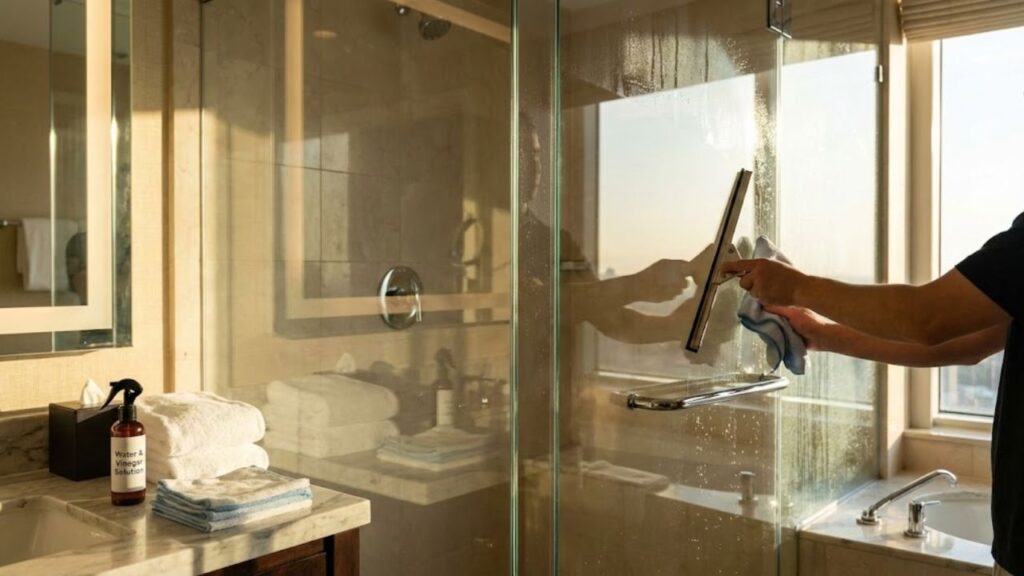
After cleaning, the glass will hold loosened dirt and tiny sponge particles. Rinse the surface thoroughly with warm water. The professional finishing touch involves using a squeegee. Run the squeegee from top to bottom in overlapping lines to remove most of the water, preventing streaks. Then, finish off by wiping the edges and fittings with a dry microfiber cloth.
Where to Find Melamine Sponges
Melamine sponges are widely available in supermarkets, discount stores, DIY chains, and online. Look for products labeled with “melamine” or “foam eraser.” While the brand may vary, the key feature is the melamine foam material. Test the sponge on a small, hidden area before using it on delicate or high-gloss surfaces, such as soft plastics or tinted glass.
A Weekly Routine for Crystal-Clear Glass
For a heavily scaled screen, the first cleaning session may take some time and multiple sponges. However, once the glass is clear, maintenance becomes much easier. A light pass with the melamine sponge once a week, or every two weeks in areas with soft water, is usually sufficient.
Recommended Maintenance Schedule
| Bathroom Condition | Recommended Frequency |
|---|---|
| Very hard water, daily showers | Weekly use of melamine sponge |
| Moderate water hardness | Every two weeks |
| Soft water, light use | Deep clean once a month |
The 30-Second Habit Hotels Swear By
The key to keeping shower glass looking pristine isn’t the deep clean, but what you do right after each shower. Use a squeegee to remove water droplets. This small task can drastically reduce new limescale build-up by preventing mineral deposits from forming.
Extra Tips for Long-Lasting Cleanliness
- White Vinegar: After using the squeegee, a light mist of water and white vinegar helps dissolve mineral traces. Avoid using it on natural stones like marble.
- Ventilation: Good ventilation reduces moisture and slows the growth of mould and mildew. Open windows or run an extractor fan for 15-20 minutes after showering.
Risks and Trade-Offs of Melamine Foam
While melamine foam reduces the need for chemical cleaners, it is a synthetic material that contributes to waste once worn out. You can reduce waste by cutting sponges into smaller pieces, ensuring you use only what you need for each job. Pairing the sponge with a regular squeegee and vinegar spray will help reduce the frequency of sponge replacements.
Restoring “Ruined” Glass to Hotel-Clean Condition
Imagine a rental shower with cloudy streaks and white spots. A normal spray cleaner doesn’t do much. Using the hotel method, soak a melamine sponge, work in sections, and after a few passes, the glass will look clear again. Finish with a rinse, squeegee, and dry cloth, and the shower looks almost new. Maintaining that state requires just a weekly touch-up and daily squeegee use, making it far easier than most people expect.