
On a damp afternoon in February, Julien stands facing the tall green barrier separating his modest garden from his neighbor’s terrace. Over time, the hedge has quietly climbed beyond two meters, casting long shadows over his vegetable beds and stealing precious winter light from the kitchen window. For years, neither side made a fuss. Occasional trimming, a polite word across the fence, then everyday life carried on while the branches kept growing.
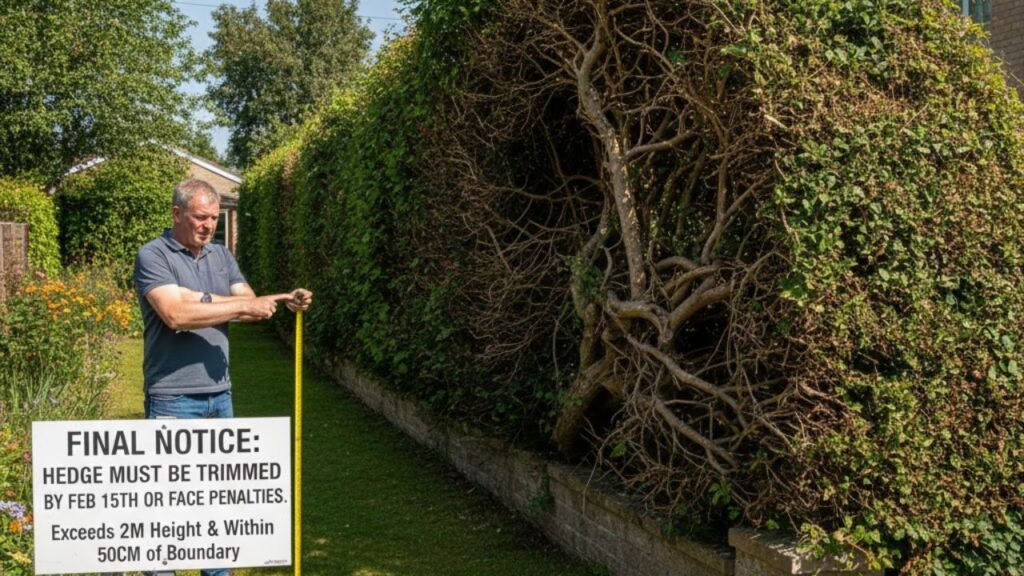
This year feels different. His neighbor arrives holding a printed notice from the town hall: from February 15, any hedge taller than two meters and planted less than 50 centimeters from a boundary must be cut back or face penalties. What once felt like a harmless screen of greenery suddenly looks like a legal risk waiting to explode.
From Quiet Privacy Screen to Source of Tension
Not long ago, dense hedges were simply part of the scenery, an unspoken agreement between neighbors. Too tall? “We’ll deal with it later.” Too close? “It’s always been there.” Then a letter arrives, or a firm comment from next door, and the same hedge that offered privacy begins to feel like a silent accusation.

The rule taking effect on February 15 replaces vague customs with a clear deadline. Any hedge over two meters high and planted within 50 centimeters of a property line can now become a formal issue. Across suburban streets and quiet village lanes, the collective sigh is almost audible.

A Familiar Story Playing Out Across Neighborhoods
In a small residential cul-de-sac, one family planted fast-growing conifers years ago to give their children privacy. At first, the shrubs barely reached shoulder height. Then they surged upward—two meters, then more—pressed tightly against the fence, sometimes only a hand’s width from the legal boundary.
Next door, sunlight slowly disappeared. The neighbor’s garden sank into permanent shade, and his living room felt dim even at midday. For years, he stayed silent to preserve good relations. When news of the new rule spread through the local community, he finally printed the official text and knocked on the door, torn between relief and discomfort.
Why the February 15 Rule Changes Everything
The legal reasoning itself is straightforward. Limits on hedge height and distance from property lines already existed, but they were poorly understood and rarely enforced unless a dispute erupted. With clear thresholds—more than two meters high and less than 50 centimeters from the boundary—and a fixed reference date, the rules become far harder to ignore.
The intention is to reduce conflict, protect light and access, and prevent these slow-growing “green walls” from overwhelming entire neighborhoods. On paper, it sounds simple. In real life, it collides with inherited gardens, long-standing plantings, delicate neighborly balances, and budgets that cannot always stretch to professional pruning.
What to Do Before February 15 Arrives
The first step is practical and unavoidable: measure your hedge properly. Avoid guessing. Use a tape measure, a marked stick, or any reliable tool to check both the exact height and the distance between the base of the hedge and the boundary line.
If branches lean over the fence, focus on the trunk or planting point. That is usually the legal reference, not the overhanging foliage. Write the figures down—something like “2.30 meters high, 35 centimeters from the boundary.” This small action turns a vague concern into a clear situation you can address.
 Daily training after 50 rebuilds chest muscle better than bench press with safer joint positioning
Questions That Often Cause Confusion
Many homeowners assume that if a hedge is on their side, they can do as they wish. Others believe that long-standing plantings are automatically accepted. Once the legal framework applies, neither assumption really holds.
If the hedge stands on your land and exceeds the limits, responsibility for trimming usually falls on you. A neighbor can formally request action and, if necessary, involve authorities. That does not mean they enjoy doing so. These conversations are often awkward, filled with hesitation on both sides.
The Value of Talking Early
The simplest way to avoid escalation is to speak up early. A calm conversation by the fence—“I’ve seen the new rule, my hedge is too high and too close, and I plan to cut it back by a certain date”—can dissolve months of silent tension.
As one local mediator notes, disputes often reach them only when it is already too late. By then, the hedge is just one issue among many unresolved frustrations. Early discussion, prompted by the rule change, could prevent most conflicts from ever becoming formal complaints.
Practical Steps to Take Now
- Measure the height and distance of your hedge accurately.
- Check local regulations with the town hall or property association.
- Schedule pruning and request professional quotes if needed.
- Inform your neighbor of your plan, even briefly.
- If you rent, contact the landlord to clarify responsibilities.
Rethinking Our Living Green Boundaries
The February 15 deadline does more than force a tidy-up. It encourages a broader rethink of how private spaces meet shared ones. A hedge is not just a wall of leaves; it is a living boundary that must balance privacy, light, safety, and coexistence.
Some will take the opportunity to redesign their gardens, replacing towering conifers with mixed, lower plantings and trimming gradually to protect both plants and relationships. Others will reluctantly cut back, watching long-hidden windows reappear across the fence.
Few people read hedge regulations when planting shrubs on a quiet weekend. Choices are made for convenience and privacy, not future disputes. The new rule acts as a reminder that private decisions shape a shared landscape. The law sets the frame; how neighbors navigate it will determine whether streets fill with conflict or quiet cooperation.

Key Points to Remember
- Height and distance matter: hedges over two meters and closer than 50 centimeters must be trimmed.
- Early communication helps avoid formal complaints and legal stress.
- Thoughtful pruning and planting can preserve privacy while staying within the rules.
