On a dull Paris morning, deep inside a quiet defense ministry hallway, a small group of officers study a radar display glowing softly in the dark. Tiny moving points drift across a digital map of Europe, marking aircraft hundreds of kilometers away. There is no engine noise, no spectacle, only calm, precise signals that speak of both power and exposure.
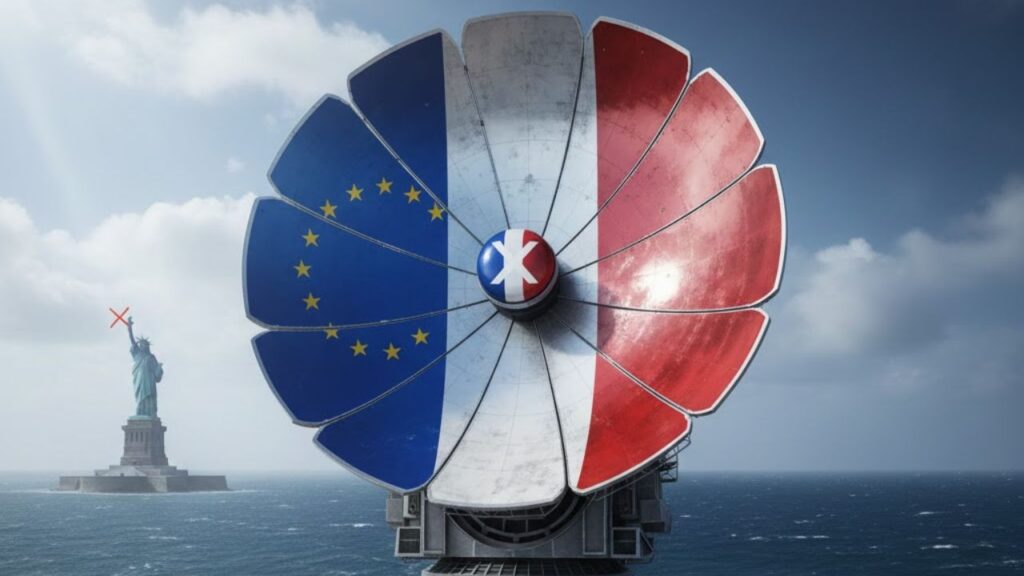
An engineer leans closer, lowering his voice almost instinctively. “With this system, we’ll detect them before they even realize they’re being watched.” Beyond those walls, the city begins its day as usual. Coffee machines hiss, scooters weave through traffic, commuters scroll through headlines. Few realize that France has just committed €1.1 billion to a European-built detection system capable of scanning the sky up to 550 kilometers away.
The purchase is quiet, but its meaning is unmistakably loud.
 Long Hair After 60 Can Pull Features Down - This Specific Length Creates a More Lifted Look
€1.1 Billion and a Message: Europe Looks After Itself
Officially, the decision appears technical: France is investing €1.1 billion in a long-range air defense radar, designed and produced in Europe, with a reach of 550 kilometers. Unofficially, it is a political signal aimed far beyond French borders.

Paris is making its position clear: European security cannot depend indefinitely on the United States. Not after shifting American priorities, not after recent diplomatic shocks, and not while conflict continues on Europe’s eastern edge. The logic is straightforward — if Europe wants strategic weight, it needs its own detection capabilities, not borrowed ones.
This radar represents that shift. Not a dramatic break, but a measured step toward autonomy. A quiet separation, carried out through procurement rather than speeches.
From Borrowed Data to European Eyes
Imagine a patrol aircraft lifting off near the Baltic region, skirting NATO airspace, transponders flicking on and off. For years, Europe has often relied on American satellites and intelligence feeds to fully interpret such movements.
With this new European detection system, the situation changes. A single high-capacity radar stationed on EU territory can track aircraft and missiles across vast distances, analyze unusual paths, and transmit information directly to allied command centers from Paris to Warsaw. This is not a gadget purchase. It is an investment in independence.
One engineer described the shift simply: “We’re moving from borrowed binoculars to our own telescope.” The cost is high, but the ability to see clearly carries its own value.
Why Early Detection Is the Real Currency
The reasoning behind the investment is direct and unsentimental. When the United States is fully engaged in Europe, shared systems and NATO integration create stability. But political winds change, administrations rotate, and attention drifts toward other regions.
Recent conflicts made one reality unavoidable: early warning determines outcomes. When threats are detected late, the price is always higher. France’s radar investment follows this logic — pay now, rely less later. It also delivers a clear message to Washington: cooperation remains welcome, dependence does not.
A Cornerstone of a European Air Shield
Behind its dramatic nickname, the system serves a practical role. France is laying a foundation for what many defense planners envision: a fully European air and missile defense network. The radar is designed to integrate seamlessly, sharing real-time data and supporting multiple layers of defense, from fighter aircraft to ground-based interceptors.
 Cut Hair to Match Face Shape, Not Trends - Stylists Say It Changes Everything About Your Look
The advantage lies in perspective. With a 550-kilometer detection range, threats are identified long before they approach national borders. Altitude changes, testing maneuvers, and unusual trajectories become visible early. Time gained becomes time to decide.
Choosing Complexity Over Comfort
The simpler option would have been familiar American systems — proven, politically convenient, and quick to deploy. Many European states choose this route and feel secure doing so.
France deliberately chose another path. Building within Europe means greater coordination, industrial negotiation, and political debate. It also means defending billion-euro expenditures for systems most citizens will never physically see.
Yet the calculation remains focused on one question: long-term safety. Paris is betting that a European-built detection backbone will provide greater confidence than another layer of external dependence.
A Subtle Shift Away From Washington’s Orbit
Within French defense circles, the mood blends reassurance and strain. Reassurance, because the project reinforces a long-standing doctrine: cooperate with allies, but maintain autonomy. Strain, because each euro spent locally is one step further from American defense industries.
As one senior officer put it privately, “We’re not closing the door on the United States. We’re just choosing not to live in their spare room.”
That mindset translates into concrete actions:
- Redirecting multi-billion-euro contracts from US suppliers to European manufacturers
- Prioritizing shared EU radar and missile initiatives over imported models
- Designing air defense systems that function even when American assets are deployed elsewhere
A Europe That Sees Further and Decides for Itself
This radar is more than hardware. It forces a broader reflection across the continent: what role does Europe want to play decades from now? A region permanently sheltered, or one capable of protecting itself while choosing its alliances freely?
The French answer is debated and imperfect, shaped by budgets, delays, and industrial rivalry. Still, it signals a shift. European engineers will now be first to detect distant threats. European commanders will decide how to respond, which alerts to trigger, and which paths to take.
NATO is not undone by this move. Its balance evolves. The more Europe can see independently, the less it reacts in panic to political changes elsewhere. For many policymakers in Paris, Berlin, and beyond, that confidence is worth a billion-euro radar and every challenge that comes with it.
 Collarbone-Length Hair Is the “Universal Safe Cut” - Stylists Say It Flatters Almost Everyone
| Key point | Detail | Value for the reader |
|---|---|---|
| European strategic shift | France invests €1.1 billion in a 550 km-range radar built in Europe | Helps understand how Europe is reducing dependence on US defense |
| From dependency to autonomy | Data, detection and decisions move from US systems to European hands | Clarifies why “who owns the radar” matters for future security choices |
| Long-term vision | Project anchors a future European air and missile defense architecture | Offers a lens to read coming debates on war, peace, and defense budgets |