
The first time I saw it, I actually laughed.
In a tiny counter-only restaurant in Osaka, a middle‑aged chef in a faded bandana slid a pan onto the stove, cracked an egg… and didn’t reach for a single drop of oil. No butter, no spray, no “olive oil blend for high heat” with the shiny gold label. Just a well‑worn pan, a splash of water, and a quiet confidence that made every ad for premium frying oil feel like a joke.
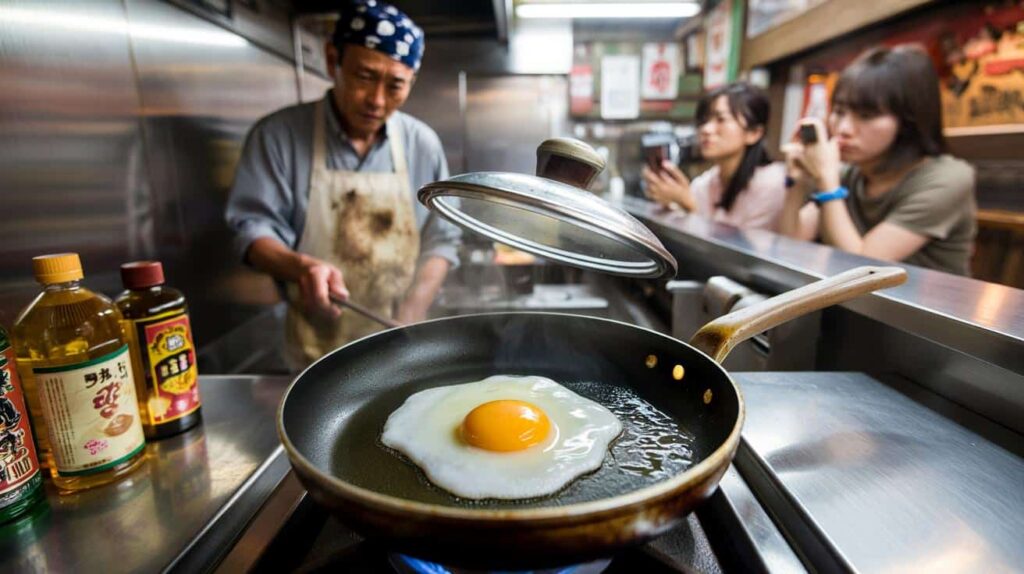
Two minutes later, the egg looked like a commercial.
The yolk sat round and bouncy, the white glossy at the edges, with this almost custardy center.
The couple next to me gasped.
Someone at the back whispered, “So… have we been lied to?”

That question hasn’t left my head since.

The Japanese chef who fries eggs without a single drop of oil
The chef’s name is Sato, and he cooks like someone who has no time for theatrics.
No tweezers, no blowtorches, no special gadgets “as seen on TikTok”. Just a blackened pan, a pot of water, and a heat control that feels almost surgical.
He sets the pan to medium, flicks in a tablespoon of water, and waits for the first tiny bubbles to shiver.
One egg, cracked straight in. No sizzling fireworks.
He drops a lid over the pan and steps away to prepare miso soup, as if nothing magical is happening in front of him.
Three short minutes later, the lid comes off, and the egg slides onto the plate without sticking.
No burnt edges. No grease sheen. Just this gentle, barely steamed look that seems to break every rule you’ve ever read on a bottle of oil.
I watched a tourist from London film the whole scene on their phone like they’d found a kitchen glitch in the Matrix.
Later, in the street, they pulled up a reel showing the same technique: Japanese home cooks “frying” eggs in water, claiming it’s lighter, faster, cleaner.
The comments below were a war zone.
On one side, people who’d tried it and swore they’d never go back to oil. On the other, die‑hard butter fans calling the method “sad”, “joyless”, even “egg abuse”.
We’ve all been there, that moment when your cooking feels judged by strangers who haven’t tasted a single bite.
What struck me wasn’t just the hack itself.
It was how emotional people get when you touch their morning ritual, their pan, their precious bottle of extra‑virgin anything.
On the surface, Sato’s method is ridiculously simple.
Water in a hot pan, egg on top, lid on, wait. The steam cooks the white from above, the gentle heat from below sets the bottom, and the yolk stays runny, almost creamy.
Behind that, there’s a quiet rebellion.
For decades, marketing has sold us the idea that a proper fried egg must bathe in a generous halo of oil or butter to be “real”, “indulgent”, “restaurant‑worthy”.
Brands fight for the place next to your stove with labels like “for perfect frying”, “non‑stick performance”, “high‑heat hero”.
Then a chef in a small Osaka kitchen shows you an egg that looks and tastes incredible, using nothing more than water and patience.
Suddenly, all those glossy bottles start to feel less like a necessity and more like a very well‑crafted story.
How the “water‑fried” egg actually works (and why people are obsessed)
Here’s what Sato really does, step by step, without the mystique.
He takes a good non‑stick or well‑seasoned pan and sets it on medium heat. No rushing. He adds a small splash of water, just enough to lightly coat the bottom, not drown it.
When the first gentle bubbles show, he cracks the egg directly into the pan. The white fans out, half touching the hot metal, half floating in the water.
Then comes the crucial move: he covers the pan with a lid.
Inside, the moisture turns to steam that swirls around the egg.
The bottom cooks in contact with the pan, the top sets under the steam, and the yolk is insulated in this warm little bubble.
The result looks like a cross between a fried egg and a soft‑poached one.
If your first thought is “I tried something like this and it stuck like crazy,” you’re not alone.
Many people fail the first time because they crank the heat too high, drown the egg, or use a scratched‑up pan that would cling to anything.
Sato’s quiet rule is: let heat build, don’t attack it.
He never cooks eggs on screaming‑hot burners. He prefers a stable medium heat that lets the white set slowly without toughening.
And he doesn’t move the egg. No poking, no sliding, no knife at the edges.
There’s another detail people skip: the lid.
Without it, the top is undercooked while the bottom overcooks. With it, steam wraps the egg like a sauna.
Let’s be honest: nobody really does this every single day when they’re late for work.
But the days you do, the egg suddenly tastes like you’ve upgraded your entire kitchen.
When I asked Sato why he cooks his eggs this way, he shrugged, wiped his hands on his apron and said something that stuck with me.

“Oil is a flavor, not a crutch. If your pan and your heat are right, you don’t need it just to stop fear.”
Then he smiled and added that plenty of his customers still ask for butter “for nostalgia, not for function”.
Here’s how his method breaks down in plain terms:
- Less oil on the plate – You’re not soaking the egg, so it feels lighter and leaves you less of that post‑breakfast heaviness.
- More control over texture – Steam is gentler than direct frying, so the white stays tender instead of rubbery.
- Cleaner pan, fewer splatters – No violent sizzling, far fewer stains on your stovetop and your T‑shirt.
- Flavor is optional, not compulsory – You can add butter later on top, as a seasoning, instead of as a slippery bandage.
- Egg taste first – Without a big oil cloud, you actually taste the egg more. Not everyone likes that, but it’s real.
*Once you’ve eaten an egg that tastes like egg and not like the bottom of a greasy pan, it’s hard to forget it.*
Why this “no‑oil egg” is sparking arguments at breakfast tables
What divides people isn’t the physics.
Steam cooking an egg works, and it’s not witchcraft. The split comes from what we expect breakfast to feel like.
For some, a fried egg means browned edges, butter perfume, a little crispy halo around the white.
Take that away, and they feel something essential has been stolen.
For others, especially those counting calories or watching fats, Sato’s version feels like liberation: no sticky pans, no guilt puddle on the plate.
Underneath, there’s a bigger question humming.
Were all those “light cooking oil” campaigns really about taste and technique, or mainly about selling us yet another bottle for an act that sometimes needs… none?
Talk to nutrition‑conscious cooks and they love this method because it dodges a ton of hidden fat without turning breakfast into a punishment.
They’ll tell you they keep oil for when they actually want that flavor: drizzled over tomatoes, whipped into mayo, brushed on toast. Not automatically under every egg.
Talk to restaurant chefs and the picture shifts.
They remind you that diners often “eat with their ears”: that first aggressive sizzle hitting the pan tells your brain “this is indulgent”. No sizzle, no show.
So if you try Sato’s way at home and feel something’s missing, you’re not wrong.
You’re bumping into your own idea of what pleasure should sound and smell like at 8:30 a.m.
That doesn’t make the method better or worse. Just more honest about what’s habit and what’s actually necessary.
The most interesting reactions come from people who land somewhere in the messy middle.
They test the water‑fried egg, love how soft the white is, then miss the nutty hit of butter.
Those people often end up with a hybrid routine.
They heat a tiny knob of butter, then add that same spoonful of water and a lid. Or they cook the egg Sato‑style and finish with a quick drizzle of soy sauce and sesame oil on top, not under.
The oil stops being the default base and becomes a conscious choice.
And that might be the quiet revolution here.
Not a war on fat, not a worship of hacks, just a small shift from “I need this or my egg will fail” to “I’ll use this because I actually want its taste”.
Once you’ve felt that difference in your own pan, clickbait headlines about “miracle frying oils” start to look a lot thinner.
Walk away from Sato’s counter and you don’t just think about eggs.
You start replaying all the little rituals you’ve outsourced to packaging and slogans: the special pan for pancakes, the only‑for‑stir‑fry oil, the “perfect breakfast” spread that looks nothing like your actual kitchen.
Maybe you’ll try his method once, curse at a slightly stuck egg, and go straight back to your butter.
Maybe you’ll nail it on the second try and quietly stop buying that third bottle of “high‑heat frying blend” sitting half‑used at the back of your cupboard.
The point isn’t to turn every breakfast into a health sermon.
It’s to notice what you’re doing and why. Is the oil there because it adds something you love, or because you’re scared the egg will betray you without it?
Next time you crack an egg, you might find yourself hesitating over the bottle for a second longer.
Not to follow a trend, not to please a Japanese chef you’ll never meet, but to decide, in that small moment, what flavor you actually want your morning to stand on.

| Key point | Detail | Value for the reader |
|---|---|---|
| Water‑fried method | Use a splash of water, medium heat and a lid to cook the egg by steam and gentle contact | Offers a lighter, tender egg without relying on large amounts of frying oil |
| Role of oil | Oil becomes a chosen flavor added on top, not a mandatory base under every egg | Helps reduce unnecessary fats while keeping control over taste and texture |
| Mindset shift | Questions marketing‑driven habits around “essential” frying products | Encourages more intentional, confident home cooking with what you already have |
FAQ:
- Does the egg really not stick without oil?With a decent non‑stick or well‑seasoned pan, stable medium heat and a lid, sticking is minimal to none; on old scratched pans, it’s more likely to cling.
- How much water should I use for one egg?A thin layer, about one tablespoon, is usually enough to coat the bottom without fully submerging the egg white.
- How long does it take to cook?Once the water is gently bubbling, the egg typically needs 2 to 4 minutes with the lid on, depending on how runny you like the yolk.
- Can I still get crispy edges with this method?You’ll get softer, more tender edges; if you really want crisp, you can finish for 30 seconds on slightly higher heat with a tiny bit of fat.
- Is this healthier than traditional frying in oil or butter?It usually means less added fat and fewer calories, especially if you don’t replace the missing oil with heavy toppings afterward.
