Across Europe, households are still dealing with the aftershocks of sharp fuel price increases, even though costs have eased since their 2022 highs. Drivers are cutting back on non-essential trips and searching for savings, while a quiet, data-driven strategy promoted by Germany’s largest motorists’ organisation is beginning to catch attention beyond its borders.
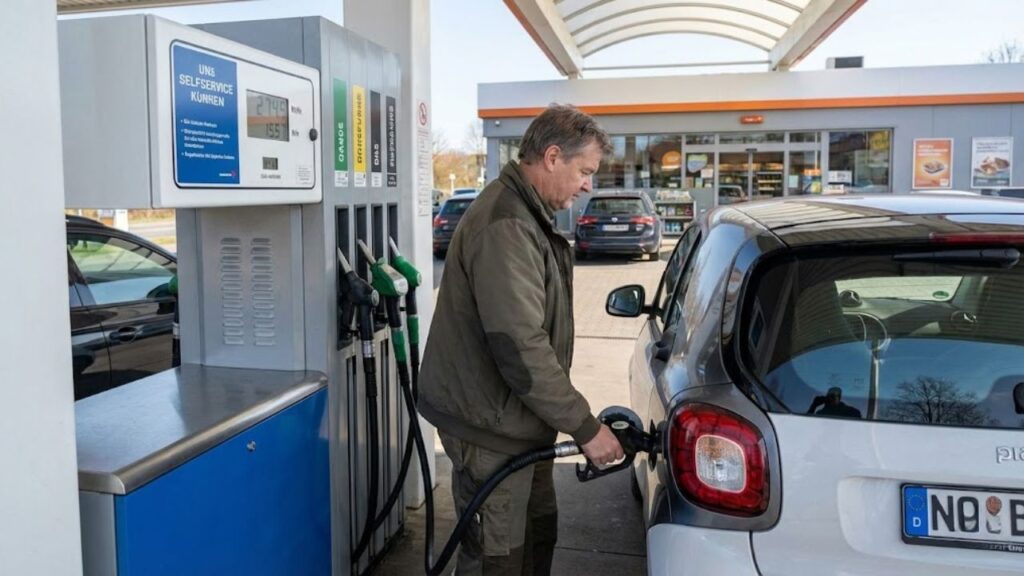
Why German drivers are changing how they refuel
In Germany, the ADAC motoring association reviewed thousands of fuel receipts and price reports. The results were clear: motorway service stations consistently charge much higher prices than fuel stations located just a few kilometres away from the main road.
On certain routes, the difference between a motorway pump and a nearby off-route station can reach around €0.40 per litre. The reason is straightforward. When drivers are already on the motorway with a low fuel warning, their choices are limited. Service stations understand that many motorists will pay extra to avoid detours or delays, allowing these locations to maintain prices well above the wider market.

The German approach: planning before you pump
ADAC’s advice is direct: stop treating motorway stations as the default option and start planning refuelling as part of the journey. This idea, often referred to as filling up “the German way,” is less about clever tricks and more about shifting habits. Instead of reacting at the last minute, drivers schedule fuel stops in advance.

Step one: avoid motorway stations when possible
ADAC recommends leaving the motorway to refuel, especially during long journeys. Stations in towns, suburbs, and industrial areas usually face strong competition, which helps keep prices lower than those at enclosed motorway services operating under exclusive contracts.
- Motorway services: limited competition, captive customers, higher margins.
- Urban or retail areas: multiple brands nearby, frequent price competition.
- Industrial zones: high-volume users such as delivery fleets, pushing prices down.
For a family car with a 50-litre tank, even a €0.25 per litre difference adds up to €12.50 saved in one stop. Repeated across monthly driving and holiday travel, those savings can make a noticeable difference to household spending.
Step two: let fuel apps do the work
Germany, France, the UK, and many other countries now offer real-time or near-real-time fuel price apps, supported by official databases and user reports. These tools have turned fuel buying into a comparison exercise, where informed drivers can choose cheaper options with minimal effort.
Often, checking an app just minutes before departure and making a small route adjustment is enough to cut costs.
- Check prices at stations located 5–10 km off your route.
- Select one or two low-cost options with easy access and suitable opening hours.
- Save them in your navigation system in advance.
- Refuel at the chosen station instead of waiting for the motorway warning light.
Timing matters: choosing the right day to refuel
ADAC and other motoring groups have identified another consistent trend: fuel prices often fluctuate during the week. While patterns differ by country and brand, early weekdays are usually calmer.
Refuelling on Monday or Tuesday often costs less than filling up on a busy Friday or Saturday. Retailers respond to demand, and weekends bring more long trips, holiday traffic, and last-minute refuelling. When stations are crowded, there is less pressure to keep prices low. During quieter periods, margins are often trimmed to attract drivers.
For commuters, this insight can become a routine: monitor fuel levels and aim to refuel earlier in the week instead of waiting for the weekend rush.
Does refuelling early in the morning help?
German advice sometimes includes refuelling during the coolest part of the day. At lower temperatures, fuel is slightly denser, meaning more energy per measured litre.

While fuel does expand when warm and contract when cool, most modern underground storage tanks are insulated, limiting the effect. On extremely hot days or at smaller rural stations, temperature differences may have some influence, but the impact is modest.
Early-morning refuelling can offer a small additional benefit, but it should not be the main focus. The biggest savings still come from choosing the right station and timing refuelling across the week.
What the savings look like in practice
- Motorway service station: €1.95 per litre × 50 L = €97.50
- Off-motorway town station: €1.65 per litre × 50 L = €82.50
- Difference per full tank: €15 saved
Filling up twice a month on long trips could save €30 monthly. Over a year, that can exceed €350, simply by leaving the motorway for a few minutes.
Habits that strengthen the German method
The strategy becomes even more effective when paired with basic driving habits that reduce fuel use. Paying less per litre and using fewer litres compounds the benefit.
- Smoother driving: gentle acceleration and early gear changes reduce consumption.
- Correct tyre pressure: underinflated tyres increase resistance and fuel use.
- Moderate speed: lowering motorway speed can noticeably cut fuel burn.
- Lighter loads: roof boxes and heavy cargo force the engine to work harder.
Even small reductions in fuel consumption multiply the gains from cheaper refuelling stops, delivering savings both at the pump and on the road.
Limits, trade-offs, and practical considerations
There are boundaries to this approach. Leaving the motorway takes time and requires planning to avoid running on very low fuel levels. The method only works when stops are planned early, not when drivers push their luck to save a few cents.
In remote areas, long detours may cancel out savings, while electric or hybrid drivers must also consider charging needs. The sensible balance is to weigh cost savings against time, safety, and convenience. For some families, small savings per trip are worth a short detour; for others, simplicity matters more.
Key concepts behind fuel price differences
A few economic factors explain why prices vary so widely:
- Price sensitivity: motorway drivers are less responsive to prices, allowing higher charges.
- Competition: closely packed stations must undercut rivals to attract customers.
- Seasonal demand: holidays and peak travel periods often push prices upward.
Understanding these forces helps explain why the same litre of fuel can cost far more depending on where and when it is bought. The German-style approach does not alter global markets, but it gives drivers control over their own refuelling decisions.