Arm flab after 55 is rarely caused by weak muscles alone. It develops when shoulder stability declines, the upper back stops supporting posture, and the arms move through daily life without consistent tension. Even regular workouts can miss the root problem when exercises rely on momentum or seated support.
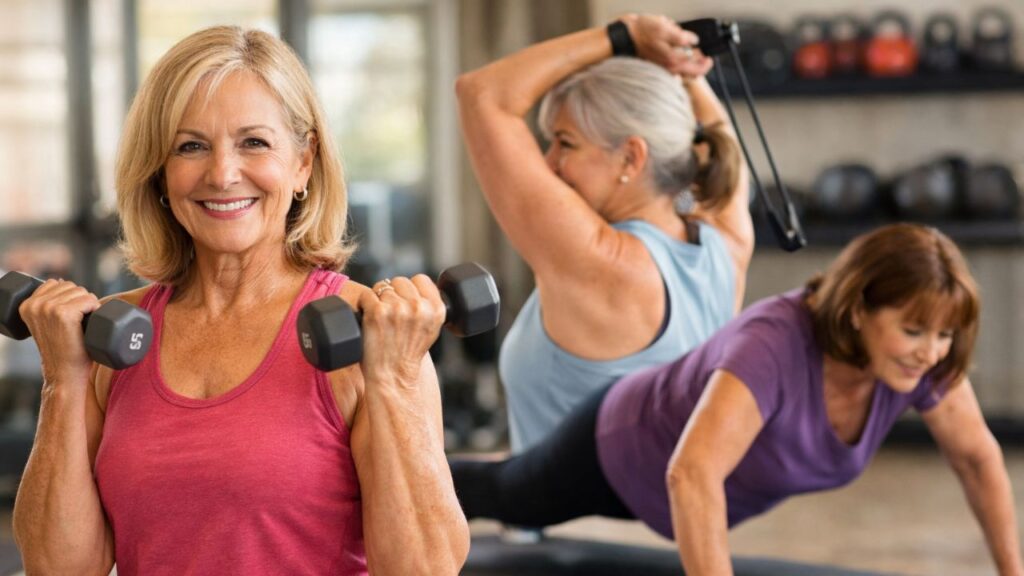
To truly tighten the arms, the body needs frequent signals that keep muscles active while maintaining an upright position. Light resistance, slow movement, and posture-focused exercises outperform heavy lifting because they extend time under tension without stressing the joints. When the arms work in sync with the upper back and core, visible tone returns more quickly.
These four daily exercises target the triceps, shoulders, and upper back while reinforcing control and posture. With consistency, they restore firmness by retraining how the arms support movement throughout the day, not just during workouts.
 What does greeting someone without getting up from your chair mean, according to psychology?
Six Chair-Based Movements That Build Leg Strength Better Than Squats After 65
Standing Triceps Push-Back
This exercise directly targets the triceps while keeping the shoulders stable and the torso upright. Many arm movements fail when the shoulders drift forward, shifting tension away from the back of the arms. The push-back motion keeps the elbows close to the body, ensuring the triceps remain engaged through the full range.

Slow, controlled repetitions increase time under tension, which aging muscles respond to better than heavy resistance. Performing the movement standing adds a stabilizing challenge that speeds up visible tightening.
How to Do It
- Stand tall holding bands or light dumbbells
- Bend elbows with hands close to the ribs
- Press arms straight back slowly while hinging slightly forward
- Return to the start with full control
A Five-Minute Standing Routine That Reduces Belly Overhang More Effectively Than Ab Workouts After 55
Standing Arm Lift Hold
Static holds tighten arm tissue by demanding continuous muscle engagement. This lift hold challenges the shoulders and upper arms while the upper back maintains posture. Without movement, weak areas reveal themselves instantly, forcing the muscles to activate.
Holding the arms just below shoulder height creates maximum tension with minimal joint stress. This sustained effort improves firmness and endurance faster than high-repetition lifting.

How to Do It
- Stand tall holding light weights
- Lift arms slightly forward or out to the sides
- Hold the position with elbows softly bent
- Stop the hold before posture breaks down
If You Can Perform This Number of Chair Dips After 55, Your Upper Body Strength Is Exceptional
Upright Row to Squeeze
This movement tightens the upper arms while activating the upper back, a critical combination for arm tone. Pulling upward with control and finishing with a squeeze shifts emphasis away from the wrists and into the shoulders and arms. The final squeeze reinforces posture and keeps tension where it belongs.
Practicing this exercise daily retrains how the arms function during pulling and lifting tasks, improving firmness without bulky loading.
How to Do It
- Stand upright holding bands or dumbbells
- Pull hands upward toward the chest with control
- Squeeze the shoulders briefly at the top
- Lower slowly without swinging
Five Daily Movements That Restore Muscle Faster Than Gym Machines After 45
Standing Arm Extension Reach
This final exercise lengthens and tightens the arms at the same time. Reaching while extending forces the triceps to stay active as the shoulders stabilize the motion. The upright stance increases coordination demands, reinforcing functional arm strength.
This movement improves how the arms maintain tension during daily reaching, lifting, and carrying, a key factor in preserving long-term arm firmness after 55.