Most people only notice the problem when their “fresh” laundry starts to smell musty, or black spots appear along the rubber seal. By then, simple wipes with a cloth or a splash of vinegar rarely change much. A different, more targeted method works far better – and protects the machine at the same time.
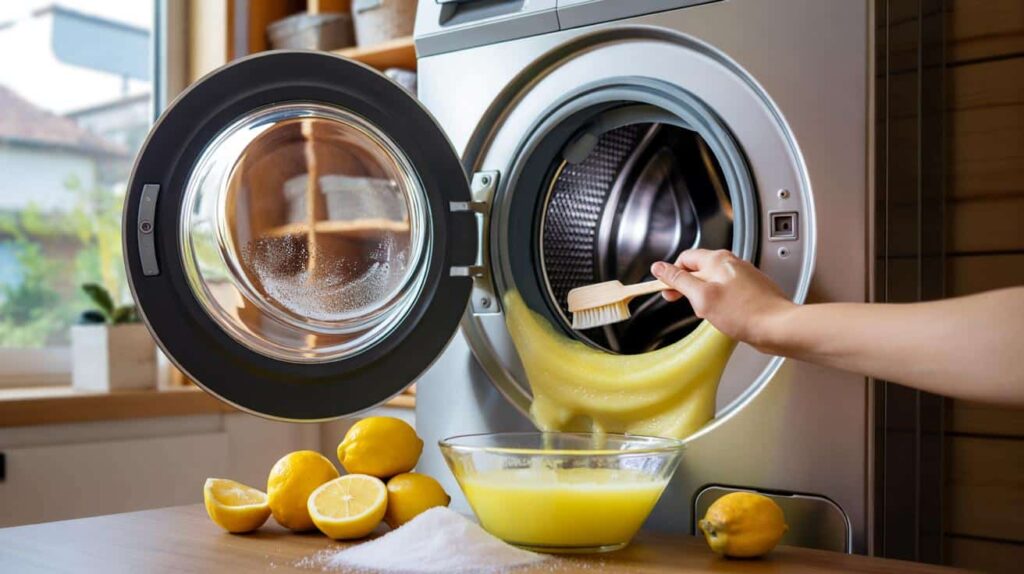
Why the washing machine seal gets so disgusting
The flexible rubber seal around the door is there to stop water leaking out during the wash. It also happens to be the perfect trap for moisture, detergent residue and lint.
Every time a cycle ends, warm water evaporates and condenses in that hidden fold of rubber. Tiny fibres, hair and leftover detergent stay behind. Over time, that mix becomes fertile ground for bacteria and mould.

When the rubber seal is dirty, you’re effectively washing clothes in a contaminated environment, even if the drum looks spotless.

Once mould takes hold, you’ll usually notice:
- Black or dark green spots all around the inner folds of the seal
- A sour, stale or “wet dog” smell on freshly washed laundry
- Water collecting in the gasket that never seems to dry
- The door struggling to close properly due to built-up grime
Leaving it like this doesn’t just smell bad. It can shorten the life of the seal, affect the machine’s performance and, in extreme cases, lead to leaks.
Why vinegar and bicarbonate aren’t the miracle fixes
Social media is full of advice telling you to pour vinegar, bicarbonate of soda or both into the machine to solve everything. They can help with limescale or odours inside the drum, but they’re not ideal for the door seal.
Undiluted vinegar is acidic enough to slowly attack certain rubber compounds and metal parts if used heavily and often. Bicarbonate is abrasive and can scratch delicate surfaces when used as a scrub.
Harsh home-made mixes can wear out the very parts you’re trying to protect, especially if you scrub vigorously or repeat the process too often.
That’s why many appliance engineers now suggest a more targeted, gentler method for the gasket itself: a simple mixture of lemon juice and fine salt.
The lemon and salt method that really works
Lemon contains natural citric acid, which helps disinfect and cut through soap scum. Fine salt acts as a gentle mechanical scrub that loosens stubborn mould stains without gouging the rubber.
Step-by-step: how to clean the rubber seal safely
Before you start, unplug the machine or switch it off at the wall. Make sure the drum is cool, and work only with the machine off and empty.
| Step | What to do | Why it matters |
|---|---|---|
| 1 | Juice two large lemons into a bowl. | Provides enough liquid to work all around the seal. |
| 2 | Add two tablespoons of fine salt and mix. | Creates a mild scrub that clings to the rubber. |
| 3 | Pull back the rubber gently to expose hidden folds. | Most mould hides out of sight in the creases. |
| 4 | Use a sponge or soft brush to apply the mixture generously. | Ensures the acid and salt reach every stained patch. |
| 5 | Leave it to sit for several minutes. | Gives time for the citric acid to break down residue. |
| 6 | Wipe away with a damp cloth until the seal looks clean. | Removes loosened mould, soap and salt grains. |
| 7 | Dry thoroughly with a separate towel or microfibre cloth. | Prevents new moisture from restarting mould growth. |
The key is not just cleaning, but drying the rubber completely at the end. Moisture left behind is an open invitation for new mould.
If your seal is heavily stained, you may need to repeat the process once or twice. For very tight crevices, an old soft-bristled toothbrush works better than a sponge.

Simple habits that keep the seal clean for longer
Deep cleaning doesn’t need to become a weekly chore. A few small habits reduce the need for heavy scrubbing and keep that lemon-and-salt session rare.
After every wash
- Leave the door slightly open so air can circulate and the seal can dry.
- Wipe the visible part of the rubber quickly with a dry cloth.
- Remove any coins, tissues or hair trapped in the fold.
These two minutes after a cycle reduce trapped moisture drastically. Mould thrives on damp, not on dry rubber.
Once a month maintenance
- Run an empty hot cycle (60°C or above) with a washing machine cleaner or a small amount of suitable detergent.
- Clean the detergent drawer and filter, where sludge and bacteria also build up.
- Inspect the seal for new spots and tackle them before they spread.
A washing machine is not self-cleaning. Treating it like any other household appliance – with scheduled care – prolongs its life and keeps clothes genuinely fresh.
When the seal may need replacing
Cleaning has limits. If the rubber is cracked, warped or badly discoloured, no homemade solution can restore its structure. In that case, mould can creep deep into the material and keep coming back.
Signs that a new gasket might be necessary include persistent leaks around the door, strong odours even after cleaning, or sections of rubber that feel sticky or brittle. Many manufacturers sell replacement seals, and a trained technician can usually swap them in under an hour.
What “mould” really means for your health and laundry
Mould on a seal is rarely dangerous for a healthy adult, but it isn’t harmless either. Spores can cling to fabrics, especially towels and sportswear, and aggravate allergies or asthma in sensitive people.
That musty smell on laundry is a sign that organic residues are still present. These residues can interact with sweat and body oils, causing odours to reappear quickly even on freshly washed clothes.
Cleaning the rubber isn’t just about appearance; it also helps reduce allergens and keeps textiles from smelling stale before you even wear them.
Combining this trick with smarter washing habits
The lemon and salt mixture works best when combined with a few changes in everyday washing habits. Using too much detergent, for example, leaves sticky residue that feeds mould and clogs the gasket.
A practical rule of thumb: if your detergent regularly foams excessively or leaves a strong scent after drying, you are probably using too much. Modern high-efficiency machines need less product than older models, particularly with soft water.
Low-temperature cycles are another factor. Washing at 30°C protects fabrics and saves energy, but it also means grease and bacterial films are not always broken down. Alternating low-temperature washes with an occasional hot cycle helps keep the interior cleaner, including the seal.
For households with pets, children or frequent sports gear, these points matter even more. Fur, sand and mud accumulate around the gasket very quickly. A quick wipe after those heavy loads, plus a monthly lemon-and-salt clean, keeps the machine from turning into a hidden biofilm factory.