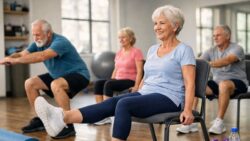
Hip strength is one of the most overlooked elements of aging well. As a personal trainer and director of a fitness education company, I’ve spent nearly four decades helping older adults stay active. One consistent pattern I see is how much people underestimate the importance of hip mobility and strength. Improving both delivers major benefits as we get older.
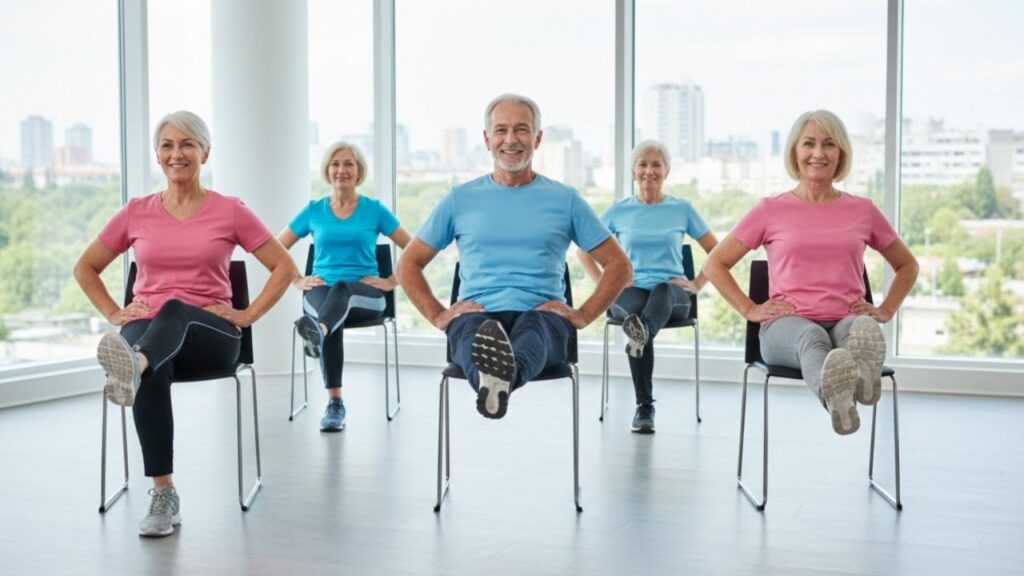
The good news is that you don’t need a gym, equipment, or even to stand up. This simple 8-minute chair routine targets the muscles that weaken most with age, and you can start it right at home.
How Weak Hips Quietly Limit Everyday Movement
Throughout my career, the same hip issues appear again and again. Hips gradually become tight, weak, and restricted, often without people noticing until daily tasks become difficult.
 Daily exercises for women over 55 tighten arm flab faster and improve shoulder definition safely
Getting in and out of a car starts to feel awkward. Instead of stepping out naturally, both legs move together. Putting on socks or shoes becomes a challenge, often requiring sitting and lifting one leg with your hands. Climbing stairs feels harder—not only because of the knees, but because the hips no longer generate enough power.

This happens due to three issues occurring at the same time. First, the front hip muscles shorten from prolonged sitting. Second, the glute muscles weaken because they are underused. Third, the small muscles responsible for hip rotation lose both strength and flexibility.
Together, these changes create a chain reaction. Tight hip flexors pull the pelvis forward, placing stress on the lower back. Weak glutes force other muscles to compensate. Limited rotation makes turning, stepping sideways, and changing direction more difficult.
Walking also changes. Stride length shortens because the hips cannot extend properly, leading to more steps over the same distance. Balance suffers as the hips lose their ability to stabilise the body.
Many people assume this is normal aging. It isn’t. While aging brings changes, most hip problems stem from lack of movement, not unavoidable decline. Hips are designed to move in all directions. When those movements stop, function is lost.
Seated Knee Lifts for Front Hip Strength
This movement directly strengthens the hip flexor muscles while engaging the core. Performing it seated removes balance concerns and allows full focus on controlled hip movement.
Muscles trained: Hip flexors, core
How to perform
- Sit near the front of the chair with feet flat and hip-width apart.
- Keep your back upright, as if lifted from the crown of your head.
- Hold the sides of the chair lightly for balance.
- Slowly lift one knee toward your chest.
- Pause for two seconds, then lower with control.
- Alternate legs.
Common errors to avoid
- Leaning backward during the lift.
- Moving too quickly and using momentum.
- Gripping the chair tightly for assistance.
Recommended volume: 20 reps per leg (about 2 minutes)
Seated Leg Pushes for Side-to-Side Stability
This exercise strengthens the outer hips and glutes, which are essential for lateral stability. These muscles help prevent swaying while walking and support safe side steps.
Muscles trained: Hip abductors, glutes
How to perform
- Sit upright with feet together and knees bent.
- Place hands beside your hips on the chair.
- Move one knee outward while keeping the foot grounded.
- Hold for two seconds, then return to centre.
- Switch sides.
Common errors to avoid
- Leaning the torso or tilting the hips.
- Lifting the foot off the floor.
- Rushing the movement.
Recommended volume: 15 reps per side (about 2 minutes)
Seated Hip Press Backs to Reactivate Glutes
This movement reawakens the glute muscles and retrains backward hip motion essential for walking, standing, and stair climbing.
Muscles trained: Glutes, hip extensors
How to perform
- Sit near the front of the chair with feet flat.
- Keep your back tall and hands resting on your thighs.
- Lift one foot slightly and press the leg backward.
- Squeeze the glutes, hold briefly, then return.
- Alternate legs.
Common errors to avoid
- Arching the lower back to increase range.
- Leaning forward.
- Feeling the movement in the back instead of the glutes.
Recommended volume: 15 reps per leg (about 2 minutes)
Seated Hip Rotations to Restore Turning Ability
This exercise restores hip rotation, which is essential for smooth turning, getting in and out of cars, and stepping in multiple directions.
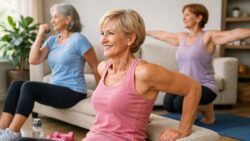
Muscles trained: Internal and external hip rotators
How to perform
- Sit upright and lift one foot slightly off the floor.
- Rotate the knee inward, then outward.
- Keep the movement small and controlled.
- Complete the reps, then switch legs.
Common errors to avoid
- Moving from the knee instead of the hip.
- Forcing range of motion.
- Rushing through repetitions.
Recommended volume: 10 rotations each direction per leg (about 1.5 minutes)
Seated Hip Circles for Full-Range Mobility
This movement blends all hip actions into one smooth pattern and highlights areas of stiffness or restriction.
Muscles trained: All hip muscles
How to perform
- Sit upright and lift one foot off the floor.
- Move the knee in a controlled circular motion.
- Complete circles in both directions.
- Switch legs.
Common errors to avoid
- Making overly large, uncontrolled circles.
- Allowing one hip to lift.
- Ignoring stiff areas rather than moving gently through them.
Recommended volume: 5 circles each direction per leg (about 30 seconds)
When Medical Advice Is Needed First
If you have had a hip replacement, consult your doctor before starting. Certain movements may not align with your recovery plan.
Anyone with a recent hip injury or worsening hip pain should be assessed by a professional. These exercises are designed for general stiffness and weakness, not acute injury.
Those with severe hip osteoarthritis may benefit from modifications and should seek guidance. The same applies to individuals with balance issues, vertigo, bleeding disorders, or pelvic and lower-back conditions.
How to Choose the Right Chair
Select a stable, firm chair without wheels or cushioning. A dining chair works best. When seated, your feet should rest flat with knees near a 90-degree angle.
If needed, adjust foot height with a book or step. Sit toward the front edge, staying upright without leaning on the backrest.
No equipment is required. Your body weight provides enough resistance. Ensure there is enough space around the chair to move your legs freely.
What Improvements to Expect After 4–6 Weeks
Exercises will start to feel easier within the first week as movement becomes smoother. By two weeks, everyday tasks like standing up and putting on shoes require less effort.
After four weeks of consistent practice, walking feels more fluid, stride length increases, and turning becomes easier. By six weeks, others may notice how smoothly you move.
Many people regain 20–30 degrees of hip rotation, which significantly improves daily comfort. Hip-related discomfort often decreases as muscles resume their proper roles.
These exercises won’t restore the hips of your 30s, but they will recover lost function and support lasting improvements. Consistency matters most. Eight minutes, three to four times weekly, creates meaningful change over time.