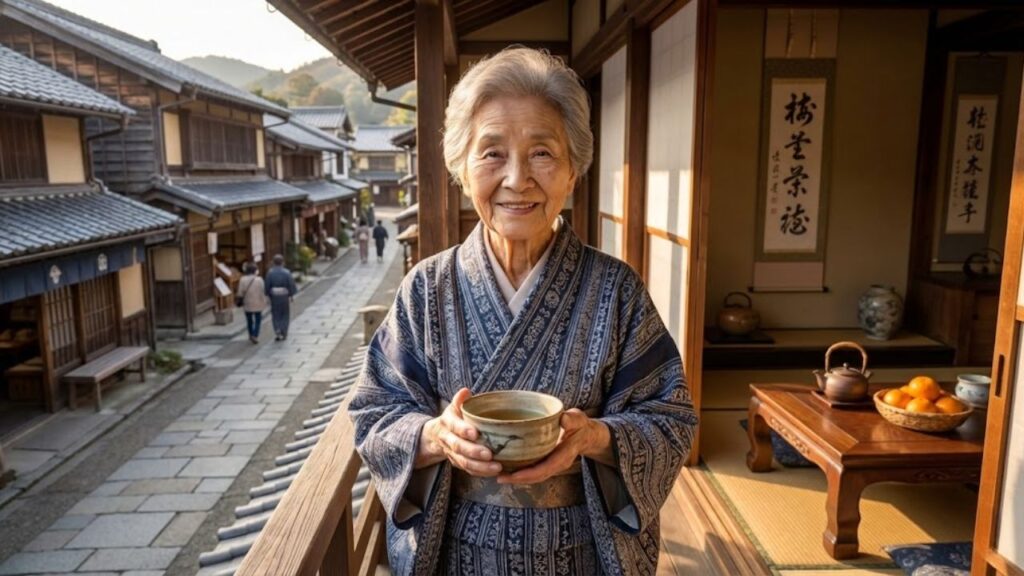
Every morning at 7:02 sharp, Anna opens her balcony door and greets the sky before acknowledging any person. In her quiet seaside town, the air carries a sharp chill, even in summer, and her knees creak like worn wooden steps. She steps outside anyway. One hand grips the railing, the other steadies a chipped porcelain cup filled with black coffee. She inhales deeply three times, slow and loud, as if announcing she is still here. Around her, neighbors hurry off, cars glide past, and a delivery driver curses at a blocked street. Life moves fast.
Living Alone, On Her Own Terms
She lives by herself, tends her plants, cooks her own meals, and manages her bills without help. The moment nursing homes come up, her jaw stiffens and her blue eyes sharpen.
“I refuse to end up in care,” she says, and there is no doubt she means it.
The Daily Discipline That Preserves Her Independence
When I first met Anna, she answered the door herself. Her steps were slow but her posture upright, wrapped in a lemon-colored cardigan. No walker. No caregiver. Just a small woman who lived through two world wars and still ties her own shoes. Her apartment smelled of toasted bread and Marseille soap, the kind once tucked into linen drawers.

On the table lay a notebook filled with sketches and figures. She called it her “lifeline book.” Inside, she notes her walks, meals, calls, and naps. Not obsessively, but as a quiet promise to her future self.
“I don’t want strangers deciding when I sleep,” she told me, closing the notebook.
A Small World Walked With Purpose
On paper, her life seems simple. A survivor’s pension. A third-floor apartment without an elevator. A grocery store three streets away. Her daily world stretches barely a kilometer. Yet she moves through it like a ruler of her own realm.
Nearly every day, she follows the same route: the bakery, the post office, the bench beneath the chestnut tree, then home by the longer path “to keep the hips honest.” Once a week, she takes a taxi to the market, where the fishmonger already knows to prepare her cod “for one little old lady who eats properly.”
When her doctor suggested a walker to prevent falls, she replied, “I’ll slow down, not stop.” And she did.
Consistency Over Miracles, Every Time
Her geriatrician, a calm man in his fifties, showed me her file with a smile that mixed amazement and concern. Blood pressure of someone decades younger. A resting pulse shaped by lifelong movement. Mild arthritis, slight hearing loss, almost no medication.
What impressed him most wasn’t luck. It was consistency. “She never exercised formally,” he said, “but she never stopped moving. She never dieted, but she always cooked. She never meditated, yet her routines are so steady they protect her mind.”
We love searching for secrets: miracle drinks, rare genes, exotic powders. Anna quietly proves that ordinary habits repeated faithfully outlast dramatic efforts. One walk. One meal. One conversation. Repeated over decades.
The Quiet Rebellions That Keep Her Free
Ask Anna about health hacks and she laughs, as if offered a social-media trend. There are no supplements, no elaborate routines. Her approach is simple and demanding: decide once, repeat daily.
She follows three non-negotiables: move the body, eat simply, speak to someone. That’s all. It sounds easy until you try to do it every day.
 Goodbye Hair Dye for Grey Hair: The Conditioner Add-In That Gradually Restores Natural Colour
She eats at set times, always at the table, never in front of a screen. She sleeps with the curtains slightly open so daylight pulls her awake. Heavy items stay on low shelves, not because she feels old, but because she wants her arms “for hugging, not grabbing falling pans.”
Listening to her makes our modern habits feel fragile. Gym memberships unused. Cookbooks untouched. Promises postponed until Monday and forgotten by Wednesday.
Anna watches younger people complain of constant exhaustion and quietly counts the basics on her fingers: no proper meals, no real walks, no real rest. She isn’t judging. She’s confused.
Advice That Feels Too Simple to Ignore
Her guidance is almost uncomfortable in its simplicity: choose one habit that fits your real life and guard it fiercely. A short walk after dinner. Cooking one vegetable a day. Calling one person every Friday. Your independence at 80 is being shaped by what you repeat at 40.
Why She Fears Care More Than Aging
At one point, our conversation turned to nursing homes. Anna listened, fingers tracing her cup, then spoke.
“I know what disappears first,” she said. “Not your belongings. Your choices. They decide when you wake, eat, bathe. I’m not luggage to store. As long as my mind works, I’ll protect my keys.”
She slid a paper toward me, listing the habits she returns to when life feels unsteady:
- Get fully dressed every day, even if no one visits.
- Open a window before turning on a screen.
- Walk after breakfast and lunch, even if it’s just the hallway.
- Eat something grown from the ground at every meal.
- Call someone before 5 p.m., never “tomorrow.”
She doesn’t follow this perfectly. But she returns to it quickly, and that return is what protects her.
What a Century of Living Quietly Teaches Us
Sitting across from a 102-year-old who still pays her own bills is unsettling. It challenges our excuses. The days we skip a short walk. The nights we eat standing at the sink because effort feels heavy.
Anna isn’t flawless. She complains about her hip, misplaces her keys, sometimes naps through phone calls. She has known grief, boredom, and endless winters. Still, her long life is threaded with one steady pattern: defending small freedoms before they vanish.
She doesn’t speak of anti-aging. She speaks of keeping her mailbox, her balcony, and the right to decide when the light goes off.
What Her Habits Reveal
- Daily movement over intense exercise: short walks after meals, slow stairs, no long sitting.
- Simple food at regular times: home cooking, vegetables each meal, minimal snacking.
- Social contact as essential: one conversation daily within a small local circle.
Together, these choices show a realistic, sustainable path to preserving independence without extremes.