
The woman ahead of me at the market glared at the vegetable stall as if it had personally offended her. On one side stood a neat stack of green cabbages. In the center, broccoli crowns rose like miniature trees. On the other, a pale heap of cauliflower sat quietly. She paused, let out a tired sigh, and finally picked up a plastic-wrapped tray labeled mixed vegetables. The fresh piles remained untouched, like shy guests waiting to be noticed.
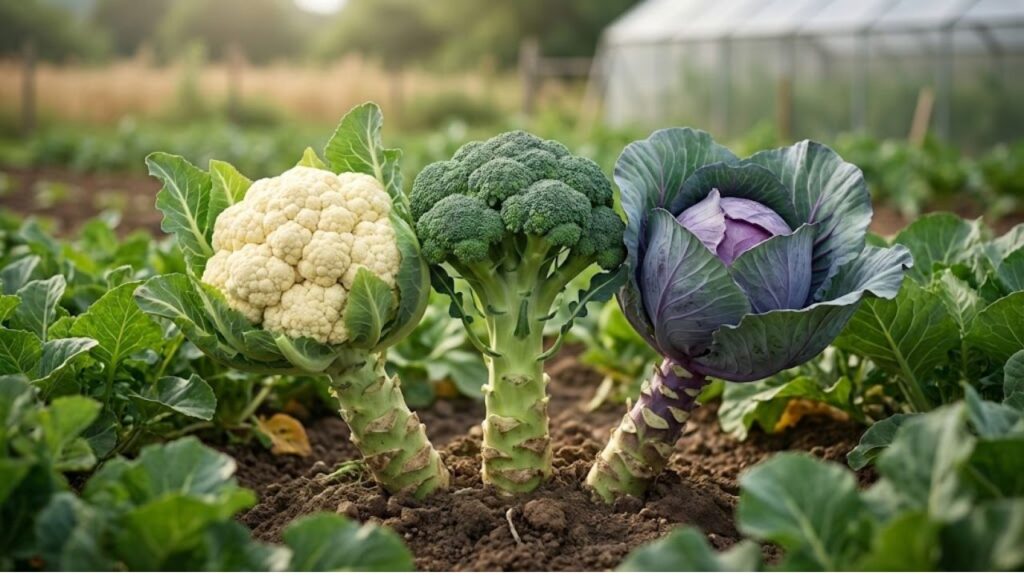
The vendor leaned closer and whispered, “People think these are different, but they’re really the same plant.” He shrugged, sharing a secret most shoppers never hear.
That thought lingered with me all day. The same plant? Really?

They Look Different, But Share One Origin
At first glance, your mind resists the idea. Cabbage forms a dense, layered ball. Broccoli resembles a tiny forest. Cauliflower looks like a pale brain perched on a stem. Everything about them suggests separate vegetables.
 Storm as city fines gardener for feeding stray cats while neighbors applaud booming rat population
Yet all three come from the same species: Brassica oleracea. Long ago, humans took a hardy wild plant growing along European coastlines and shaped it over centuries. Like relatives raised in different places, they share identical roots but developed completely different appearances.
Once you know this, a trip to the supermarket starts to feel less like shopping and more like a quiet family gathering.
How Farmers Gave One Plant Many Forms
Imagine a rocky shoreline hundreds of years ago. Farmers noticed that some wild plants produced thicker leaves, others larger flower buds, and some formed compact heads. Season after season, they saved seeds from the most unusual plants.
Those who favored tight leaves gradually created what we now call cabbage. Others focused on large flower clusters, paving the way for broccoli. Elsewhere, farmers selected pale, dense flower masses that eventually became cauliflower.
There were no laboratories or machines involved. Just patience, observation, and the simple thought, “This one is different.”
The Science Behind the Shape-Shifting
Behind everyday cooking debates lies a straightforward biological fact. Brassica oleracea is remarkably adaptable. Its genes allow dramatic changes in form depending on which traits people encourage over time.
Select larger leaves and you move toward kale and cabbage. Focus on flower buds and you get broccoli, cauliflower, and Romanesco. Favor swollen stems and kohlrabi appears.
As years passed, these variations earned separate names, recipes, and price tags. Supermarkets reinforced the illusion, placing them apart as if they had nothing in common.
Why This Matters in the Kitchen
Understanding that these vegetables share the same origin can quietly change how you cook. You begin to see patterns. Cabbage leaves, broccoli florets, and cauliflower chunks are simply different ways the same plant arranges its structure.

Try roasting them together. Cut cabbage, broccoli, and cauliflower into bite-sized pieces, toss with olive oil, salt, garlic, and smoked paprika, then roast at high heat. Finish with a squeeze of lemon.
On the plate, the shared family flavor comes through clearly. Only the textures differ, from crisp cabbage edges to soft cauliflower and sturdy broccoli stems that add bite.
Rethinking Vegetable Preferences
Many people treat these vegetables like difficult guests. One poorly cooked meal in childhood can leave a lasting impression of grey broccoli or sulfur-scented cabbage. After that, experimentation stops.
A small mental shift can help. Instead of saying, “I don’t like cauliflower,” try, “I haven’t found my version of cauliflower yet.” If you enjoy roasted broccoli with cheese, you are already close to appreciating roasted cabbage prepared the same way.
Most of us never test multiple cooking methods before deciding we dislike a vegetable. One bad experience becomes a permanent label.
A Chef’s Perspective on Brassicas
A chef who works almost entirely with these vegetables once put it simply: “If you treat broccoli as completely different from cabbage, you miss half of its potential.”
He meant this literally in the kitchen, but the idea reaches further than cooking.
A Simple Brassica Toolkit
- Cabbage works best when you want crunch and volume, such as in slaws, quick sautés, or stuffed leaves.
- Broccoli shines when you need firm florets that hold sauces in stir-fries, pastas, or curries.
- Cauliflower acts as a blank canvas for purées, roasts, steaks, and comfort dishes.
Think of them not as competitors, but as different tools from the same set. Shared roots, different roles.
A Quiet Reflection on Similarity
Once you realize these vegetables are simply different expressions of the same plant, a broader idea emerges. We often debate which is healthier or lighter, as if they were unrelated. Genetically, they are remarkably close.
In that way, they quietly mirror us. Across cultures and borders, people emphasize differences while sharing nearly the same biological blueprint.
The next time you stand in front of the vegetable shelf, pause for a moment. Look at the cabbage, broccoli, and cauliflower, and imagine a single resilient wild plant, shaped over generations, still fundamentally the same beneath the surface.

Key Takeaways to Remember
- Same species: Cauliflower, broccoli, and cabbage all come from Brassica oleracea, changing how you see and choose them.
- Human selection: Centuries of selecting leaves, buds, and stems created their distinct forms.
- Kitchen shortcut: Treat them as different tools with shared flavor roots to cook more creatively and waste less.
