
At first glance, the routine feels familiar. In Jakarta, the sun rises, motorbikes crowd the roads, and street vendors arrange plastic stools along the pavement. Yet near the sea wall, something feels off. Old stone doorsteps that once sat safely above ankle height now skim the ground. Some have vanished beneath layers of concrete, as if the city itself is slowly bowing.
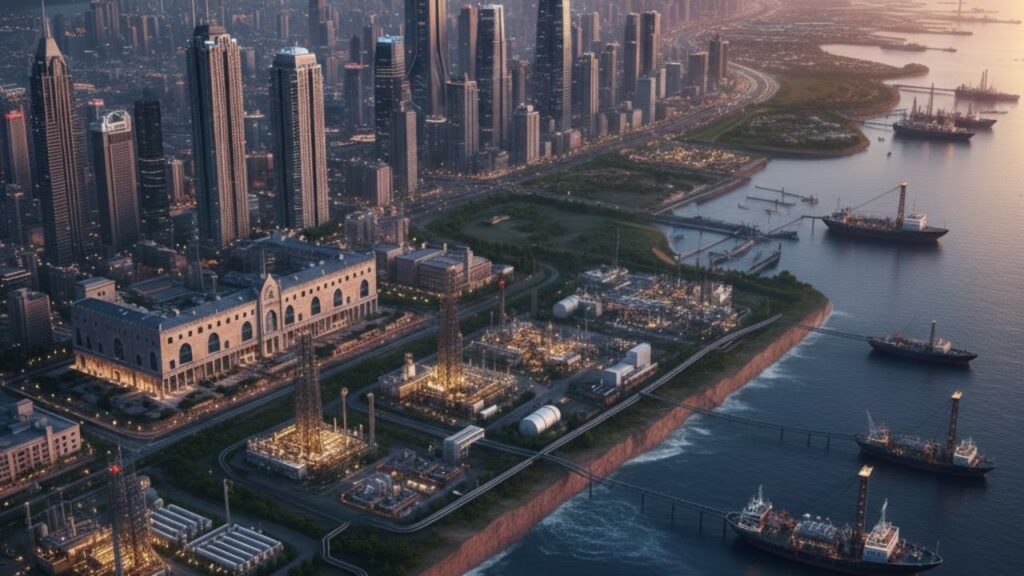
Beneath the heat, the cables, and the noise, engineers are doing something unexpected. They are pushing water back underground, into oil fields that once fueled the explosive growth of these megacities. Deep below, in darkness, the goal is simple but urgent: keep the surface from sinking, even if only a little longer.
Why the Ground Quietly Gives Way
Land subsidence rarely dominates headlines. It doesn’t erupt like a volcano or tear through coastlines like a hurricane. Instead, it creeps. It shows up as cracks in floors, doors that refuse to shut, or streets that suddenly sit a step lower than before.

In coastal giants such as Jakarta, Shanghai, and Mexico City, the pace can be startling. The land can drop by centimeters each year, quietly adding up to meters over a lifetime. What sounds abstract becomes real when a familiar café ends up below high-tide level.

Much of this sinking isn’t natural. For decades, cities followed a simple formula: extract resources and build upward. Oil, gas, and groundwater were pulled out, wealth accumulated above, and the ground slowly compacted below. In northern Jakarta, the land has fallen by more than four meters since the 1970s. Entire neighborhoods now depend on pumps and barriers to keep the sea at bay.
From Oil Fields to Urban Lifelines
Mexico City, built on an ancient lakebed, has sunk so dramatically that historic buildings lean like worn teeth. Shanghai once faced subsidence rates nearing 10 centimeters a year during peak groundwater extraction. Engineers were forced to confront a hard question: if removing fluids made the land sink, could replacing them slow the fall?
The idea came from the oil industry. Engineers already knew that emptying underground reservoirs lowers pressure and allows rock layers to compress. To counter that, oil companies had long used water injection to stabilize fields and prevent collapse.
Applying this approach to cities was far from simple. Urban geology is layered and uneven, with clay, sand, and rock responding differently to pressure. Still, in places like Shanghai and parts of California, carefully managed water injection into depleted fields has helped slow subsidence. It doesn’t stop the process, but it buys something invaluable: time.
How Engineers Gently Push the Earth Back
The principle is surprisingly intuitive. Imagine a sponge squeezed after its water is removed. Adding water back allows it to relax slightly. Engineers drill wells into depleted oil reservoirs beneath or near cities, sending treated water down at controlled pressures to restore some lost support.
This is not about lifting cities like balloons. It’s closer to preventing shelves from sagging by filling missing gaps. Every injection is measured, monitored, and tracked. Even reducing subsidence by a few millimeters a year is considered progress.
In Shanghai, aggressive extraction during the mid-20th century caused alarming ground loss. The response combined strict groundwater controls with targeted water reinjection in nearby depleted fields. Over decades, sinking rates in some areas fell to under six millimeters a year. The movement didn’t stop, but the difference became tangible.
Shop owners noticed they no longer needed to raise floors as often. Old flood marks on walls stopped climbing so quickly. Above ground, life felt unchanged. Below, engineers worked constantly to maintain balance.

The Science Beneath the Streets
When fluids are removed, pore pressure drops, grains pack tighter, and the ground above sinks. Injecting water nudges those grains apart, slowing compaction and sometimes allowing a slight rebound. But the process is delicate. Too much pressure can trigger small seismic events or redirect fluids along hidden fractures. Too little makes no difference.
As a result, teams rely on detailed simulations, fault maps, and sensors that track even tiny shifts at the surface. This is slow, methodical engineering, focused not on miracles but on minimizing loss.
What It Means for People Above Ground
Before any injection begins, engineers analyze years of satellite and ground data to understand how neighborhoods have moved. Depleted fields are mapped like underground districts, identifying where compaction is fastest and where pressure can travel safely.
Water is treated to avoid corrosion or mineral buildup, and pumps are calibrated to stay below risky thresholds. The approach resembles drip irrigation for the subsurface: apply pressure, pause, observe, and adjust. On paper, it’s all numbers. In reality, it’s about keeping homes level just a bit longer.
The real damage often starts decades earlier. Unregulated groundwater use, backyard wells, and industries tapping deep aquifers created habits that slowly dragged cities down. When authorities respond with bans, higher prices, and seawalls, residents can feel blamed for systems that once encouraged overuse.
As one city geologist in Mexico City put it, the underground was treated as storage for ambition. First it was emptied for growth. Now it’s being refilled to prevent collapse.
Watching the Signs of a Sinking City
- Follow local subsidence maps, which reveal which districts face the greatest risk.
- Track groundwater and reinjection policies, as they influence insurance, infrastructure, and property values.
- Ask basic questions when major projects are announced, including where water comes from and what lies beneath.
A Delicate Truce With the Ground Below
There is something quietly striking about cities relying on ancient oil fields to stay afloat. Reservoirs that once powered economic booms now act as unseen supports beneath homes and markets. It feels like a late attempt to return what was taken.
Water injection is no cure-all. It doesn’t stop sea-level rise or resolve the limits of building on soft coastal ground. But it creates breathing room, allowing cities to rethink water use, relocate critical infrastructure, and reconsider development along vulnerable edges.
When the next headline mentions a sinking city, it helps to picture the invisible work below. Pumps hum in the dark, water moves through ancient rock, and pressure slowly builds. Above, life continues along seawalls that didn’t exist a generation ago. Below, engineers buy time for streets, homes, and memories that people aren’t ready to give up yet.

| Key point | Detail | Value for the reader |
|---|---|---|
| Land subsidence is accelerating in megacities | Heavy extraction of oil, gas, and groundwater causes the ground to compact and drop, sometimes meters in a few decades | Helps you understand why floods, cracks, and infrastructure failures are growing in places you might live or invest |
| Water injection into depleted oil fields can slow sinking | Engineers pump treated water into old reservoirs to rebuild pressure and reduce compaction beneath urban areas | Shows that there are real, technical tools being used to protect cities and buy time against climate and geological risks |
| Public awareness and policy matter as much as engineering | Restrictions on groundwater, monitoring subsidence, and questioning new megaprojects influence how effective these fixes are | Gives you concrete levers—information, questions, civic pressure—to engage with what’s happening under your own feet |
