
The leftover pasta felt like an easy win. You slide the bowl into the microwave, set it for a minute and a half, scroll your phone, and wait for the familiar beep. Moments later, the rim is scorching hot, the center is still cold, and the cheese has turned into a strange, rubbery layer. You eat it anyway. Of course you do.
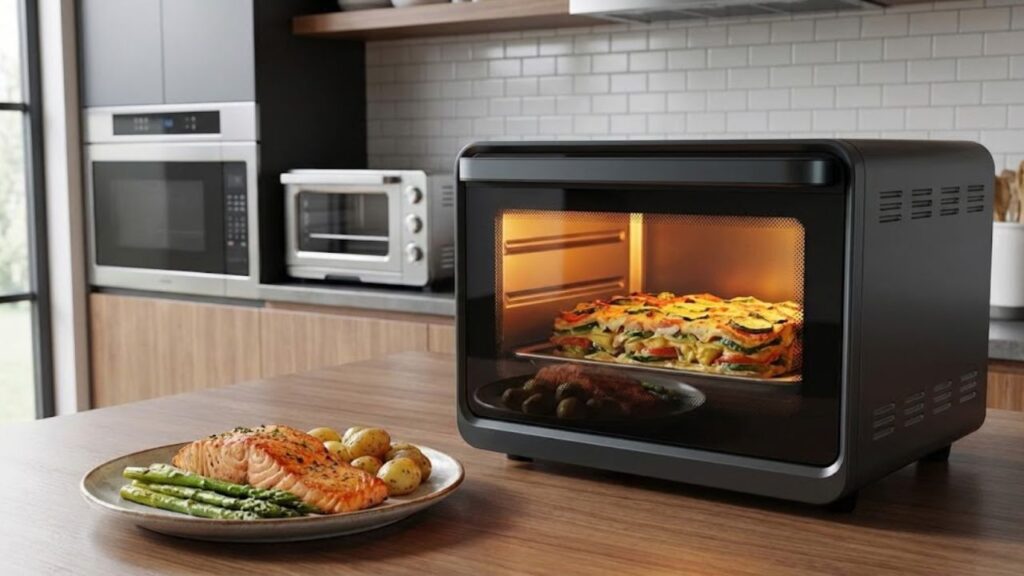
Now picture something different on that same counter. The same speed and convenience, but the food comes out tasting like it was reheated in a real pan or oven. No cold patches, no chewy edges, no sad, shriveled leftovers.
That idea isn’t just wishful thinking anymore. It’s starting to become real.

A Quiet Shift Toward Smarter Heat
Step into a few modern test kitchens and you’ll notice the microwave quietly pushed aside. In its place sits a compact, matte-finish box, roughly the size of a large toaster oven, humming softly. There’s no spinning plate or harsh buzzing. Just a touchscreen, a solid door, and a promise that feels almost unbelievable.

This new generation of “smart heat” ovens doesn’t rely on a single blast of energy. Instead, it layers precise infrared heat, controlled convection air, and sometimes even low-power microwaves used in a smarter way. The result is fast cooking that actually looks and tastes like real food.
Why the Results Feel Different
One standout device making the rounds among chefs and early adopters shows how dramatic the change can be. You place a cold lasagna inside, tap “Reheat,” and walk away. Seven minutes later, it’s bubbling at the edges, browned on top, and hot all the way through. No stirring, no rotating, no icy center.
People testing it on everything from roasted vegetables to salmon say it feels almost unfair. Some even ran blind taste tests at home. Same leftovers, same timing: traditional microwave versus this new oven. Time and again, families chose the food from the smart oven without knowing which one it was.
What’s happening inside isn’t magic. It’s smart engineering. Instead of hitting food with one blunt wave of energy, these devices map the surface and sometimes even the volume of what’s inside. They sense moisture, temperature, and density, then adjust the heat precisely.
The payoff is clear: crispy pizza instead of soggy slices, steak that warms without turning gray, and vegetables that stay bright instead of collapsing into mush.
Why Microwaves Were Never Built for This
The microwave was designed for speed, and speed alone. These new ovens are designed for speed with respect for food. That difference changes everything.
How It Fits Into Everyday Kitchen Life
The most surprising part isn’t the technology itself. It’s how normal everything feels once it’s part of your routine. You come home late, drop your bag, open the door with one hand, and slide in leftover roast chicken. Tap a preset, and it quietly gets to work.
There’s no plastic wrap ballooning, no plate burning your fingers. From the outside, it behaves like a smarter, gentler oven. Inside, it’s constantly measuring and adjusting, pulsing heat in short bursts to avoid overcooking.
At first, many people treat it like a microwave, rushing everything at full power. That’s usually where early disappointment happens. Yes, you can still warm coffee in 30 seconds. But its real strength shows when you slow down just slightly.
 Goodbye Hair Dye for Grey Hair: The Conditioner Add-In That Gradually Restores Natural Colour
Give that slice of pizza three or four minutes with crisping turned on, and it suddenly tastes like a fresh slice, not yesterday’s regret.
No one uses it perfectly every day. We fall back on old habits when we’re tired. The point isn’t perfection. It’s that even your laziest meals taste noticeably better.
When Old Habits Quietly Fade
One early adopter summed it up simply:
“Once I realized I could put a full plate of food in there and it came out looking freshly cooked, I stopped using the microwave.”
He didn’t plan to replace anything. He just stopped reaching for the old machine.
That’s the real power here. This isn’t a single-purpose gadget. It slowly takes over multiple jobs:
- Reheating leftovers so they resemble the original meal
- Crisping frozen foods without needing a separate air fryer
- Cooking raw proteins faster than an oven, with better texture than rushed pan cooking
- Baking small batches of bread or cookies without heating a full oven
- Handling breakfast, lunch, and dinner in one compact space
The more tasks it handles, the more the microwave gets ignored.
Are Microwaves Really on the Way Out?
Kitchen tools often reach a tipping point quietly. They sit unchanged for years, then a new device slips in with small daily improvements that add up.
That’s what’s happening with smart ovens now. They don’t demand a steep learning curve or shout about being futuristic. They blend into routines, forgive mistakes, and improve the food you already eat.
We’ve all had that moment, standing at the counter eating from a plastic container, not because we want to, but because we’re too tired to care. That’s exactly where this new kind of oven changes the story.

What This Means in Practical Terms
- Layered heating technology: Combines infrared, convection, and controlled pulses for even heating and better texture
- Everyday ease of use: Simple presets and fast cycles that fit real-life routines
- True replacement potential: One compact device can handle most reheating, crisping, and quick-cooking tasks once done by a microwave
