
Late on a Tuesday evening in a tight city kitchen, a man studies his cold leftovers and hesitates. He opens the microwave door, then shuts it again, almost embarrassed. The rubbery pizza from yesterday, the dry chicken from last week—he knows exactly how this will end if he presses start. Instead, he reaches for his phone and scrolls past another video of a sleek, glowing kitchen gadget promising to reinvent cooking. This one makes him stop. No spinning plate. No loud buzzing. Just a quiet countertop box claiming to heat, roast, crisp, and brown food from the inside out. He watches cheese melt, bread toast, and steak sizzle from a device that barely resembles a microwave. The comments call it a microwave killer.
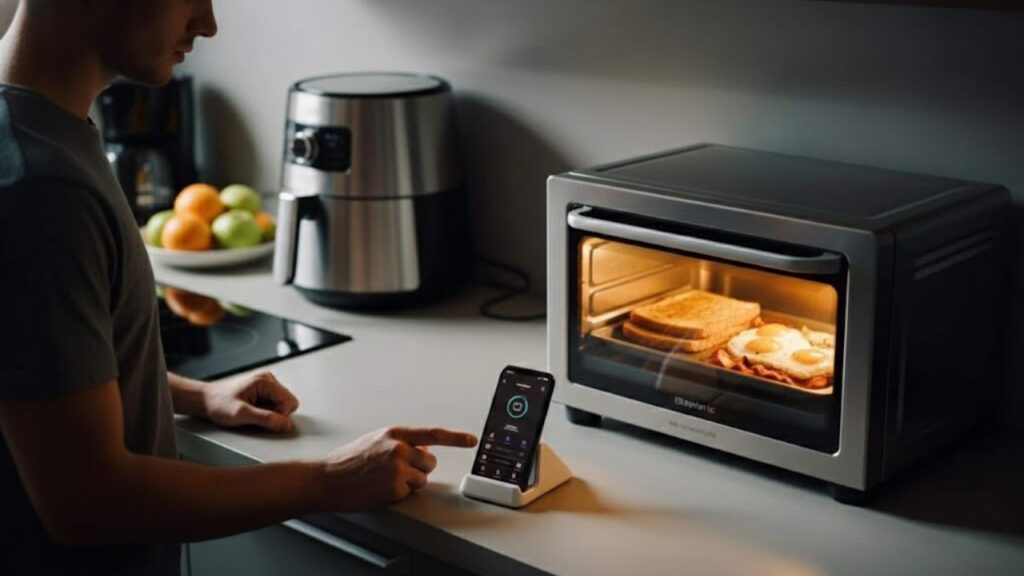
A quiet countertop shift changing everyday cooking
The device people keep whispering about doesn’t loudly replace the microwave. It slips into daily life with one modest promise: proper texture. No icy centers, no scorching edges, no spongy bite we’ve learned to tolerate. This new wave of smart rapid-heating ovens, powered by solid-state RF and hybrid air-fry convection, heats food with far more precision than the old magnetron box tucked in the corner.
One early user in London bought it simply to reheat coffee properly and found herself cooking nearly everything in it within a week. The microwave still sits there, plugged in, now serving as a dusty phone-charging shelf. She roasts vegetables, reheats pasta while keeping sauces silky, and crisps leftover potatoes in minutes. Even her teenage son, once devoted to soggy microwave noodles, now uses it daily because the food “tastes like actual food.”

Why this new technology feels so different
The real change isn’t magic—it’s control. Traditional microwaves fire magnetron-powered waves that scatter randomly until absorbed, which is why one corner of lasagna burns while another stays frozen. These newer devices rely on solid-state radio frequency technology, intelligent sensors, and airflow to deliver energy evenly.

Instead of blasting everything at full power, they adjust intensity, placement, and timing in real time. Heat behaves more like a careful cook than a bare bulb in a box, creating consistent results without guesswork.
What everyday use actually looks like
Using it feels almost too simple. You slide in leftovers, tap “Reheat,” and close the door. There’s no need to enter weights or power levels. The system quietly senses moisture, density, and temperature, then decides how each section should be heated.
Rice stays soft instead of hardening. Sauce warms without boiling over. Pizza emerges with bubbling cheese and a crisp base rather than a limp, steamy slice. Some models finish with brief blasts of hot air or infrared heat to brown the edges. One user in Chicago reheated salmon, roasted carrots, and quinoa on the same plate—everything came out hot, tender, and clearly recognizable as dinner, without lingering smells or dried grains.
Why the results feel closer to real cooking
The key difference is attention. Traditional microwaves treat food as one solid mass. These devices see it as a landscape—sauce pockets, protein peaks, fat and water zones. Sensors track energy absorption millisecond by millisecond and redirect it as needed.
Some models skip the spinning plate entirely, while others combine controlled RF with fans and heating elements. This blend quietly breaks the old trade-off between speed and quality, delivering fast results without sacrificing texture.
Adjusting your habits when replacing the microwave
The biggest change is behavioral. Instead of tossing food into a buzzing box, you start thinking in small categories: crispy, juicy, melty, gentle. Pizza gets a crisp mode. Croissants use a pastry setting that restores flakiness instead of turning them foamy.
 Goodbye Hair Dye for Grey Hair: The Conditioner Add-In That Gradually Restores Natural Colour
For soups and stews, the device may suggest covering the bowl or using a specific container shape for even heating. That brief pause turns reheating from damage control into a form of light cooking.
Most beginners make the same mistakes: overcrowding the tray and relying on old microwave instincts. These ovens don’t use brute force. Overloading still leads to uneven results. The other habit is manually setting time instead of trusting presets. Using intelligent modes a few times teaches how the system “thinks,” and soon “Reheat pasta” feels more reliable than guessing 1:45 on full power.
The small daily wins that matter most
A nurse in Berlin summed it up perfectly: “I didn’t need another gadget. I needed reheating to stop ruining dinner.”
For her, the value wasn’t tech jargon but everyday ease:
- Smart reheating modes that protect sauces and preserve texture
- Hybrid air-crisp cycles that revive roast chicken skin instead of drying it out
- App guidance showing ideal container size and placement
- Kid-friendly presets that prevent dangerous temperature spikes
- Energy insights encouraging shorter, smarter heating cycles
These features don’t feel futuristic. They feel like small, practical mercies.
Will microwaves fade away or simply fall back?
Appliance stores are still full of traditional microwaves promising quick meals and one-touch popcorn. They won’t disappear overnight. What’s changing is what people expect from that space on the counter.
Once the choice was microwave or small oven. Now brands are racing to fill the gap with devices that heat at microwave speed but finish like an oven, connect to apps, and remember weekly habits. For many homes, the microwave becomes the backup—useful for melting butter or thawing berries—while the smart oven takes over the task of making leftovers taste good again.
The real shift isn’t just convenience. It’s how we treat our daily meals. If speed no longer has to mean soggy, the microwave may keep its shape—but its role is quietly being rewritten.

Key takeaways at a glance
- Smarter targeted heating: Solid-state RF and sensors adjust energy in real time for even warmth
- Texture-first settings: Crisp, gentle, pastry, and reheat modes preserve food quality
- New daily habits: Smaller portions, presets, and proper containers improve results effortlessly
