
At 7:02 a.m., the yard is still blue with cold. Breath hangs in the air, the fence is rimmed with frost, and the feeder looks as empty as a Monday morning inbox. Then you hear it — that sharp, impatient chickadee call from the maple. He remembers what was here yesterday. He’s checking if you’ve kept your side of the deal.
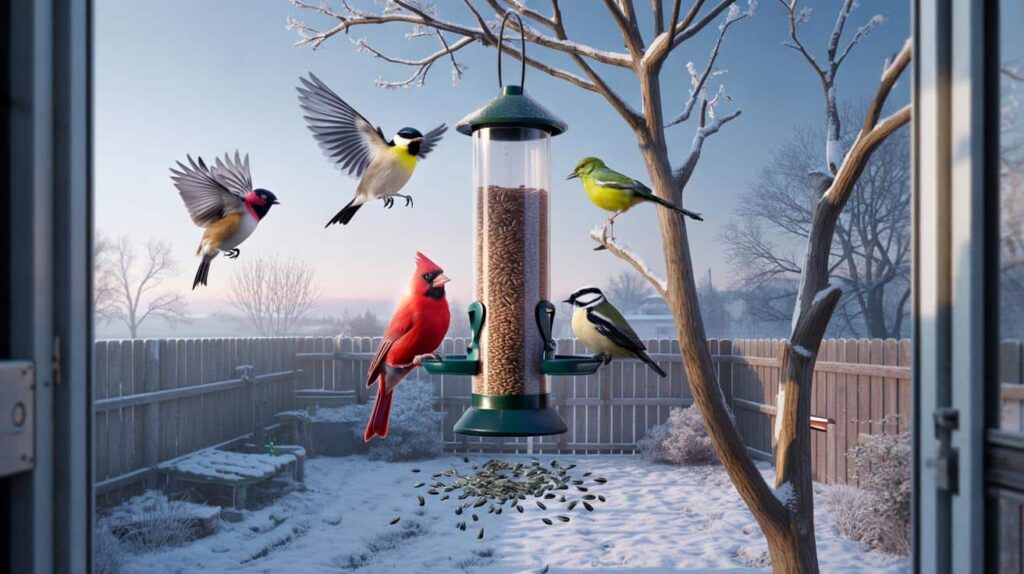
You step out in your slippers, fingers already numb, and pour the same cheap little treat into the feeder. By the time you shut the door, the first birds are already diving in, scolding you for being late.
There’s a reason they keep coming back to this one backyard every February.

The cheap February treat birds can’t resist
Ask any winter birder and they’ll tell you: February is survival mode for wild birds. Natural food is scarce, snow hides seeds, and icy nights burn through their energy. What they want in the morning is simple — a dense, high-calorie breakfast that doesn’t cost you half your paycheck.

That’s where plain black oil sunflower seeds quietly win the month. They look boring, they’re cheap by the bag, and they don’t photograph as nicely as fancy seed “gourmet” mixes. Yet this is the one budget treat that pulls in chickadees, finches, cardinals, nuthatches and woodpeckers day after day. It’s like the reliable diner on the corner that never closes.
A reader from Ohio told me she switched from a colorful “deluxe” mix to a simple bag of black oil sunflower seeds last winter. The change was almost embarrassing. Sparrows stopped scattering filler grains all over the snow. The feeder stayed cleaner. And within a week she counted twice as many visits from cardinals at dawn.
Another backyard watcher in Vermont ran a small experiment. One feeder with pricey mixed seed, one with only black oil sunflower. In February, 80% of the birds chose the sunflower feeder, especially in the coldest early-morning hours. The birds weren’t being picky. They were being smart. High fat, easy shell, maximum calories for each frantic minute in the open.
There’s a simple logic behind their choice. Black oil sunflower seeds have thin shells, so even tiny birds can crack them fast without wasting precious energy. The kernels are rich in fat, which is exactly what a bird’s body needs to stay warm through biting nights and bitter mornings.
Those glittery mixes with cracked corn and big striped sunflower seeds look abundant, yet half of what you pour out ends up on the ground because birds won’t touch the filler. *You’re basically paying for bird trash.* With a cheap bag of black oil sunflower, almost every seed gets eaten. Less waste for you, more fuel for them. And that’s why the same birds come back, feeder memorized, route locked in.
How to serve sunflower seeds so birds return every morning
Dumping any old seed into any old feeder isn’t quite enough. February birds are on a tight energy budget, and they learn fast which yards are worth the risk. Start by choosing a basic tube or hopper feeder with small perches and modest openings — nothing fancy, just something that keeps seeds mostly dry and off the snow.
 The sentence that instantly ages you in a conversation: what to say instead without sounding forced
Fill it with straight black oil sunflower seeds. Not striped sunflower, not “wild bird mix”, not the bag with colorful pictures next to the dog food. Then hang the feeder close to a tree or shrub so birds can hop back to cover between bites. Same place, same time, same food. Routine is what locks them in.
Many people give up on winter feeding because “no birds came” after one or two days. Or they overthink it and buy five types of seed, three new feeders, and a heated birdbath, then burn out by mid-February. Let’s be honest: nobody really does this every single day.
The trick is low effort, steady reward. Choose one feeder that’s easy to reach and easy to clean, one cheap treat you can actually afford all month, and one short moment in the morning to refill. Miss a day? Fine. Just don’t keep switching foods and spots. Birds aren’t confused by the season — they’re confused by us.
Some long-time birders jokingly call black oil sunflower “the February contract.” You offer calories on the coldest mornings, and the flock pays you back with color, sound, and that jolt of life at the kitchen window. As one backyard watcher told me, “Those tiny birds kept me going through the grayest weeks of the year.”
- Choose black oil sunflower seedsThey’re cheaper than you think when bought in bulk and favored by many species.
- Use a simple tube or hopper feederNo need for decorative “cottage” feeders; birds only care about access and safety.
- Place it near cover, but not inside itClose enough for quick escapes, far enough that predators can’t ambush easily.
- Refresh seed frequentlyOld, clumped, or moldy seed is a fast way to lose trust.
- Stick to a loose routineRoughly the same time each morning creates a pattern birds will remember.
The quiet ritual that changes how you see winter
If you keep at this for a few weeks, something shifts. You stop thinking of “the birds” as a vague background and start recognizing individuals: the bossy cardinal, the nervous titmouse, the one goldfinch that always lands sideways. You walk to the window in February not just to check the weather, but to see who’s waiting on the branch.
The cheap bag of sunflower seeds in the mudroom suddenly feels less like feed and more like a small agreement with the wild world. You don’t rescue these birds — they’re tougher than we give them credit for — yet you offer them a reliable stop on their icy morning commute. And they repay you with movement, sound, and a flicker of color against all that gray.
We’ve all been there, that moment when winter feels endless and dull, the days blurring into one long, cold hallway. A handful of cheap seeds and a returning flock won’t fix the season, but they can punctuate it. Maybe that’s why so many February feeders swear that once the birds learn their yard, they keep coming back — not just this winter, but the next, and the next.
 A new banana peel trick is spreading fast : just bake them for 30 minutes and the problem is solved
| Key point | Detail | Value for the reader |
|---|---|---|
| Use black oil sunflower seeds | High fat, thin shell, low waste compared to mixed seed | More birds for less money and less cleanup |
| Keep placement consistent | Hang the feeder near cover and refill at roughly the same time | Birds learn your yard as a reliable daily stop |
| Focus on simple routines | One easy-to-clean feeder, one cheap seed, quick daily check | Sustainable habit you can maintain all February |
FAQ:
- What’s the “cheap treat” birds love in February?Plain black oil sunflower seeds. They’re usually cheaper than fancy mixes, high in fat, and attract a wide range of species from chickadees to cardinals.
- Can I mix black oil sunflower with other seeds?You can, but many birds will simply pick out the sunflower and kick the rest to the ground. If you’re on a budget, straight sunflower gives you the best return.
- How often should I refill the feeder in winter?Once a day is ideal during cold snaps, especially in the morning. If the feeder stays full for days, you may have enough natural food nearby and can scale back.
- Do I need a special “winter” feeder?No. A basic tube or hopper feeder that sheds snow and keeps seeds fairly dry is enough. Focus on placement and seed quality rather than design.
- Will birds become dependent on my feeder?No. Wild birds continue to forage naturally, using feeders as one of many food sources. Your steady supply, though, can boost their odds on the harshest February mornings.
