
The hallway light was still glowing when she eased her bedroom door shut with a soft, decisive click. The apartment continued its distant rhythm—a neighbor closing a cupboard, a car alarm echoing somewhere far off. Inside her room, everything shifted. The world narrowed to four walls, a bed, and the faint vibration of her phone on the nightstand. Only then did she realize she’d been holding her breath and finally let it go.
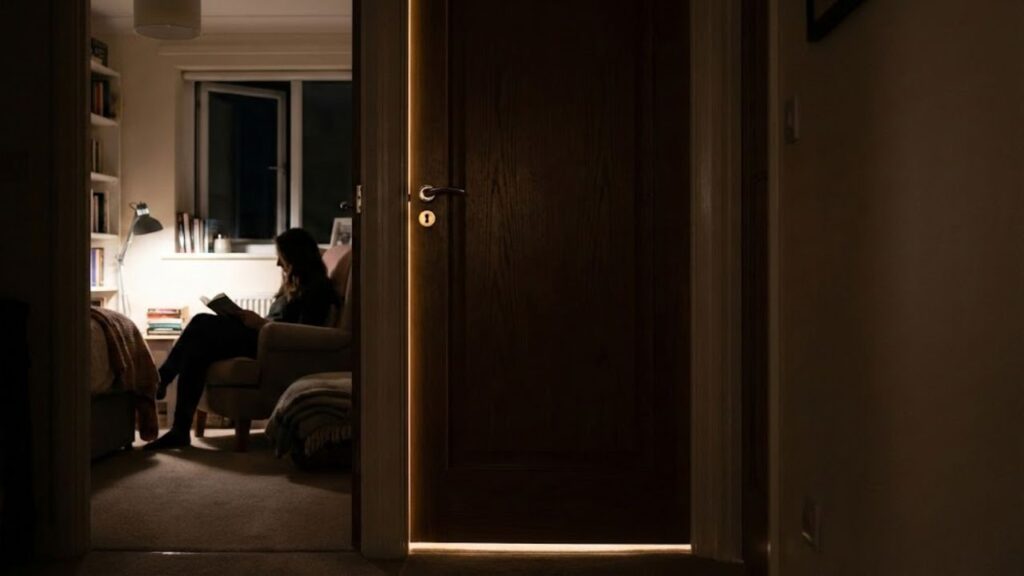
Some people feel uneasy when enclosed. Others depend on that feeling to truly rest.
If you always sleep with your bedroom door closed, it might seem like nothing more than a habit you’ve never questioned. Yet over time, sleep researchers and psychologists have begun noticing patterns hidden within that quiet, nightly choice. A closed door doesn’t just influence sleep—it subtly reflects aspects of who you are.

The subtle psychology behind sleeping with the door closed
People who prefer sleeping with their bedroom door shut often share a defining quality: a strong appreciation for control over personal space. Not control in a rigid or domineering sense, but a calm, grounded awareness of boundaries. A closed door creates a clear division between self and surroundings, and for certain personalities, that distinction matters deeply.

Once the latch clicks into place, the day’s demands fade. There are no unexpected shadows in the doorway, no drifting conversations, no hallway light spilling across the floor. What remains is a deliberately chosen environment where they decide what enters and what stays out.
Consider those who close their door every night, even when living alone. One woman, residing in a third-floor studio, explained that while the door changed nothing about noise or safety, it helped her sleep more deeply. “It makes me feel off duty,” she said. A man sharing a house with roommates put it more simply: “An open door means I’m available. A closed door means I’m not.”
Beneath these casual remarks lies a consistent message repeated nightly: I choose when the world stops. That small click of the door acts as punctuation at the end of the day.
Psychologists often highlight perceived control as a key element of mental stability. Those who close their doors naturally lean into this sense of control. Regardless of whether they’re introverted or extroverted, they usually value predictability around sleep and intimacy. The closed door becomes a signal to the brain: you’re safe, contained, and free to rest. It’s also a subtle act of self-respect, reinforcing that rest and personal space deserve protection.
Boundaries, privacy, and the personalities behind the habit
Sleeping with the door closed often reflects a broader need for clear emotional boundaries. You might be supportive, generous, and always available during the day. But once the door shuts, it quietly announces that the day’s emotional labor is finished.
This nightly behavior shapes personality over time. By consistently creating a pause from the outside world, people who close their doors often become better at protecting routines, recognizing overload, and making space for themselves.
Many of us know the feeling of staying up too late, scrolling endlessly because the mind hasn’t fully disengaged. Those who shut the door frequently pair it with a second ritual—dimming lights, silencing the phone, or simply lying still for a moment. These small actions reinforce the transition from day to night.

A 32-year-old nurse shared that she only adopted the habit after temporarily moving back in with her parents. Closing the door became her only separation from constant expectations. When the door was shut, she wasn’t fulfilling roles—she was simply a person trying to sleep. That’s the quiet strength of a simple physical boundary.
From a personality perspective, people who sleep behind closed doors tend to be self-protective without being closed off. They’re sensitive to noise, light, and emotional tension, and they dislike the feeling of being perpetually available. This awareness often helps them recognize when boundaries are being crossed, both in daily life and relationships.
Using the closed-door habit in a healthy, intentional way
If this habit resonates with you, there’s value in turning it into a conscious ritual rather than an automatic reflex. Before closing the door, pause briefly. Take one deliberate breath and mentally mark it as your off switch. This simple pause reframes the act from blocking out noise to inviting calm.
Our nervous systems respond well to predictable cues. Over time, your brain can associate the sound of the door closing with relaxation, making it easier to fall asleep and disconnect from the day.
However, there’s a balance to maintain. When the closed door becomes a way to avoid necessary conversations or ongoing tensions, a healthy boundary can quietly turn into avoidance. If you find yourself shutting the door to escape every discomfort, it may be time to check in with yourself.
You’re allowed to protect your rest and privacy. You’re also allowed to open the door again in the morning and engage with life at a realistic, human pace. A closed door works best when it supports rest, not withdrawal.
One reader captured this perfectly: closing the bedroom door became a way of affirming self-worth. After years of keeping it open to avoid seeming rude, closing it improved sleep and daytime kindness alike—because rest was no longer running on empty.
- Boundary awareness: Comfortably defining personal space without constant explanation.
- Emotional privacy: Recharging best when unobserved, even by loved ones.
- Sensitivity to details: Noticing light, sound, and the strain of always being “on call.”
- Quiet self-reliance: Using the bedroom as a reset point before facing the world.
- Respect for routines: The nightly door click often fits into broader self-care patterns.
What a closed bedroom door reveals—and what it doesn’t
Sleeping with the door closed doesn’t mean you’re antisocial or distant. It often means you function best with a clear physical boundary between rest and the outside world. Likewise, someone who prefers the door open isn’t careless by default—they may associate openness with comfort or safety.
When these preferences differ, a simple door can become a quiet negotiation about trust, space, and comfort. How that conversation unfolds often says just as much about personality as the habit itself.

- Closed door equals control: Signals a need for physical and emotional boundaries, helping explain the desire for a sealed environment at night.
- Ritual over reflex: Turning door-closing into a deliberate cue can improve sleep and reduce mental fatigue.
- Boundaries versus avoidance: Using the habit to protect energy rather than escape challenges supports healthier communication.
