
The unmistakable sound of a lawnmower rumbles through the neighborhood: the sharp rattle of blades, the low growl of the engine, and the scent of freshly cut grass wafts through an open window. For years, this soundtrack has been synonymous with Saturday freedom.
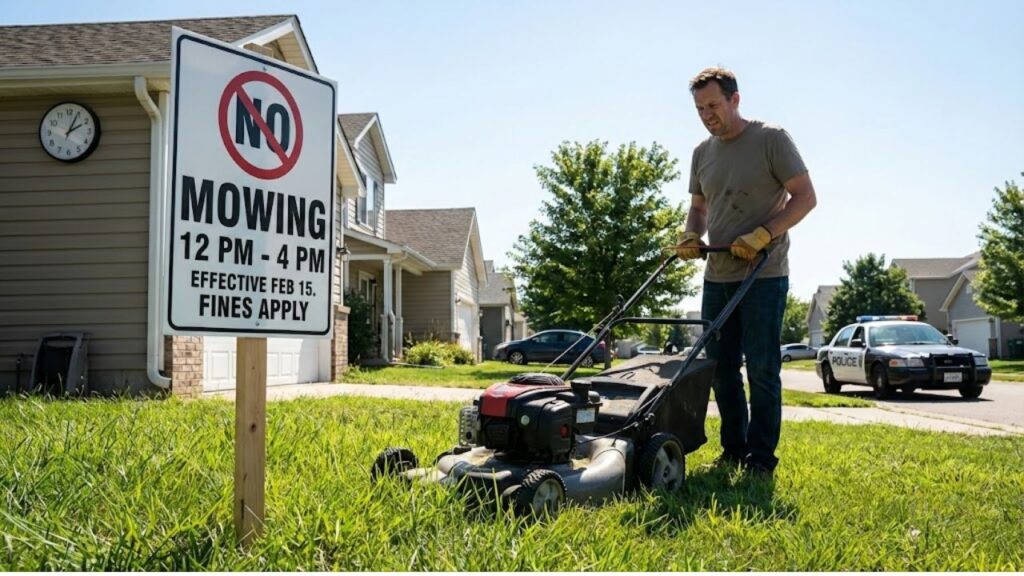
Then, one afternoon, you try to mow your lawn as usual, and a neighbor shouts from their balcony, “You know that’s banned now, right? Noon to 4 p.m. – fines!”
You laugh, dismissing it as a joke or a local rumor, until you find an official notice in your mailbox confirming the new rule.

The clock is ticking, and the new reality sets in.

The New No-Mow Window: From Weekend Ritual to Risk
Across the country, municipalities are tightening their regulations on noisy garden tools. Starting February 15, a new rule bans lawn mowing between noon and 4 p.m. in many areas, specifically targeting the loudest part of the day.
For years, midday mowing was the go-to choice for people with busy schedules. It’s when the sun’s out, the grass is dry, and you can see what you’re doing. Now, the same routine could result in a warning, or even a fine.
The official reason is clear: protect neighbors’ peace, reduce noise pollution, and limit emissions during the peak heat of the day. For homeowners, however, it feels like an unexpected blow to their weekend.
Walk through any suburban street on a sunny Sunday now, and you’ll notice the silence between noon and four—interrupted only by the occasional, hurried sound of a leaf blower quickly turning off. Someone clearly remembered the rule a little too late.
Take Julien, a 39-year-old IT technician. He leaves home at 7 a.m., returns after 6 p.m., and only sees his lawn on weekends. The first Saturday after February 15, he started mowing at 12:10 p.m., thinking the rule wouldn’t be enforced. Within minutes, a neighbor called the town’s hotline. Fifteen minutes later, a municipal officer appeared at his gate to explain the new schedule, hinting at a fine if he mowed again. Julien reluctantly put the mower away, frustrated and a little embarrassed.
Why the No-Mow Rule Exists: Noise, Health, and Community
These rules don’t just appear overnight. They typically stem from years of low-level conflict between neighbors—where complaints are collected, but nothing changes until it’s too late.
Municipalities argue that midday mowing disrupts rest time: children need peace for their naps, elderly residents seek calm, and temperatures peak in the afternoon. The combination of heat, noise, and exhaust from old gas-powered mowers is exactly what the authorities aim to reduce.
There’s also a public health angle: studies have repeatedly linked chronic noise to stress, sleep issues, and even cardiovascular problems. When one mower is added to forty houses, the quiet time vanishes fast.
However, for those with busy lives and tight schedules, the rule feels like it’s punishing the wrong people at the wrong time. This tension is already playing out in group chats and neighborhood forums.
How to Cope with the New Mowing Hours (Without Losing Your Mind)
The first practical tip is simple: rethink your mowing schedule the same way you would a work meeting.

If mowing is banned between noon and 4 p.m., your window for mowing shifts to early morning or late afternoon. This may mean starting earlier on weekends, but the upside is clear: cooler air, softer light, and less strain on both you and the mower. Grass cut in cooler hours suffers less shock, which helps keep it greener.
Another tactic is to spread out your tasks. Edge the lawn one day at 7:30 a.m., mow the next day at 5:30 p.m., and leave midday for quieter tasks like hand-weeding or planning garden beds. It may feel fussy at first, but it quickly becomes a new rhythm.
On the emotional side, we’ve all been there: that moment when you finally have free time, the sun is shining, and a rule you didn’t ask for tells you, “Not now.”
That frustration is real, especially for those with young children, rotating shifts, or shared custody weekends. Many homeowners feel like they’re being treated as if they were running a construction site, not just trimming grass.
A common mistake is to test the limits, mowing at 12:05 p.m. and telling yourself, “Just today.” One annoyed neighbor and a local officer on duty can quickly turn that moment into a formal violation.
Let’s be honest: nobody reads every municipal update or checks every detail of the noise ordinance. But if you’re annoyed, you’re not alone. Calmly talking to neighbors about shared times can soften reactions and prevent unnecessary conflict.
Tips for Navigating the New Mowing Regulations
- Know your local schedule: Check whether the noon-4 p.m. rule applies every day or only on weekends. Some towns have looser weekday rules.
- Switch to quieter tools: Electric or battery mowers are often less restricted, and some areas target only gas-powered engines for fines.
- Talk before you mow: A quick message in a group chat or a knock on your neighbor’s door can prevent complaints, especially for one-off exceptions.
- Document your efforts: In case of a dispute, keep notes on dates, times, and even photos of your mower model to show you’re acting in good faith.
- Ask about exemptions: Some municipalities offer flexibility for gardeners, elderly residents, or those with specific work schedules—just be sure to request it formally.
The Bigger Picture: A Shift in How We Share Our Space
When you strip away the legal jargon, the new no-mow window reveals something deeper: our patience with noise, fumes, and shared spaces is shrinking. What was once tolerated as part of “weekend life” is now being redefined as a nuisance that can be regulated and even ticketed.
For some, this feels like a step toward more livable neighborhoods, where midday quiet is treated with the same respect as nighttime sleep. For others, it’s another brick in the wall of rules that make homeownership feel like a never-ending list of obligations.
The truth is somewhere in between: real people trying to keep both their lawns and their relationships intact.
This rule is likely to spread, with variations in different towns. It’s already sparking creative solutions: shared robotic mowers working at dawn, neighbors pooling for a gardener who works within approved hours, or simply letting courtyards grow wild and free.
The question is no longer just “When can I mow?” It’s about how we negotiate quiet, comfort, and climate in the same few square meters of suburban lawn. And that conversation is only just beginning.

Key Points
- New No-Mow Time Slot: The rule bans lawn mowing between noon and 4 p.m. starting February 15, with fines for violations.
- Strategy and Timing: Shift your mowing to early morning or late afternoon, breaking tasks into shorter sessions.
- Tools and Dialogue: Use quieter tools, understand local nuances, and communicate with neighbors to avoid conflicts.
