
The first time I tossed a banana peel into my tomato bed, it felt like a shortcut to greener gardening. But after a week, the leathery strip was still there, and my tomato plants were unchanged. A few ants hovered, a wasp circled, but nothing magical happened. It was just a slowly rotting banana skin, and a sense that I’d been tricked by a viral gardening tip.
Since then, I’ve noticed this scene in many gardens. Banana peels scattered like confetti, each one a hopeful attempt at a potassium boost. The photos online promise vibrant growth, but reality tends to be stickier. The trick might not be the peel itself—but where you place it.
Why Tossing Peels on Top Doesn’t Work
Visit any community garden in summer, and you’ll see them—banana peels half-buried beside roses, drooping next to basil, tucked under hydrangeas. It looks like eco-friendly care, but often does more to please birds and bugs than plants.

Close up, the scene tells a different story. On the surface, peels dry out and toughen, not decomposing as promised. The nutrients remain trapped inside, and roots, deep below, can’t access them. It becomes a symbolic gesture, not an effective one.

One neighbor showed me his “banana corner” behind a shed—a pile of leathery skins with roses meters away. The flowers weren’t impressed, but blackbirds certainly enjoyed the stash.
Another friend slipped peels under her potted monstera. Days later, fungus gnats appeared, drawn to the decaying mess. The plant stayed the same. No leafy explosion. Just more flies indoors and a lingering smell.
In truth, peels get dropped where it’s easy—not where it helps. And on the surface, decomposition is slow and inefficient. Sun dries them, microbes struggle, and nutrients remain out of reach. Plants feed from a network of roots beneath the surface, not from items dropped on top.
The Right Way to Use Banana Peels
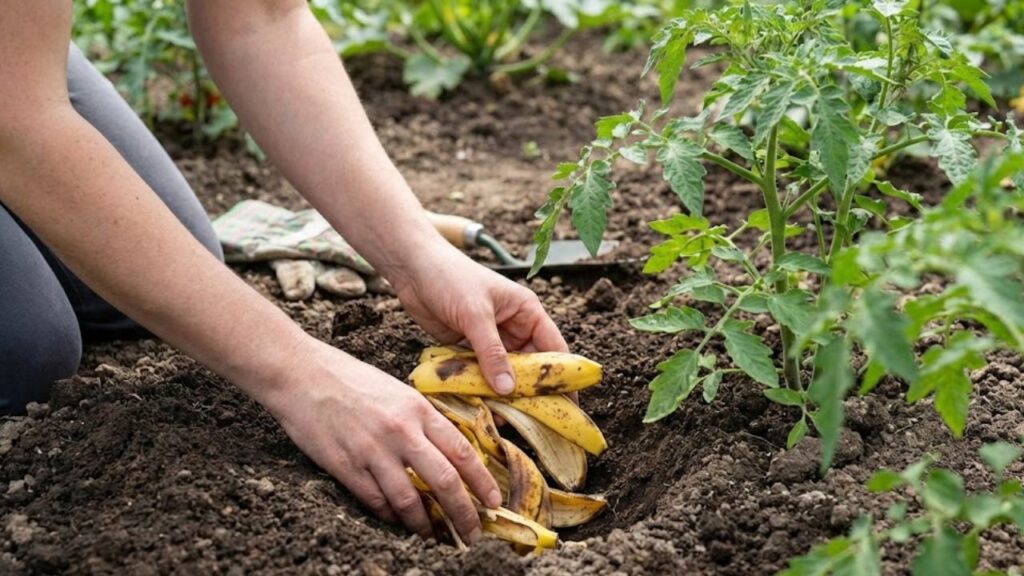
The key isn’t just the peel—it’s where you bury it. Instead of tossing it on top, dig a narrow slit or small hole about 5–10 cm deep in the root zone, not directly at the plant’s stem. Tuck the peel inside, ideally chopped into smaller pieces, then cover with soil.

This method keeps the peel moist and within reach of microbes, worms, and roots. The nutrients break down slowly, feeding the soil where it matters. There’s no mess, no pests, and no exposed yellow strips.
Many gardeners instinctively pile peels at the base of stems, like feeding a mouth. But this can attract pests, cause mold, or even damage the plant. Roots absorb nutrients from the surrounding zone, not from the base of the stem.
Think in circles, not targets—create pockets around the plant, placing small amounts of peel in each. In containers, bury bits toward the outer third of the pot, not against the sides or in wet clusters. One peel per large pot is more than enough.
Quick Tips for Using Banana Peels Effectively
- Slice or tear peels into small bits to speed up breakdown.
- Bury 5–10 cm deep in soil, away from the plant stem.
- Distribute evenly around the root zone—don’t clump them.
- Use moderately as a supplement, not your main fertilizer.
- Avoid if rodents are a problem; consider composting instead.
Shifting the Mindset: Feeding the Soil, Not the Trash
Once you’ve seen both approaches—peels tossed casually on top vs. peels buried with intention—the difference is striking. Same peel, same plant, entirely different results.
The real benefit isn’t in flashy tricks, but in consistent, thoughtful practices. A banana peel is just one more way to turn waste into nourishment. It’s not magic, but it’s a step toward healthier soil.
And the beauty of it all? Your garden doesn’t need perfection. It responds to small, smart moves: a slice of peel at the right depth, compost at the right moment, water before a heatwave. Over time, you shift from tossing scraps to truly tending your plants.
 Moist and tender the yogurt cake recipe reinvented by a famous French chef that divides the internet
| Key point | Detail | Value for the reader |
|---|---|---|
| Right location | Bury peels 5–10 cm deep in the root zone, not on the surface | Turns kitchen waste into real, usable nutrients |
| Right method | Slice peels, spread small pockets around plants, avoid stems | Reduces pests and smells while supporting healthier growth |
| Right mindset | Use peels as a supplement within a broader soil-care routine | Prevents disappointment and sets realistic, sustainable habits |
