
The neighbor’s lawn mower fires up almost on schedule at 12:05 p.m., just as you finally sit down with a sandwich. The engine rattles, the sharp scent of fuel drifts through the air, and freshly cut grass sprays over the low fence. It’s a familiar piece of the suburban soundscape.
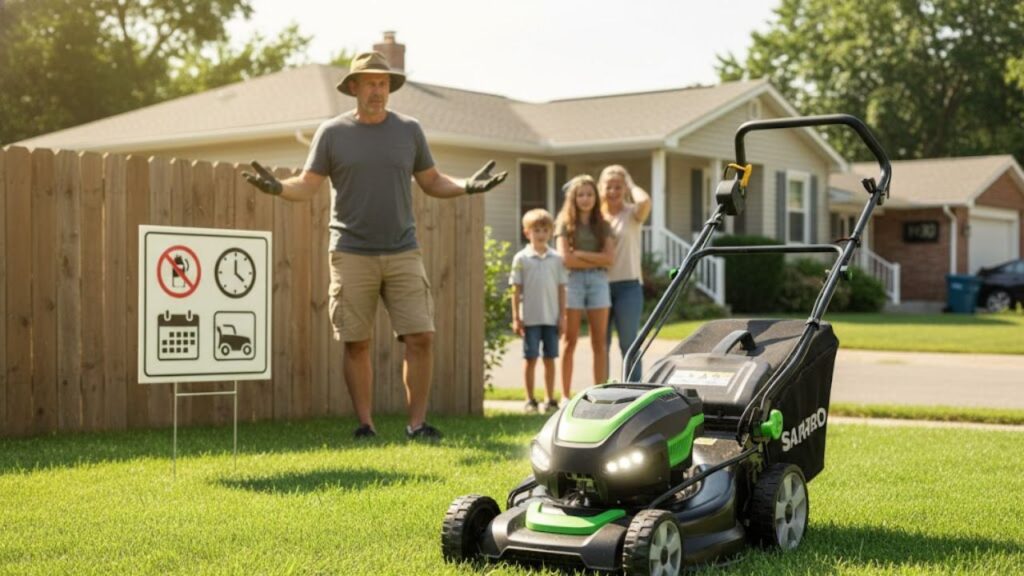
This year, though, that routine is about to hit a wall. Starting February 15, mowing the lawn between noon and 4 p.m. will be prohibited in your area.
For some residents, it’s welcome news. For others, it feels like a disruption waiting to explode in an already packed schedule. Behind this narrow time window sits a larger tension involving daily routines, noise, and growing climate concerns.

From everyday habit to restricted activity: understanding the midday mowing ban
The situation will play out again and again across neighborhoods. Someone accustomed to squeezing chores into a lunch break wheels out the mower at 12:30 p.m. This time, instead of background noise, there’s an uneasy quiet and watchful glances from nearby windows.

Once February 15 arrives, the sound of a mower during these hours isn’t just irritating—it’s against the rules. The restriction, which is spreading gradually across municipalities, makes it clear: no lawn mowing from noon to 4 p.m.
On paper, it’s a four-hour pause. In real life, it wipes out the only daylight window many working residents rely on for yard work.
Take an early spring weekday. Julie leaves home at 7:30 a.m. and doesn’t return until around 6:30 p.m., children in the backseat and dinner already overdue. Her messages are still piling up, and the lawn is the last thing on her mind.
For her, that midday break—on the days she works from home—was the solution. A quick lunch, followed by half an hour of mowing, kept the grass under control.
From February 15, that option vanishes. The suggestion she keeps hearing is simple: “Just do it on Saturday.” But Saturdays are already packed with sports, shopping, family commitments, and the unexpected issues that always show up uninvited.
The motivation behind the ban goes beyond neighborly complaints. Local authorities cite noise reduction, rest periods, and sometimes heat and biodiversity concerns. Midday is increasingly treated as a shared quiet zone—for people, wildlife, and overall noise balance.
While early mornings and late evenings were already regulated, this rule stretches the quiet period into the heart of the day. It’s a subtle shift that reshapes routines, weekends, and the mental load tied to home maintenance.
Adapting your lawn routine without added stress
The first step for many is reassessing the week. Instead of ideal plans, look at real availability: mornings when the house is calm, evenings when you’re home a bit earlier, or weekends that aren’t fully booked.
From there, set one or two realistic mowing slots outside the noon–4 p.m. restriction.
Some people shift mowing to early evening, around 6 or 7 p.m., when the heat eases and neighbors are still awake. Others choose late morning on Saturdays or Sundays.
The key change is moving away from “whenever I can” toward a fixed routine. Treat mowing like an appointment, not a filler task.
 Goodbye Hair Dye for Grey Hair: The Conditioner Add-In That Gradually Restores Natural Colour
This rule can feel like another limitation layered onto busy lives. It’s easy to think, “They’re regulating even this now?” What usually backfires is delaying the task until the grass becomes unmanageable.
Short, regular sessions—even 20 minutes—are far less draining than tackling overgrown grass in one exhausting stretch. Planning two brief mowing times each week outside the restricted hours often works better than leaving it open-ended.
Some residents are already changing how they manage their lawns. Quieter electric mowers, robot models, and partially unmown areas are becoming more common.
Marc, 49, who works rotating shifts, shares his experience: “Since the midday ban started, I switched to a small robot mower. It runs early and later in the day, stays quiet, and I no longer have conflicts with neighbors over noise.”
- Choose a battery-powered or electric mower to lower noise levels.
- Leave a less-maintained section of the garden to cut down mowing time.
- Coordinate shared equipment or schedules with nearby neighbors.
- Use reminders to avoid mowing during the restricted noon–4 p.m. window.
- Review the local bylaw details, as some areas allow specific exceptions.
What the midday ban reveals about shared space and daily life
This rule isn’t just an administrative update. It reflects a broader shift in how private habits intersect with shared environments, noise sensitivity, and climate awareness.
A lawn mower is no longer viewed solely as a household tool. It’s also a sound, a presence, and sometimes a source of conflict.
For those working nights, parents with sleeping children, or people working from home, the afternoon quiet is a relief. For others, it feels like an intrusion into personal time and autonomy.
The reality is that gardens are becoming shared stages, where personal routines meet collective rules and expectations.
This change may also reshape ideas of what a “well-kept” yard looks like. Slightly longer grass, uneven patches, and more natural growth are becoming more acceptable.
Many homeowners recognize that familiar feeling of guilt when the lawn looks wild. Yet the noon–4 p.m. ban can also be seen as permission—to let go of perfection and avoid mowing during the hottest, most exhausting hours.
From February 15, neighborhoods will sound different. Engines will fall silent in the middle of the day. Some residents will follow the rule closely, others may test it, and a few will simply enjoy a quieter afternoon.
This narrowly defined restriction opens wider questions about noise regulation, shared comfort, and how far rules should reach into private spaces. It highlights the balance between community well-being and personal freedom—played out, quite literally, on our lawns.

| Key point | Detail | Value for the reader |
|---|---|---|
| Noon–4 p.m. mowing ban | Applies from February 15 in certain municipalities/regions, check local bylaw | Know exactly when you risk a fine or conflict with neighbors |
| New mowing routine | Plan short, regular sessions outside restricted hours | Keep a manageable lawn without sacrificing all your free time |
| Alternative solutions | Electric/robot mowers, wild zones, shared equipment | Reduce noise, stress, and environmental impact while staying within the rules |
