
You probably know that person in the group chat who reacts to every meme but never shares anything themselves. They know all the trending TikTok audios, every celebrity breakup, every quiet reunion, yet their own profile looks untouched since 2019. Their “last post” feels like a digital relic. Still, they see everything.
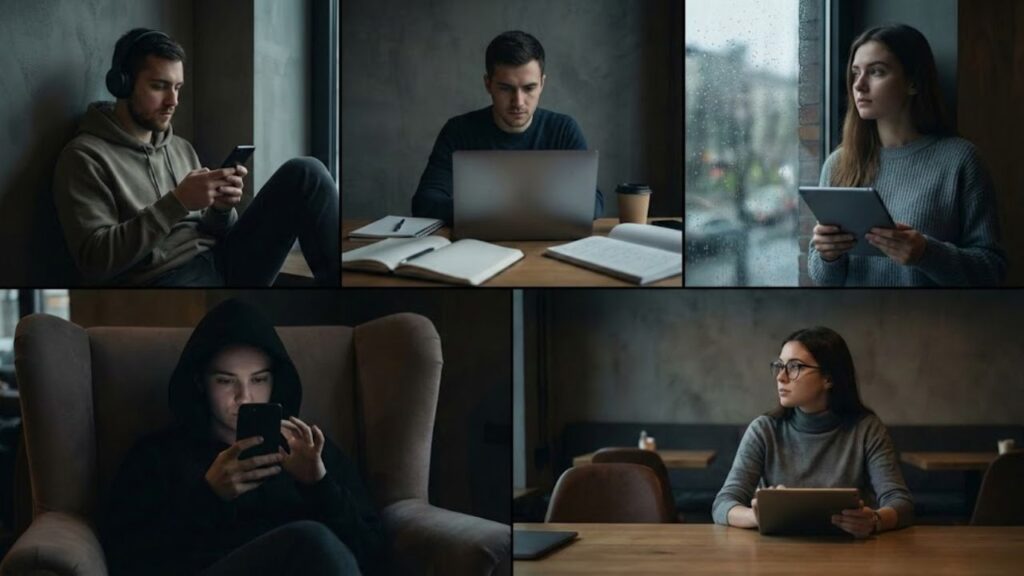
From the outside, they seem inactive. In truth, they’re present every day.
Scroll. Read. Watch. Exit. No likes. No comments. No stories.

Psychologists call this behavior social media lurking. As researchers study it more closely, clear patterns begin to emerge. People who stay silent online often share a set of recurring psychological traits.

Some of them may surprise you.
1. They are highly observant and attuned to social subtleties
Silent users usually notice far more than they reveal. While vocal users rush to post and react, lurkers slow down and observe. They notice who suddenly disappears, who changes posting habits, and who hints at a new relationship with a vague photo.
They’re constantly reading the room, even when that room is just a feed of selfies and holiday photos. Tone, timing, captions, emojis—all of it matters. Patterns stand out quickly.
They may not tap the like button, but they remember. They notice the friend who posts motivational quotes late at night or the colleague who slowly crops someone out of photos. To them, the feed becomes a kind of social weather map, and they track every shift.
Take Emma, 29, who rarely posts on Instagram. Her profile shows just three images: a wedding photo from years ago, a sunset, and a blurry dog. It looks like she barely uses the app.
Yet she can tell you exactly who among her friends is job-hunting, burning out, or quietly ending a relationship. She pieces it together through subtle clues: fewer stories, vague captions about “new beginnings,” or a LinkedIn profile updated late at night.
Research on social media behavior suggests that passive consumption often sharpens awareness of social detail. Silent users pick up on micro-signals most people scroll past without noticing.
Psychologically, this adds up. People who hold back socially often compensate by observing more. Like standing at the edge of a party, they may not speak much, but they notice every pause and side glance.
Over time, this becomes a habit. Lurkers train themselves to scan, interpret, and compare. Captions get analyzed. Comment threads feel like scripts.
This doesn’t mean they’re judgmental. More often, they’re protective. Observing instead of posting feels safer. They can understand social dynamics without fully stepping into them.
2. They struggle with self-presentation and fear being misunderstood
For many silent browsers, the issue isn’t general shyness. It’s the pressure of deciding what to show. Posting online means creating a public version of yourself, and that idea can feel overwhelming.
Every photo feels like a test. Every caption feels risky. Hitting “share” stops feeling casual and starts feeling permanent. Posts can be screenshot, judged, or misinterpreted long after they’re shared.
So they choose what looks like passivity but is actually a strategy: opting out of the performance.
Many people type a comment, delete it, rewrite it, then close the app. This small internal struggle happens constantly. Studies show that fear of negative evaluation is strongly linked to lurking behavior. The more someone worries about judgment, the less they speak up online.
One woman described keeping a folder on her phone called “Almost Posted,” filled with hundreds of photos she never uploaded. She adjusted filters, rewrote captions, questioned angles—then gave up and returned to scrolling.
While not everyone experiences this daily, for some, that internal editing process never really turns off.
Social media amplifies perfectionism. Curated feeds full of polished moments quietly raise the bar for what feels acceptable to share.
Lurkers tend to feel this pressure more intensely. They understand how quickly opinions form online. A bad joke, an awkward photo, or an unpopular opinion can feel like a real social risk. Silence becomes a form of protection.
The irony is that fearing misinterpretation often leads to invisibility. That avoidance may reduce short-term discomfort, but it also limits connection and self-expression.
3. They lean toward introversion and protect their social energy
Many silent users naturally conserve social energy. Posting, replying, and engaging can feel draining rather than energizing.
A healthier approach isn’t forcing constant posting but experimenting with low-pressure interaction. Small, simple responses that don’t feel performative.

Replying to a close friend’s story with a short message or emoji can be enough. Not something clever—just something real.
These small moments act like social training wheels. They allow presence without turning interaction into a public event.
Another option is setting private boundaries. Sharing a story only with close friends. Leaving one comment a day for a week. The goal isn’t visibility—it’s comfort.
Without this middle ground, people often swing between extremes: long silence, sudden oversharing, followed by regret and withdrawal. That cycle is exhausting.
Being gentle with yourself matters. Social media doesn’t have to be all or nothing. It can exist quietly, without pressure.
- Start with private or close-friends-only posts
- Engage with content that genuinely moves you
- Use simple, neutral captions when words feel heavy
- Pause if you find yourself rewriting repeatedly
- Notice how you feel after engaging
4. They compare themselves more and feel less satisfied afterward
Psychology research consistently shows that passive scrolling is often linked to lower mood, especially when interaction is minimal.
When you only observe, comparison creeps in quietly. Your ordinary day versus someone else’s highlight reel. Your uncertainty versus their polished milestones.
Lurkers often become experts at this comparison—and they usually come out feeling worse. Watching others’ best moments while hiding your own reality makes life feel smaller by contrast.
A study from the University of Pittsburgh found that heavy social media use was associated with a higher risk of depression, particularly when users weren’t actively engaging. Interaction creates connection. Observation alone creates distance.
Closing an app and feeling behind or inadequate is a familiar experience. For silent scrollers, that feeling can become routine.
Psychologists call this upward social comparison—measuring yourself against people you perceive as better off. Without interaction, there are fewer reminders that others are also struggling.
Even small engagement can break the illusion. A simple reply might reveal that someone else feels the same way or is dealing with their own challenges.
When lurkers stay silent, they miss these grounding moments. Over time, that imbalance can quietly erode self-esteem.
5. They prioritize privacy and control over visibility
Behind much lurking is a rational choice: valuing privacy. Some people don’t want their lives constantly documented. They’ve seen posts misused, screenshots shared, or old content resurface unexpectedly.
They choose control over exposure. Personal updates happen in private conversations, not on public timelines. Being underestimated online feels safer than being overexposed.
Psychologically, this can reflect a stable sense of self. Their identity doesn’t rely heavily on likes or reactions.
At times, this boundary can slide into avoidance—a belief that staying unseen prevents judgment or hurt. That response often grows from past disappointment.
Still, there is quiet strength in opting out. In a culture that encourages constant self-promotion, choosing restraint is deliberate.
The real question isn’t how much you post. It’s whether silence feels protective or restrictive. One feels calm. The other feels tense.
Silent scrollers aren’t one type of person. Some are anxious. Some are private. Some are simply tired.
Lurking isn’t a diagnosis. It’s a behavior that reflects deeper traits: sensitivity, self-protection, comparison, and control.
Recognizing yourself here isn’t a problem. It’s an invitation—to ask what invisibility gives you, what it costs, and what stepping forward slightly, on your own terms, might look like.

Key Insights
- Hyper-observation: Silent users notice patterns, mood shifts, and hidden signals.
- Fear of judgment: Posting feels high-stakes, leading to withdrawal.
- Privacy and control: Limited visibility protects personal boundaries.
