
The first time I saw someone press a sheet of aluminum foil onto a tray of fresh strawberries before sliding it into the freezer, I honestly thought they were improvising. A last-minute fix, like putting tape on a broken shoe. The freezer door closed, the soft crinkle of the foil faded, and the kitchen went quiet again. A week later, those berries came out looking almost… smug. No frost beard, no sad ice crystals melting into a pink puddle on the counter. Just bright red, nearly as juicy as the day they were washed.
It felt like catching a neighbor’s tiny secret.
A small, shiny square, quietly changing the way we freeze everything.

Why aluminum foil is quietly taking over the freezer
Open any busy family freezer and you’ll usually find the same chaos. Tilted plastic boxes with cracked lids, mystery containers coated with frost, bags of vegetables frozen into unbreakable bricks. There’s something oddly depressing about food that was once fresh, now trapped under a white, icy film.

That’s where aluminum foil is slowly slipping in, literally. Thin, flexible, cheap, and already sitting in a drawer, it’s becoming the favorite shortcut for people who want frozen food that still feels alive when it thaws. Not gourmet, not perfect, just… not ruined.
Take Lucia, 39, mother of three, who used to dread opening her freezer. She’d freeze leftover lasagna in plastic boxes “for a busy day” and then never eat them. The taste was off, the texture was soggy, and the top layer was strangely gray. One day, scrolling half-distracted on her phone, she stumbled on a video showing pasta wrapped in foil, then placed inside a basic freezer bag. She tried it that same evening.
Weeks later, that lasagna came out of the oven bubbling, the edges still a bit crisp. Her kids asked if she had ordered takeout. She laughed, a little too proud for a Tuesday night.
Behind this small domestic victory lies a simple physical reality. Freezer burn happens when frozen food is exposed to air and slowly dehydrates, creating those dry, whitish patches and weird textures. Aluminum foil works like a tight winter coat: it hugs the food, blocks out air, and reflects cold, stabilizing the surface.
Plastic alone often leaves tiny pockets where air sneaks in. Foil pressed directly on the food removes those gaps. The result is basic science, not magic. Less air, less ice damage, better flavor on the plate.
The simple aluminum foil hack that actually works
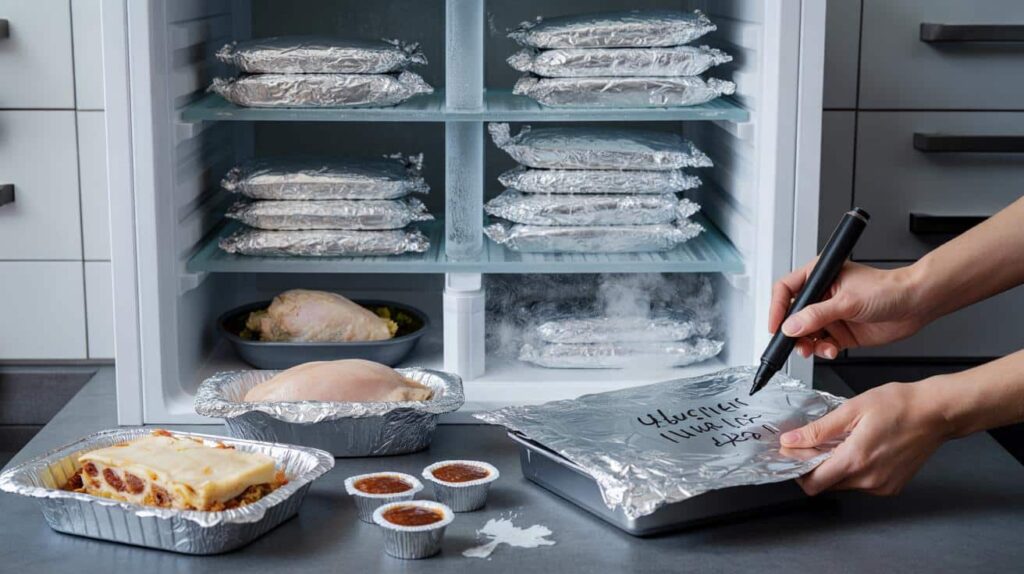
The method that’s quietly winning people over is almost too simple. First, cool your food completely so you’re not trapping steam. Then cut a sheet of aluminum foil large enough to wrap it snugly, without stretching or tearing. Press the foil gently but firmly against every accessible surface of the food, like you’re tucking it in.

Next step: give that foil-wrapped piece a second layer of protection. Slide it into a freezer bag, a reusable silicone pouch, or even a rigid box. Squeeze out as much air as you can from the bag, close it, and label it with a date. That’s it. No gadgets, no machines humming on the counter.
The missteps are almost always the same. People wrap hot dishes and trap moisture, creating ice crystals from the inside. Or they use a loose sheet of foil, leaving open corners that invite air and frost. Sometimes they skip the second layer, thinking foil alone is indestructible. It isn’t.
There’s also the guilt factor. You buy a nice glass container, promise yourself you’ll portion everything like a meal-prep influencer, then end up stuffing leftovers into any box with a free lid. *Let’s be honest: nobody really does this every single day.* That’s why this foil trick feels refreshing. It slips into the real rhythm of a tired evening.
More and more home cooks talk about this trick like it’s some kind of mini revolution. A small act that makes you feel strangely competent in your own kitchen.
“Foil has become my safety net,” says Marie, 46, who batch-cooks on Sundays. “I wrap everything: grated cheese, half a cake, sliced bread. My freezer finally feels like a pantry, not a graveyard for food I’m never going to touch again.”
- Wrap directly on the food to block out air as much as possible.
- Add a second outer layer (bag or box) for extra protection and organization.
- Label with contents and date so you actually use what you freeze.
- Favor foil for solid foods: meats, bread, cooked dishes, pastries.
- Combine with containers for sauces or liquids that don’t hold shape.
Beyond the hack: what this tiny habit changes at home
Something subtle happens when your frozen bread no longer tastes like cardboard and your batch-cooked meals actually hold their flavor. You start trusting your freezer again. You’re more likely to cook a double portion of soup, freeze half, and feel relieved three Wednesdays later when you’re exhausted and hungry.
You stop seeing aluminum foil as just that noisy roll you use on baking trays, and start seeing it as a way to rescue food from an icy, flavorless fate. Frozen doesn’t automatically mean sad. It just depends on how you send food into that cold.

| Key point | Detail | Value for the reader |
|---|---|---|
| Foil blocks air | Wrapped directly on food, it reduces dehydration and freezer burn | Better texture and flavor when defrosting meals |
| Double protection | Foil plus bag or container limits moisture and odors | Less waste, more appetizing frozen leftovers |
| Flexible use | Works for bread, meat, cooked dishes, pastries, and prepared portions | Helps plan ahead without sacrificing taste or convenience |
FAQ:
- Can I put food wrapped only in aluminum foil directly in the freezer?Yes, for short-term freezing of solid foods, but adding a second layer (bag or box) lowers the risk of damage and odor transfer.
- Is aluminum foil safe for all types of food in the freezer?It’s generally safe for most foods when cold, especially meats, bread, and cooked dishes, though very acidic foods are better stored with an extra inner layer like parchment.
- Does aluminum foil really prevent freezer burn?It helps a lot by limiting air contact, especially when pressed tightly on the surface and combined with an outer airtight layer.
- Can I reuse aluminum foil after freezing food?If it’s clean, not torn, and hasn’t been in contact with raw juices, you can gently smooth it out and reuse it for the freezer or for cooking.
- Is foil better than plastic containers for freezing?They work differently: containers organize and protect shapes, while foil hugs the food to reduce air pockets; the most effective combo is often foil around the food inside a container or bag.
