
On a Tuesday night in late January, when the freezer door sticks from years of hard use and a thin frost clings to everything, you probably do what millions of people do. You grab a roll of aluminum foil, tear off a noisy sheet, and quickly wrap the leftovers before you lose the last bit of motivation. The pan is still warm, the kids are half-asleep on the couch, and the only real goal is simple: don’t waste food, get it out of sight, go to bed.
Then, the next day, a headline flashes across your phone: “Never put aluminum foil in the freezer, experts warn.”
You blink, stare at your perfectly wrapped lasagna behind that icy door, and feel a small jolt of doubt.
Safe habit, or silent kitchen mistake waiting to happen?
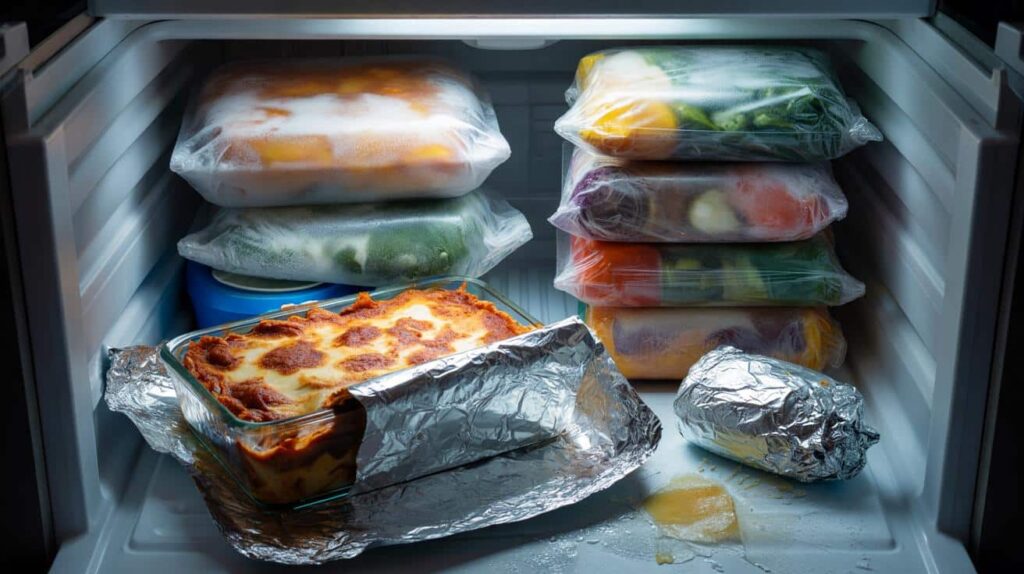
Why experts side‑eye that shiny foil in your freezer
Open any busy family freezer and you’ll spot it immediately: crumpled silver packets wedged between ice cream tubs and half-empty bags of peas. Foil-wrapped meat, sauces, portions of cake “for later” that somehow stay forever. It looks practical, thrifty, almost professional. Yet many food scientists wince when they see bare aluminum foil touching food in a deep freeze.
They’re not horrified for drama’s sake. They’ve just seen what we don’t always notice: tiny tears, freezer burn, odd smells, and sometimes a slow, invisible migration of metal into the food itself.
Think of a tray of marinated chicken breasts, tightly wrapped in foil after a long day. The marinade is a bit acidic, maybe lemon juice or tomato, the kind of thing that makes dinner delicious. You slide the tray into the freezer with relief and forget it.
Weeks later you thaw it and catch a faint metallic taste. The edges look oddly dry and grayish. A corner of the foil has fused to the meat, and when you peel it off, a thin layer of flesh goes with it. You shrug it off, cook it anyway, but something feels off, even if everyone eats without complaint.

There’s a reason experts keep repeating the same warning. Acidic or salty foods can react with aluminum, especially over time, and freezing doesn’t magically stop that contact. The cold just slows everything down. At the same time, foil tears easily when knocked around by frozen packages, creating tiny gaps that invite air and moisture. That’s exactly how freezer burn starts. *What looks like a neat silver armor can be a flimsy shield that tricks us into feeling safer than we actually are.*
The trick works, in a way. It just doesn’t work as well as we like to believe.

The safer way to freeze food without giving up your foil habit
There is a middle path between “foil forever” and “throw out the roll.” Most food safety specialists quietly recommend a two-layer method. First, wrap the food tightly in direct-contact protection, like freezer-safe plastic wrap, a silicone bag, or a rigid container. That’s the true barrier.
Then, use aluminum foil as the outer shell. The foil keeps light out, blocks odors, and bundles everything into tidy shapes that stack better. The real magic is that the foil is no longer touching the food itself.
The mistakes usually start when we’re tired and rushing. We wrap still-warm food in foil, trap steam, and then freeze it. Condensation builds, ice crystals form, and that moisture chews away at texture over time. Or we leave sharp bones or crusty food edges poking through the foil so that, after a few freezer door slams, the wrap is riddled with invisible holes.
Let’s be honest: nobody really checks those parcels three weeks later to see if the foil has torn. We just grab, thaw, and hope for the best. That’s why experts sound so strict; they’ve seen exactly where our shortcuts lead.

“Aluminum foil is not the villain,” explains a nutrition-focused chef who teaches home cooks on weekends. “The real problem is when people use it alone, directly on food, for months at a time in the freezer. It’s a good helper, not a complete solution.”
- Use foil as a second skinFirst, protect food with plastic wrap, a bag, or a container. Then add foil outside for structure and light protection.
- Label and date every packageA simple marker note cuts down on mystery packages and forgotten food lingering for months.
- Avoid direct foil contact with acidic foodsTomato sauces, citrus marinades, vinegar-based dishes are better in glass or plastic first.
- Watch for bones and sharp edgesCover them with an inner wrap so they don’t pierce the foil during freezing and stacking.
- Limit long-term storageUse foil-wrapped items within three months for best taste, texture, and peace of mind.
Between folk wisdom and lab coats: finding your own balance
The tension around aluminum foil in the freezer sits right at the crossroads of two worlds. On one side you have home habits passed down from parents and grandparents who froze whole years of harvests with nothing but foil and faith. On the other, a chorus of specialists armed with lab results, chemical reactions, and close-up photographs of freezer-burned food. Both sides believe they are protecting families, just in different ways.
We’ve all been there, that moment when an expert warning collides with the method that has kept dinner on your table for decades.
For many households, the freezer is more than just a box of ice; it’s a quiet insurance policy against busy weeks and tight budgets. Changing how we wrap food can feel like a judgment on the way we care for our loved ones. Yet sometimes the smallest tweak is enough: adding a layer, skipping foil on that lemony fish, switching to containers for stews and sauces. These shifts don’t erase tradition. They gently update it.
You might still keep that roll of foil on the counter, just like always. You might just start asking yourself, every time you rip a sheet: “Is this the inner layer, or the outer armor today?”

| Key point | Detail | Value for the reader |
|---|---|---|
| Limit direct foil contact | Avoid wrapping acidic or salty foods in bare foil for long freezer storage | Reduces metal migration risk and strange metallic tastes |
| Use double-layer protection | First a food-safe wrap or container, then foil outside | Improves texture, prevents freezer burn, keeps flavors intact |
| Shorten storage times | Eat foil-wrapped frozen foods within about three months | Better taste, fewer surprises, less food waste |
FAQ:
- Question 1Is it instantly dangerous to eat food that’s been frozen only in aluminum foil?
- Answer 1For most healthy people, an occasional foil-wrapped freezer meal is unlikely to cause dramatic harm, especially if the food wasn’t very acidic and wasn’t stored for months on end.
- Question 2Which foods are the worst match with foil in the freezer?
- Answer 2Tomato-based dishes, citrus marinades, salty sauces, and strongly spiced or brined meats are more reactive with aluminum and are better kept in glass or plastic before adding any foil outside.
- Question 3Can aluminum from foil really end up in my food?
- Answer 3Studies show that some aluminum can migrate into food under certain conditions, mainly with high acidity, salt, or long contact times, which is why experts prefer to limit direct contact in storage.
- Question 4Is foil better or worse than plastic for freezing?
- Answer 4Neither is perfect alone. Plastic bags or containers usually protect better against air and moisture, while foil blocks light and odors; using them together is often the safest, most effective combo.
- Question 5What’s a simple upgrade I can start tonight?
- Answer 5Wrap leftovers in a freezer-safe bag or container first, then add a loose layer of foil on the outside, label it with today’s date, and aim to eat it within a few weeks.
