The signature itself looks simple: more single-aisle jets, same workhorse model. Behind it sits a race for delivery slots, a reshaped balance of power between airlines and lessors, and a leasing market set to weigh roughly €370 billion by 2032.
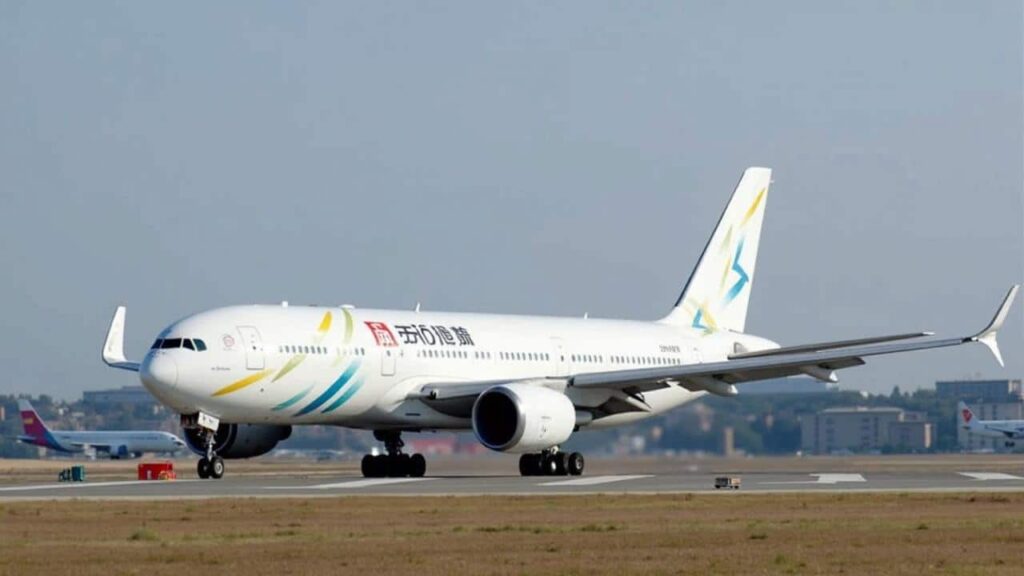
China’s CALC doubles down on Airbus narrow-bodies
On 30 December 2025, China Aircraft Leasing Group Holdings Limited (CALC) signed a fresh firm order with Airbus in Toulouse for 30 additional A320neo family aircraft.
This new batch adds to an already sizeable backlog at the Hong Kong–listed lessor. CALC now counts 282 Airbus aircraft ordered in total, including 203 from the A320neo family, the company’s clear flagship asset.

By securing extra A320neo slots in a tight production schedule, CALC locks in capacity that many airlines still struggle to access directly.

The deal comes as airlines across Asia and beyond hunt for fuel-efficient, immediately available aircraft. Production for both Airbus and Boeing remains heavily booked for years ahead, pushing carriers to rely more on lessors that locked in orders early.
Who exactly is CALC?
CALC is not an airline and does not fly passengers. It is a specialist aircraft lessor: a financial and industrial middleman that buys new jets from manufacturers and rents them out to airlines worldwide.
Its business model is simple on paper and tough in practice. CALC commits large sums years before delivery, reserves production slots and builds a portfolio of modern aircraft. Airlines then lease those jets for eight to twelve years on average, paying monthly fees instead of paying hundreds of millions upfront for ownership.
This approach lets airlines launch routes faster, adjust capacity more nimbly and refresh ageing fleets without wrecking their balance sheets. For CALC, the challenge lies elsewhere: choosing aircraft that will stay in demand for decades, keep strong resale values and can be moved from one customer to another with minimal downtime.
The A320neo family fits this logic perfectly. It is a modern single-aisle workhorse, highly fuel-efficient and already certified to fly with a blend of sustainable aviation fuel (SAF). It operates on every continent and underpins the business model of both low-cost and full-service carriers.
A relationship built over more than a decade
The latest order marks the fifth major contract between CALC and Airbus since their first deal in 2012. Over that period, the two companies have grown together, with CALC largely aligning its strategy with Airbus’s strongest-selling programmes.
CALC has climbed the global rankings steadily. According to industry databases, it stood around 16th worldwide by fleet size in 2024, with 208 aircraft and a portfolio valued at about $5.6 billion, mostly A320 family jets.
That may not yet rival giants like AerCap, but the trajectory matters. Each new batch of fuel-efficient narrow-bodies secures higher rental income potential and cements CALC’s role as a go-to partner for Chinese and international airlines that want Airbus capacity without the long wait.
Why lessors keep betting on the A320neo
The A320neo family is hardly a surprising choice, and that is its biggest strength. With more than 19,000 orders logged, it ranks as one of the most requested aircraft lines in history.
The family stretches from the standard A320neo to the larger A321neo, which offers more seats and longer range. Airlines can shift capacity up or down within the same family, maintaining common pilot training, maintenance systems and spare parts pools.
For a lessor, this creates a kind of financial Swiss Army knife. An A321neo that leaves a European low-cost carrier can easily find a new home with a Middle Eastern or Southeast Asian airline, often with minimal reconfiguration.
- High global demand supports residual values over time.
- Common cockpit and systems reduce training and maintenance costs.
- Strong leasing appetite from both low-cost and full-service airlines.
- Compatibility with growing SAF use supports long-term relevance.
A leasing market heading for €370 billion
The CALC-Airbus deal slots into a much bigger story. Aircraft leasing has moved from a niche financial product to a core pillar of global aviation.
Industry data show that the aircraft leasing market reached around $183 billion (roughly €170 billion) in 2024. Projections point towards more than $400 billion by 2032, or about €370 billion, driven by fleet renewal, traffic growth and higher interest rates that make off-balance-sheet solutions attractive.
Leasing now finances well over half of Airbus deliveries in some years, making lessors pivotal gatekeepers between factories and runways.
Europe retains a dominant position, with more than half of the global leasing market in 2023. That strength stems from the concentration of major lessors in Ireland and the continued expansion of European low-cost carriers, whose business models rely heavily on leased single-aisle jets.

Narrow-bodies such as the A320neo and Boeing 737 families make up the bulk of leased fleets. They match the dense short- and medium-haul networks favoured by low-cost and regional operators. Dry leasing – where airlines take only the aircraft, not the crew – remains the favoured structure thanks to lower operating costs and simpler regulation.
Where CALC sits among the global players
Against this competitive backdrop, CALC occupies an interesting middle tier: not a behemoth, but no longer a minor regional player either.
| Rank (2024) | Lessor | Fleet size | Portfolio value (bn $) | Main fleet type |
|---|---|---|---|---|
| 1 | AerCap | 1,669 | 61.99 | A320 family |
| 2 | Avolon | 633 | 30.68 | A320neo |
| 4 | BOC Aviation | 576 | 30.15 | A320neo |
| 6 | Air Lease Corporation | 420 | 19.50 | A320neo |
| 16 | China Aircraft Leasing Group (CALC) | 208 | 5.60 | A320 family |
For Airbus, CALC offers a bridge into Chinese and Asian demand beyond state-owned flag carriers and big private airlines. For CALC, Airbus is the anchor supplier enabling long-term portfolio planning built around a single, globally trusted platform.
Leasing as shock absorber and growth engine
The strategic role of lessors showed up clearly during the pandemic. In 2020, while many airlines halted or cancelled purchases, leasing firms still financed around 55% of Airbus deliveries. They effectively kept production lines turning when customer confidence evaporated.
As traffic recovered, those same lessors could reallocate stored or undelivered aircraft to the fastest-rebounding markets. This ability to move metal quickly across regions gives leasing companies significant influence over how capacity returns to the skies.
Forecasts suggest that the share of deliveries financed by lessors could reach 60% in the coming years. That shift embeds leasing as a permanent structural feature of commercial aviation, not just a tool for financially stretched airlines.
Environmental pressure and SAF-ready fleets
Another dimension behind CALC’s Airbus bet lies in environmental regulation. All newly ordered Airbus aircraft, including these latest A320neo jets, are already certified to run on up to 50% sustainable aviation fuel. Airbus aims for 100% SAF compatibility across its fleet by 2030.
For lessors, this reduces the risk of holding stranded assets. An aircraft capable of operating efficiently on cleaner fuels is more likely to stay desirable as carbon pricing, emissions caps and passenger scrutiny intensify.
A jet that can evolve with the fuel mix keeps its earning power for longer, a crucial factor for a leasing contract stretching over a decade or more.
What aircraft leasing really means in practice
The jargon around leasing can feel abstract, yet the mechanics are straightforward from an airline’s perspective.
In a dry lease, the lessor delivers only the aircraft. The airline supplies crew, maintenance and insurance, and uses the jet as if it owned it, within contract limits. Monthly lease payments behave like rent, not loan repayments, which can make balance sheets look lighter and more flexible.
In a wet lease, the lessor often provides aircraft, crew, maintenance and insurance as a package. Airlines use this mainly during peak seasons or disruptions, since costs run higher but flexibility is unmatched.
For passengers, the result is mostly invisible. You might board an Airbus A320 in London painted in an airline’s colours, unaware that a lessor in Dublin or Hong Kong actually owns the metal and collects rent on it.
Scenarios: how CALC’s new order could play out
Several scenarios flow from CALC’s extra 30 A320neo family aircraft:
- Capacity bridge for Chinese airlines: carriers facing long waits for direct Airbus deliveries can lease these jets to grow faster on domestic and regional routes.
- Flexibility against market swings: if demand softens in China, CALC can shift aircraft to Southeast Asia, the Middle East or even Europe, where demand for efficient single-aisles stays high.
- Green branding opportunity: airlines wanting to showcase SAF use can point to the compatibility of these newer-neos, even if SAF supply remains limited.
The main risks sit on the familiar axes: interest-rate volatility, which affects financing costs; potential oversupply if too many similar aircraft hit the market at once; and ongoing technical issues with new-generation engines, which can ground aircraft and chip away at lessors’ rental income.
Yet the broad pattern remains clear. As airlines focus on brands, routes and customer experience, they lean ever more on lessors to shoulder the heavy capital burden. CALC’s latest move with Airbus simply confirms that this quiet rebalancing has plenty of room left to run, especially in a leasing market racing towards that €370 billion horizon by 2032.