
Chairs scrape. Someone laughs a little too loudly. In a side room, a small group of people over 70 stand in a loose circle, eyes locked on a foam ball resting on the floor. “Ready?” the instructor asks. She nudges the ball toward a man nearby. He reaches, twists, wobbles for a second, then steadies himself and smiles with the pride of someone who just pulled off something bold.

There’s no treadmill here. No shiny machines. Just hands reaching, bodies turning, and feet making careful adjustments. From the hallway, it might look trivial. Inside the circle, it feels like a quiet decision: they’re not finished yet.
Because after 70, the kind of movement that protects your healthspan often doesn’t resemble traditional “exercise” at all.

The Subtle Movement That Determines Long-Term Independence
Watch an older adult rise from a low sofa. In that single action lies a preview of the next decade. A hand reaches for support, the torso leans forward, weight shifts, legs push, balance settles. It isn’t walking. It isn’t gym work. It’s a full-body coordination challenge disguised as standing up.
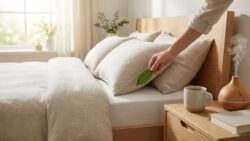
This is the movement pattern that quietly governs healthspan: transitions. Sitting to standing. Bed to chair. Floor to feet. Turning, pivoting, recovering when balance slips. When these remain strong, people stay independent, keep their routines, and choose their days. When they weaken, life shrinks into warnings and limitations.
Falls rarely happen during perfect, straight-line walking. They occur in the messy moments in between: reaching into a cupboard, turning too quickly, getting up at night. That’s why training transitions may protect your future more effectively than counting daily steps.
A geriatrician in Lyon once described a patient, 78 years old, who walked an hour every day. Healthy, disciplined, proud. One winter morning, he twisted to grab a scarf from a chair, slipped, and fractured his hip. Six months of lost independence followed, along with a confidence that never fully returned.
On paper, he was active. In reality, his body wasn’t prepared for chaos. Strong in straight lines, untrained for surprise. No practice turning under load. No drills linking feet, hips, and vision the way real life demands. Research echoes this: simple tests like standing up from a chair five times can predict mortality more powerfully than how far someone walks in six minutes.
Why People Who Age Well Keep Moving Differently
Observe those who age exceptionally well and a pattern appears. They don’t just walk. They move. They garden on their knees and stand back up. They lift grandchildren from the floor. They twist, squat, pivot, and respond quickly when called. Their days are filled with small, constant transitions, keeping the nervous system alert and joints familiar with real-world angles.
Biomechanically, transitions act like a software update for the body. They force the brain to coordinate joints in three dimensions, not just forward and backward. Muscles load dynamically instead of following fixed tracks. Vision, reaction time, and the delicate cooperation between ankle, knee, and hip are quietly trained to prevent falls when the ground shifts unexpectedly.
Training Transitions at Home Without Turning It Into a Gym
The simplest tool is a chair. No gadgets. No balance boards. Just a stable chair without wheels. Sit near the edge, feet under your knees. Cross your arms or lightly touch the armrests if needed. Lean your chest slightly forward, stand up calmly, then sit back down with control. That single movement is one repetition of a pattern that strongly predicts your future.
Start with three to five repetitions, once or twice daily. On stronger days, count how many controlled reps you can do in 30 seconds without losing form. When it feels easy, add a variation: stand up, rotate your body 90 degrees, and sit on a second chair placed beside you. You’re now practicing the exact pivot where many household falls occur. It still looks simple—and that’s the point.

Let’s be honest: almost no one does this perfectly every day. Life fills up, even in retirement. Appointments, family, fatigue, and that quiet promise to start tomorrow. So set the bar low enough to clear it. One brief session after morning coffee. Another before brushing your teeth.
A common mistake is jumping straight into complex balance drills seen online. Those have their place, but if sitting down still ends in a heavy drop, the fundamentals matter more. Another trap is moving too fast, chasing numbers instead of control. Rushed transitions teach the wrong patterns.
Small adjustments change everything. Fixing your gaze ahead makes standing easier. Turning your head to the side increases difficulty and realism. A gentle exhale as you rise calms the nervous system. Think of it as refining the software, not punishing the hardware.
Floor Transitions: A Powerful Marker of Resilience
“The most predictive movement after 70,” a physiotherapist once told me, “isn’t found on any machine. It’s whether someone can get down to the floor, pick something up, and stand back up without panic.” That single pattern reveals remarkable insight into resilience.
For those who can practice safely, training floor transitions can preserve years of autonomy. Use a sturdy chair or low table for support. Lower one knee to the floor, then the other, using hands as needed. Pause. To rise, place one foot flat, press through legs and arms, and stand. One slow, thoughtful repetition matters more than many rushed ones.
- Begin where you are, not where you think you should be
- Acknowledge fear without letting it lead to avoidance
- Use support from a person, rail, or chair when needed
- Stop before exhaustion; aim for a mild challenge
- Practice on good and bad days so your body adapts to both
From Exercise to Everyday Life
The real change happens when transitions stop being a workout and start becoming part of daily life. That’s where healthspan quietly expands. Stand from a chair without using your hands now and then. Turn gently in the kitchen while waiting for the kettle. Step sideways instead of always forward. These small choices matter more than a single intense session each week.
On public transport, hold the rail lightly with just a couple of fingers, knees soft. At home, store everyday items at varied heights so you naturally bend, reach, and pivot. Not enough to strain—just enough to remind your joints of their purpose. Physical variety becomes quiet insurance against fragility.
At a deeper level, practicing transitions sends a message: you’re still participating fully in life. We’ve all seen the moment when someone hesitates to stand and others rush in to help. The instinct is kind, but repeated removal of these moments erases valuable training.
A different approach is possible. One where caregivers and family support movement rather than replace it. Where “Let me do that for you” becomes “I’ll stay close while you try.” Where the aging body is treated not as fragile glass, but as a system that adapts to gentle challenges.
This mindset also eases the guilt of not wanting to “start the gym” later in life. That’s fine. Start with your chair, your hallway, your garden. The training ground for your nervous system is the floor beneath your feet. The question shifts from “How hard did I work?” to “How many movement patterns did I explore today?”
Key Takeaways
- Prioritizing transitions: Focus on sit-to-stand, bed-to-chair, and floor-to-standing movements to extend independence
- A chair as your training space: A stable chair is enough to begin safely at home
- Daily variation matters: Integrating pivots, side steps, and bends turns everyday life into discreet functional training
