
The first time you fired up your pellet stove, it probably felt like a small miracle. Warmth on demand, a soft glow, and clean pellets that replaced the mess of logs. For a while, it worked perfectly, bringing you crispy warmth without the hassle. But soon enough, you noticed the hum, the metallic rattle, and the fan that sounded like an old computer booting up.
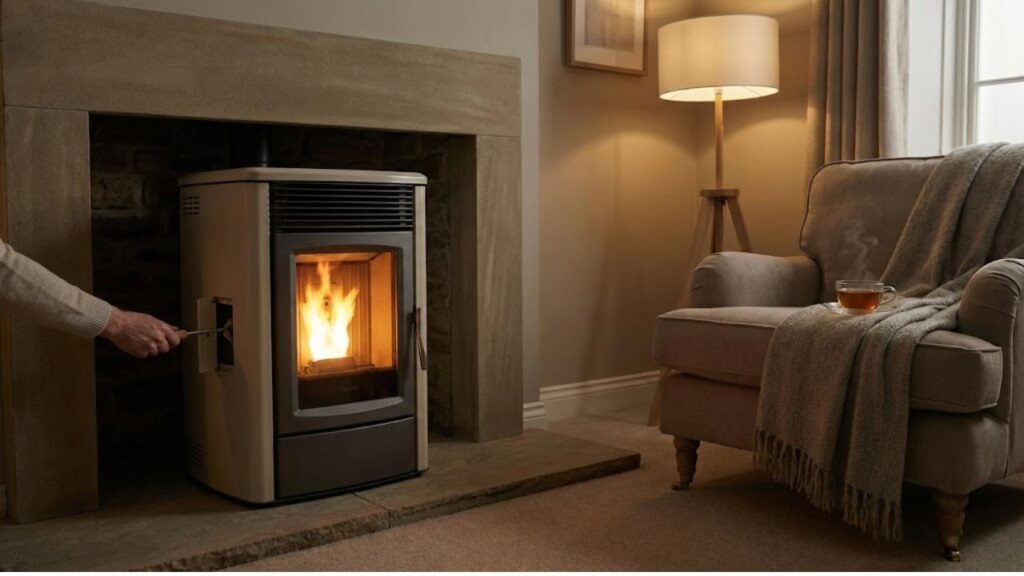
You tried to ignore it, turning up the TV and then down again, trying to block out the noise. Your living room was warm, but your nerves were anything but calm.
Some people buy a new stove. Others simply learn to live with the buzz. But there’s a quiet secret that many pellet technicians know and rarely talk about.

The Hidden Fix for Your Pellet Stove’s Noise
The story begins on a chilly winter evening, when your home should feel like a cozy sanctuary.

Laura, 41, had just tucked her kids into bed. The pellet stove cast a golden glow across the room, but beneath that warmth, the noise was relentless: a dry ticking, a low drone, a constant whirring that never quite stopped.
“It’s like having a hairdryer in the living room,” her partner joked.
From that moment on, once you hear it, you can’t unhear it. The noise becomes a part of your daily life, slowly creeping in and turning into a frustration.
On a forum, Laura found dozens of people echoing the same complaints: different brands, new stoves, old stoves, different houses—same frustration.
They tried everything: rubber pads under the stove, thick curtains, moving the furniture. Some even called in the installer for a quick cleaning, only to return to square one a few weeks later.
Then a heating technician gave her a number: *8 out of 10 homes* with a pellet stove had a noise problem that could be improved—not a defect, just a matter of tuning.
That number stuck with her long after the noise persisted.
Understanding Why Pellet Stoves Get So Loud
Pellet stoves aren’t born noisy. The real issue is usually the **small components** around the fire: the convection fan spinning too quickly, the exhaust fan working harder than needed, pellets dropping unevenly into the burn pot, and panels vibrating like a cheap speaker.
The key factor? How all these elements are **controlled**. Almost no one knows about the hidden setup menu of the stove, which is where you can adjust fan speeds, pellet feeding rates, and how the stove balances heat and airflow.
The difference between a soothing background hum and a mechanical roar often boils down to a few settings tucked away behind a combination of keys on the control panel.
The Simple Calibration You Need to Make
The secret to a quieter stove isn’t magic. It’s simply a **calibration** process.

Every modern pellet stove has a *technical* or *installer* menu, typically locked by a code or button sequence. This is where technicians adjust the fan speed, fine-tune pellet feed, and synchronize the two to allow the stove to run efficiently without becoming a noise machine.
In many models, the convection fan is set too high at the factory. While this seems like a good idea—more airflow, more heat—it’s unnecessary. The room heats perfectly fine at a lower fan speed, and the noise drops dramatically when adjusted.
Reducing the fan RPM slightly—just out of the “screaming” zone—turns that harsh, artificial wind into a soft, deep breath.
This is the tweak that almost no one explains when they install the stove.
The second part of the trick is pairing the fan adjustment with the pellet feed rate.
If the auger pushes pellets too quickly, the fire becomes aggressive: it crackles loudly, produces more residues, and forces the exhaust fan to work harder. The whole system struggles, and paradoxically, comfort decreases.
Technicians typically lower the stove’s power slightly, then adjust the pellet feed in increments. They observe the flame, ensuring it remains steady—like a flickering candle. Once the flame is stable, they adjust the fan speed so the hot air is gently pushed out, not blasted.
How to Quiet Your Stove Yourself: A Practical Guide
To bring the quiet back to your stove, follow these simple steps:
- Start with a deep clean: Don’t just dust off the stove. Empty the burn pot, vacuum the ash channels, wipe the fans if accessible, and tighten any loose screws on the body of the stove. Loose panels vibrate and cause noise, which can be easily fixed with a screwdriver.
- Access the technician menu: Use the manual or an online guide to access your stove’s hidden settings. Note the factory values before you adjust anything.
- Test gradually: Start by reducing the convection fan speed by one or two steps. Let the stove run for 15–20 minutes and listen from a distance, not right in front of the unit.
- Check the flame: If the flame starts to look lazy or smoky, you’ve gone too far. Adjust the fan speed or pellet feed slightly until the flame is steady.
- Repeat the process: Most people only need 2-3 adjustments to turn a noisy drone into a gentle hum.
It’s easy to get frustrated with the menu and settings, especially if you’re tired or just want the stove to “work.” But taking your time and making one change at a time will lead to a much quieter and more efficient stove.
When Your Pellet Stove Becomes a Quiet, Reliable Companion
There’s a strange moment when you’ve finally quieted your pellet stove. You turn it on at the usual time, and you go about your evening. Then, halfway through a book or a show, you realize something: the background noise is gone.
Your brain, which had been filtering out that constant hum, can finally relax. Conversations feel softer. The TV doesn’t need to be as loud. That quiet moment between sentences feels natural again.
On a family level, this shift matters more than we realize. It eliminates that subtle, invisible irritation we never quite pinpointed before. The quiet changes the whole atmosphere of the room.
You don’t need to be a technician to achieve this peace. The secret tweak is about tuning your stove to your home and needs. With a few adjustments, your stove can become a peaceful, reliable source of warmth rather than a noisy companion.

Key Takeaways
- Hidden technician menu: Access settings for fan speed and pellet feed to reduce noise and improve efficiency.
- Small, gradual adjustments: Tweak one setting at a time and test from your usual seating spot to avoid errors and improve comfort.
- Physical checks first: Clean the stove thoroughly and tighten loose panels to remove rattles before adjusting the settings.
