
Water bottles, light dumbbells, and casual talk about sore knees fill the room. Some people laugh about their daily 10,000 steps, others admit they skipped the gym again. In one corner, a woman wearing a blue cardigan slowly lowers herself from standing to the floor, then carefully rises again. There is no music, no special equipment, just steady, intentional movement.
She repeats it twice, steadies herself with a chair, and smiles. “If I can still do this at 90, I’ll be satisfied,” she says. Most people barely notice. They should.
Because after 70, the habit that quietly shapes how long you stay independent is not your morning walk or weekly class. It is whether your body still knows how to get down to the floor and stand back up.
The movement pattern that reflects how well you age
Geriatric specialists use a clinical term for it: the “sit-to-stand” or “floor transfer”. In simple terms, it means lowering yourself from standing to the floor and returning to standing without panic or collapse. It is not a fitness drill. It is a real-life ability.

Large studies observing older adults reveal a clear trend. People who can move down to the floor and rise again with minimal support tend to live longer and spend fewer years with disability. Those who struggle often lose independence sooner, even if they walk every day.
This can feel unfair. You may reach 8,000 steps a day and still be one fall away from being unable to get up from the carpet.
A widely cited Brazilian study followed more than 2,000 adults aged 51 to 80. Participants were asked to sit on the floor, cross-legged if possible, and stand back up using as little assistance as they could. Scores ranged from 0 to 10. Each point lost, such as using a hand for support or wobbling, was linked to a higher risk of death during follow-up.
While no single movement decides anyone’s future, the pattern is striking. The ability to transition between floor and standing combines balance, leg strength, core stability, joint mobility, and confidence into one simple task.
Doctors see this daily. Patients who rise easily from the exam table often recover better from surgery. Those who struggle to stand from a chair tend to have more difficulty with medical setbacks. This relates to healthspan, the years lived in good health, and this modest movement reflects it remarkably well.
Walking follows a steady rhythm. Moving from floor to standing is different. It challenges blood pressure, joints, muscles, and coordination all at once. It mirrors real life: getting up after a fall, kneeling to reach a cabinet, or playing on the floor with a grandchild and standing again without fear.
When this ability fades, people quietly avoid the ground. Gardening stops. Picking items up becomes risky. Fear grows, movement shrinks, stiffness increases. A slow, silent spiral begins.
How to safely practice getting up from the floor after 70
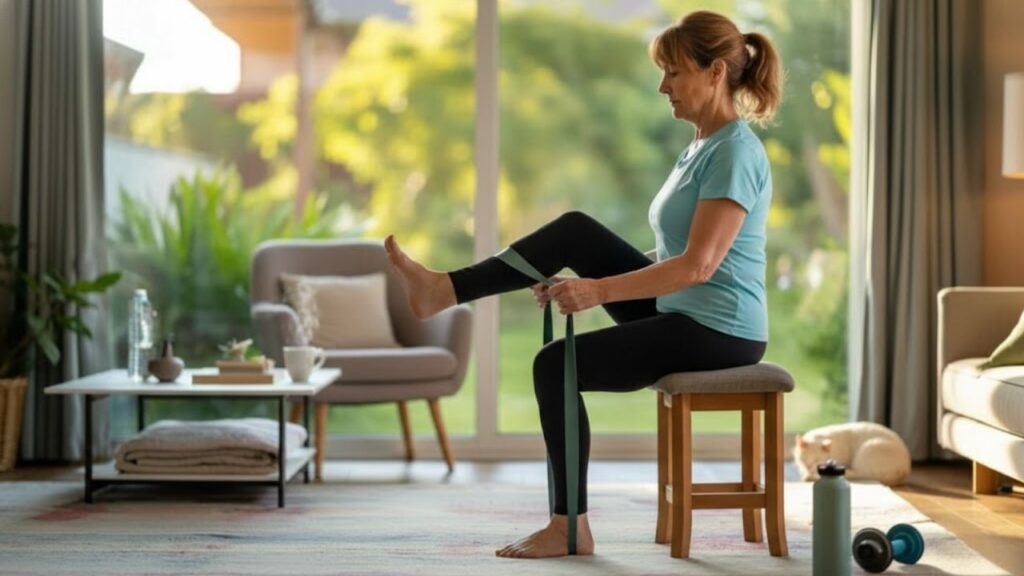
If you have not been on the floor in years, starting there can feel unrealistic. Begin higher. The most basic version is standing up from a chair and sitting back down slowly. Keep your feet flat, knees slightly apart, and hands resting lightly on the armrests.
Do a few repetitions, rest, and repeat once or twice. Some days will feel easier than others. That is normal. The goal is not perfection but familiarity. When the chair feels manageable, try a slightly lower surface, such as the edge of a bed.
Gradually, your muscles and nervous system relearn that you can move through space, not just forward in a straight line.
 Goodbye Hair Dye for Grey Hair: The Conditioner Add-In That Gradually Restores Natural Colour
Many physiotherapists then suggest a halfway step toward the floor. Stand beside a sturdy chair or counter, hold on with one hand, and practice lowering into a kneeling position and rising again. Move slowly, one knee at a time. This is often where people notice their heart rate increase. It is not only strength being tested, but confidence.
Using a soft rug or folded blanket under the knees, practice a few times each week. Some people count repetitions, others use time, such as three minutes while the kettle boils. Soyons honnêtes : personne ne fait vraiment ça tous les jours. What matters is steady practice over months, not intensity over a weekend.
When you feel comfortable, add variety. Sit on a low stool or yoga block and stand up with arms crossed. Step onto a low platform while holding a rail. These variations all reinforce the same skill: strong legs and trust in the floor.
This is about dignity as much as fitness. For many older adults, the fear is not just falling. It is the thought of being unable to get up without help. Almost everyone has experienced the moment when the ground suddenly feels farther away than it used to.
Falls specialists emphasize confidence for a reason. Practicing safe, controlled descents teaches the brain “I have options”. That reduces panic. And panic, more than age, often turns a minor stumble into a serious emergency.
As one physical therapist who works primarily with adults over 70 explains:
“I don’t measure success by miles walked. I measure it by whether you can get up off the floor in your own home.”
Simple weekly habits that support independence
- Practice standing up from a chair without using your hands a few times on most days.
- Once or twice a week, practice lowering to one knee and standing back up, using support if needed.
- At least once a week, if you feel safe, sit on the floor and explore different ways of getting back up.
These habits do not replace walks, classes, or social activities. They add a missing layer, one that quietly protects your healthspan when life becomes unpredictable.
Beyond steps and gyms: relearning everyday movement
After 70, the shift is mental as much as physical. Instead of thinking about exercise, think about movement skills. Walking keeps the engine running. The floor-to-stand pattern teaches control and adaptability. It is less about calories and more about preserving freedom.
Some families turn this into daily life. Grandparents spend a few minutes playing on the floor before standing up. Couples challenge each other to rise from the sofa without pushing off with their hands. Small moments create surprisingly meaningful gains.
This also invites honesty. Are low chairs being avoided because standing feels uncertain? Are social outings declined because getting up from the ground feels intimidating? These are not failures. They are signals pointing directly to the skill worth rebuilding.

Why this movement matters
- The floor-to-stand pattern reflects independence: Research links this ability to longer, healthier lives.
- Small, regular practice outperforms intense workouts: Simple movements build strength and confidence without overwhelming the body.
- Trusting the floor reduces fear: Knowing you can get up lowers anxiety and supports an active social life.
