
The woman in the turquoise cardigan passed the park bench three times before finally joining in. On the grass, a small circle of grey hair and well-worn sneakers took turns stepping up and down from a low wooden box, laughing whenever someone wobbled and grabbed a nearby arm. There were no machines, no Lycra, no rush—just slow, intentional movements that looked almost deceptively easy.
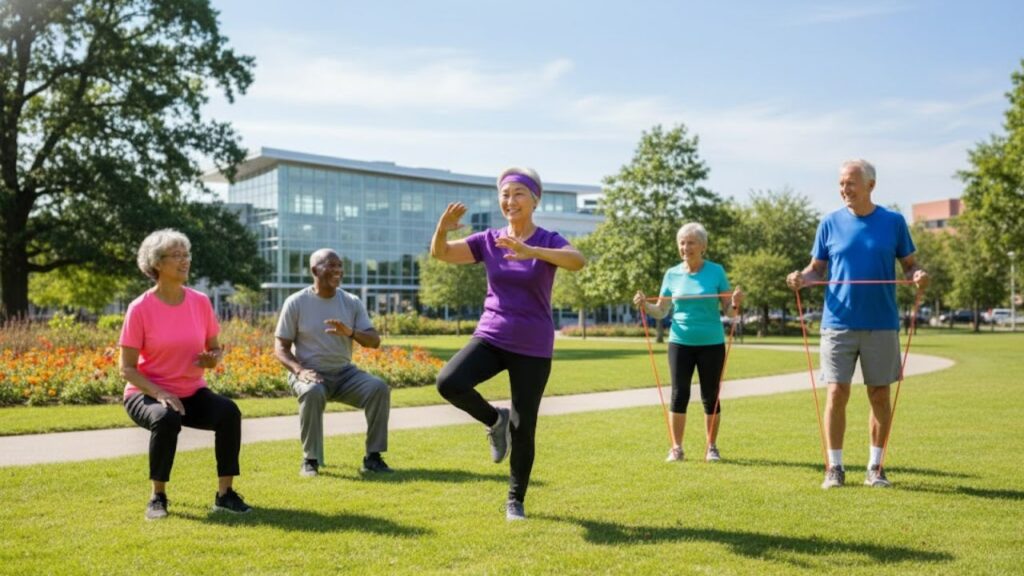
A man in his late seventies watched with his cane resting against his leg. When the instructor waved him over, he declined. Ten minutes later, he was stepping onto the box too, breathing a little heavier, standing a little taller. The walk he had planned around the park never happened. What he did instead, gerontologists say, can quietly add years of life you can actually enjoy.
Because it isn’t walking itself that changes everything. It’s how your body moves when life becomes unpredictable.
 Health Experts in the UK Raise Alarms Over a Cosmetic Trend Linked to Serious Long-Term Risks
The movement pattern gerontologists keep emphasizing
Ask people over 70 about exercise and many think of daily walks or gym treadmills. Helpful, yes—but not always transformative. What gerontologists consistently highlight is more specific: the movement pattern that best protects healthspan is controlled, multi-directional strength combined with balance.

This isn’t bodybuilding or punishing HIIT. It’s movement that forces joints to cooperate while muscles manage real load. Think standing up from the floor, stepping sideways, rotating to reach a shelf. These actions predict whether someone remains independent or begins to fear their own stairs.
What the research quietly reveals
A large Brazilian study followed middle-aged and older adults using a simple test: could they sit on the floor and stand back up without using their hands? Those who struggled faced a much higher risk of death in the following years. Not because the test was special, but because it compressed balance, coordination, leg strength, and core control into one real-life movement.
In another group, researchers observed how older adults turned, pivoted, and changed direction while walking. Those who moved stiffly and cautiously were more likely to lose independence. Those who could twist, step back, and recover from a wobble aged with more freedom. They still walked—but walking was the warm-up, not the main event.
Why this pattern supports anti-fragile aging
Gerontologists increasingly describe aging as becoming anti-fragile. The idea is simple: the body shouldn’t just survive stress, it should adapt and rebound. Daily walks support the heart and mind, which matters. But they don’t train your ability to recover from a stumble, a slip, or a sudden twist.
Multi-directional strength and balance do exactly that. When you step sideways holding light weight or rotate your torso under control, your nervous system updates its map of where your body is in space. Joints stabilize, muscles react faster, balance improves. This is what healthspan looks like in practice: a body that can improvise.
How this movement pattern shows up at home
In real life, this pattern is simple. Imagine standing up from a chair without using your hands, stepping slightly to the side, lowering into a shallow lunge while reaching forward, then returning to standing and rotating your torso. In under ten seconds, you’ve trained strength, balance, and rotation.
Another example: lightly touching a counter with two fingers, you stand on one leg and slowly swing the other forward, back, then sideways. Your ankle wobbles, hips engage, and your brain works to keep you upright. It isn’t graceful—and that’s the point. The wobble is the stimulus.
Small practices, real changes
A retired electrician once insisted, “I just walk.” His physiotherapist added a light backpack and had him step on and off a low platform, turning ninety degrees each time. Two weeks later, he noticed something unexpected: bus stairs no longer scared him.
 The plant that perfumes the home and repels mosquitoes : here’s why everyone wants it in spring
An eighty-year-old woman adopted what her gerontologist called “kitchen drills”: rising onto her toes while boiling water, standing from a chair without hands, gently twisting to place cups on a shelf. Nothing dramatic. Three months later, she could get down on the rug to play with her great-grandson—and stand back up calmly.
The raw logic behind these movements
Most serious declines after 70 don’t start with “I got unfit.” They start with “I fell” or “the steps scared me”. Cardio alone doesn’t protect against that moment. Strong, responsive legs and hips do. A spine that can rotate and return to center does.
Practicing complex patterns is rehearsal for chaos: uneven sidewalks, slippery floors, sudden pulls. Muscles trained only in straight lines panic under odd angles. Muscles trained in multiple directions stay calm—and that calm preserves independence.
How to begin training the healthspan pattern after 70
Many gerontologists start with a cornerstone move called “stand-step-turn”. Sit on a firm chair, feet flat. Stand up without using your hands, step slightly to the side, gently rotate your torso toward that foot, then return and sit slowly. That’s one repetition.
Begin with five repetitions once a day. Keep a sturdy table nearby as a safety net. Over time, add a light object in your hands or increase the rotation slightly. You’re teaching your body a simple story: rise, move, rotate, return.
Avoiding the most common mistake
The biggest trap is doing too much, too soon. Gerontologists describe the sweet spot as challenging, not frightening. Small wobbles are useful; fear shuts progress down. Start modestly and adjust based on how your body responds.
Be realistic. Some days, two quality repetitions matter more than ten rushed ones. Consistency matters more than perfection. What counts is that these patterns appear often enough for your body to remember them.
Rethinking what it means to stay active after 70
Once you notice this pattern, it appears everywhere: the neighbor stepping onto a stool to water plants, the grandparent squatting to tie a shoe, the shopper stepping sideways while scanning a stall. They aren’t exercising—they’re maintaining capability.
Healthspan often hides in ten-second movements spread throughout the day. A controlled twist, a careful stand, a deliberate step down. Small actions the body values deeply.
Emotionally, this shift changes aging from loss to competence. It’s not about looking younger; it’s about moving without fear. Carrying groceries, traveling confidently, dancing without scanning the floor. These small patterns become quiet proof that the body still learns.

- Multi-directional strength and balance: standing, stepping, rotating, controlled lowering
- Short, frequent patterns: 10–30 second drills built into daily life
- Real-world relevance: movements that mirror stairs, curbs, reaching, and rising
