From across the café, the girl looked flawless. Her brows were neatly shaped, her eyeliner precise, and her lips softly glossy. But as she stepped closer to the window, something felt off. A thick stripe of blush sat too close to her nose, as if her cheeks were flushed from sprinting upstairs. The makeup itself was well done, yet the placement was wrong. You have likely noticed this effect before—on social media, in candid photos, or while passing someone on the street. When blush sits too near the center of the face, features can appear smaller and compressed. It may look fine in a bathroom mirror, but in natural light or on camera, the balance shifts. A difference of just a couple of centimeters can separate a fresh, healthy glow from a crowded appearance. This isn’t about personal taste—it’s about basic facial geometry.
Why Blush Too Close to the Nose Disrupts Facial Harmony
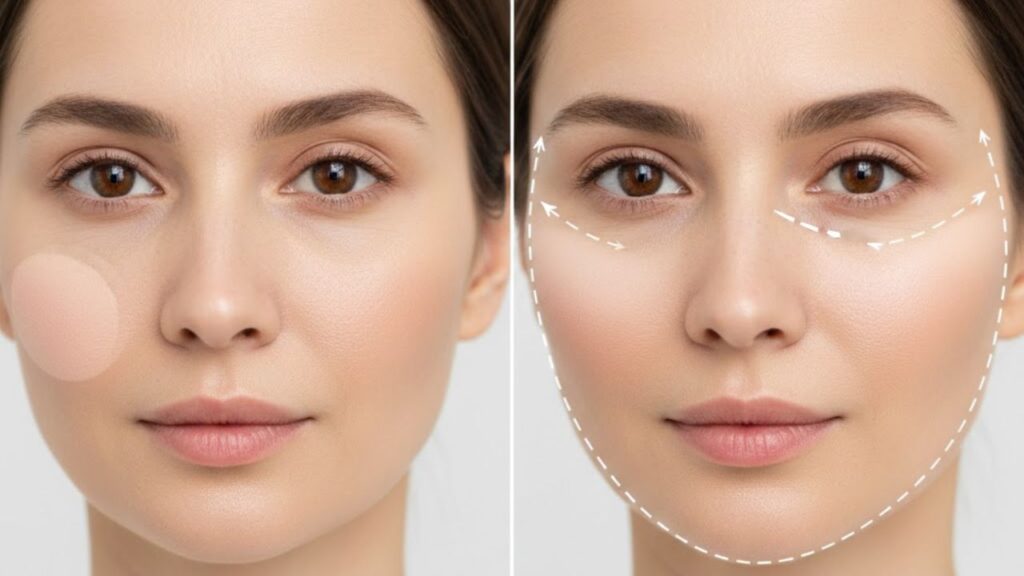
When blush is placed too near the nose, it can make the face appear narrower and more strained. The center of the face becomes the focal point, while the eyes and cheekbones fade into the background. Instead of lifting features, the color pulls everything inward. The outer areas of the face seem to disappear. Blush near the nostrils can also emphasize natural redness, making skin look tired rather than radiant. From a distance, this placement often appears puffy or crowded instead of soft and balanced. What should create dimension ends up flattening the face.
This effect becomes obvious in selfies taken under harsh lighting. The face still looks familiar, yet something feels wrong. The nose appears more prominent, the center looks busy, and the outer cheeks seem pale. Phone cameras intensify the issue by sharpening contrast, turning blush near the nose into a solid block of color instead of a gentle flush. Many television makeup artists even describe a danger zone around the nose, where excess color can make the face look smaller and more fatigued—especially under studio lights. This is why red carpet blush is typically placed higher and farther out. The reason is simple: the face isn’t flat. It’s shaped by vertical and horizontal lines, and blush placement changes how those lines are perceived. Color too close to the nose shortens the vertical line from forehead to chin, creating a compressed look.

Strategic Blush Placement That Enhances Features
Start with a simple reference point. Imagine a vertical line dropping down from the center of your eye. This marks your inner boundary—your blush should not cross this line toward the nose. Place your brush on the area of your cheek that naturally lifts when you give a small smile. There’s no need for a wide grin. Apply the color there, then blend it outward toward the top of your ear in a soft, lifted shape. Build color gradually, as adding is easier than correcting blush that has spread too far inward. If you’re unsure, leave a small gap of bare skin between your nose and where the blush begins.
 Goodbye Hair Dye for Grey Hair: The Conditioner Add-In That Gradually Restores Natural Colour
Many people apply blush too close to the nose because they follow advice about focusing on the apples of the cheeks and take it too literally. During rushed mornings, the brush lands near the nostrils and the habit sticks. On round faces, this can make cheeks look fuller instead of lifted. On angular faces, it can make the center appear harsh and pull attention away from the cheekbones. On textured skin, blush near the nose tends to settle into pores and fine lines. That familiar moment of catching your reflection later in the day and wondering why you look flushed or tired is often about placement, not product amount. A small outward adjustment can dramatically improve how you look in photos throughout the day.
- Leave at least one finger’s width of bare skin between your nose and your blush.
- Angle your brush slightly upward instead of sweeping straight across.
- Tap off excess product before touching your skin.
- Blend more on the outer edge than the inner edge.
- Step back from the mirror and check your face from arm’s length.
Let’s be realistic—no one spends ten minutes perfecting blush every morning. That’s why simple visual guidelines, like the center-of-eye line and the one-finger gap, are far more practical than complicated contour rules. They work whether you’re using a budget cream stick or a high-end compact, even when you’re half awake before work.

Finding Your Own Facial Balance Beyond Makeup Trends
There isn’t a single correct way to wear blush. The ideal placement depends on the effect you want to create. Moving blush slightly toward the nose can give a cute, youthful flush on some faces, similar to a natural cold-weather glow. But when taken too far, it stops looking intentional and starts to feel unbalanced. Every face is different, and everyone has their own comfort level with color. Some enjoy a bold, playful blush inspired by Korean beauty trends. Others prefer a soft wash placed high on the cheekbone, almost like a subtle filter.
The key is understanding how placement changes the overall impression and making deliberate choices instead of relying on habit. Try a simple experiment next time you apply blush. On one side of your face, apply it the way you usually do, closer to the nose. On the other side, place it slightly higher and farther out toward the temple. Step back and take a photo in natural daylight. Notice which side makes your eyes stand out more and which allows your nose to blend naturally instead of becoming the focal point. Consider which side feels more aligned with your personal style, rather than copying the last tutorial you watched late at night.
This exercise isn’t about criticizing your features. It helps you see how color placement guides attention. The more you experiment, the more you realize your face doesn’t need fixing—it’s a canvas you can arrange in different ways. Blush placement near the nose may seem like a small detail, but it has a powerful effect. Once you understand this principle, you can adjust intensity and placement whenever you like. The goal isn’t to hide anything, but simply to choose what you want others to notice first.