The woman in the salon chair watched her reflection, pinching the tips of her hair between her fingers. “It always stops right here,” she said, tracing a line across the middle of her back. “No matter what I try, it never grows past this point.” Around her, dryers buzzed and someone laughed at a TikTok, yet she looked quietly discouraged, as if her hair was keeping a secret from her.
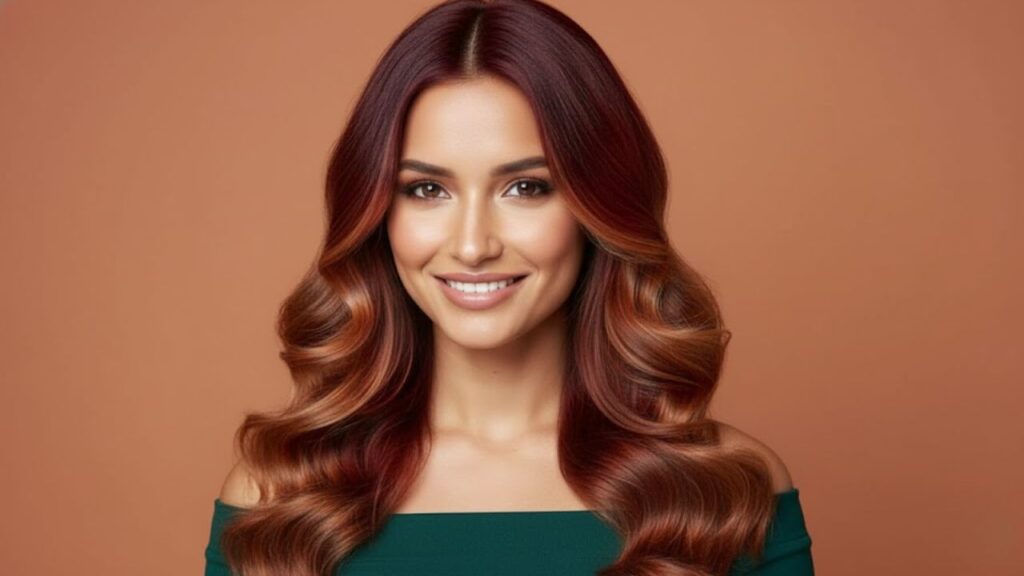
The stylist nodded almost instinctively. She had heard the same story several times that week. Different clients, identical motion: those stubborn ends that never seem to move. Step outside and you’ll notice it everywhere—women in their thirties, forties, and fifties whose hair appears locked at one length, as though time pressed pause on the final inches.
But what if this “stuck length” isn’t random at all? What if it’s a biological limit that shifts with age? What if your hair isn’t refusing to grow—it’s simply running out of time?

Why Hair Growth Feels Different as We Age
Stand in front of a mirror with a friend and the comment comes up quickly: “My hair used to reach my waist. Now it just… stops.” The sensation is unsettling. You’re still yourself, yet your hair behaves differently. It sheds faster, the ends lose their freshness sooner, and that image of ultra-long hair starts to feel like a memory you can’t recreate.

Look around during a busy commute and patterns emerge. Teenagers with heavy, swinging lengths. People in their thirties hovering around mid-back hair that never quite dips lower. Over-fifties embracing shoulder-grazing cuts, even while insisting they’re growing it out. Preference plays a role, but dermatologists track something deeper: the changing life cycle of each strand.
Hair doesn’t grow endlessly. Every strand follows a cycle—growth, rest, and shedding—known as anagen, catagen, and telogen. In youth, the growth phase can last six to eight years, allowing hair to reach dramatic lengths. With age, that phase often shortens. Six years may become four, then three. At roughly one centimeter of growth per month, a three-year window naturally caps length around mid-back rather than hips.
Add slower cell renewal, hormonal shifts, and increased breakage, and the visible maximum length shrinks even more.
Understanding Terminal Length and What Undermines It
Terminal length is simply the longest your hair can grow before it sheds on its own. It’s not a flaw or a failure—it’s arithmetic. Growth speed multiplied by the length of the growth phase equals potential length. When that growth clock runs out, the strand rests and falls.
Imagine two friends in their twenties. One has a five-year growth phase, the other only three. Their hair grows at the same pace, yet one trims hip-length hair while the other never moves past the shoulder blades. No mystery—just genetics keeping different time.
Fast-forward to your forties or fifties. Hormonal changes and subtle scalp inflammation can shorten that growth window further. The result looks like hair that’s “stuck,” when in reality the race simply ends sooner.
Age also brings accumulated damage. Coloring, heat styling, sun exposure, rough brushing—each stress reduces a strand’s chance of surviving long enough to reach its full potential. It becomes a double challenge: a shorter growth phase internally and more breakage externally.
This is why many people feel their hair once grew faster. Often, growth speed hasn’t changed much. What’s changed is how long each strand can stay intact before snapping or being pushed into early shedding by daily habits.
How to Reach Your True Maximum Length
You can’t change your DNA, but you can protect every extra month of your growth window. The idea is simple: support growth and reduce breakage. In real life, that means small, consistent habits.
Start at the scalp. Gentle daily massage with your fingers or a soft brush can encourage circulation and help nutrients reach the follicles. Two calm minutes are enough—no aggressive scrubbing.

Next, address mechanical stress. Hair that hangs past your shoulders is years old and behaves like delicate fabric. Switching to satin or silk pillowcases helps hair glide instead of snag. Sleeping with hair in a loose braid or low bun reduces friction during the night.
Let’s be honest—no one does this perfectly every day. But even practicing it most nights can mean noticeably fewer broken ends over time.
Heat and chemical stress matter more than most people want to admit. Lower blow-dryer temperatures, space out coloring sessions, and use bond-repair or protein treatments monthly if you color or bleach.
Nutrition plays a quiet but critical role. Not miracle supplements, but basics: adequate protein, iron, omega-3 fats, and enough fuel overall. When the body is depleted, hair is one of the first systems it scales back.
Stress also leaves a mark. Chronic tension can push more hairs into the shedding phase earlier, shortening their lifespan. You see it later in the shower drain, not on the stressful day itself.
Stylists who work with clients for decades notice this long before science spells it out. As one London hairdresser put it:
“Most of the time I’m cutting damage, not ‘old hair’. When clients protect their ends, the hair they thought was stuck suddenly passes their shoulders.”
What Actually Helps Hair Look Longer
- Gentle scalp care and balanced nutrition help support a longer growth phase from within.
- Low manipulation, protective styles, and soft fabrics reduce breakage on the outside.
- Realistic expectations based on your natural cycle prevent years of frustration.
Accepting Limits and Stretching Them Wisely
There’s relief in realizing your hair isn’t betraying you. It’s following a script shaped by biology, time, and habit. Once you stop chasing someone else’s waist-length ideal, a better question emerges: what is the healthiest, fullest version of my own maximum length?
You may find that with less breakage and more care, collarbone hair becomes mid-back, or mid-back inches closer to the waist. Or you may discover that a strong, glossy shoulder length feels more powerful than fragile extra inches ever did.
There’s no prize for the longest hair. Only for hair that feels like the most authentic version of you.
Age changes the negotiation. You can’t force follicles to behave like they did at seventeen, and chasing that past can create its own stress. What you can do is treat your hair as something worth preserving—brush more gently, cool down your tools, leave conditioner on a little longer, and investigate sudden shedding with a professional when needed.
Somewhere between science, habit, and self-respect, a new terminal length takes shape. Not endless—but finally, honestly yours.