
The crew didn’t hear the impact first. Instead, they felt the water around their 15-meter sailboat stir with an eerie energy. On a calm spring night off Spain’s coast, the sea seemed to come alive, as if something large had decided to make its presence known. A flash of light skimmed across the waves, followed by a deep, unsettling thud against the rudder, causing the boat’s hull to shudder as though it were a living creature.
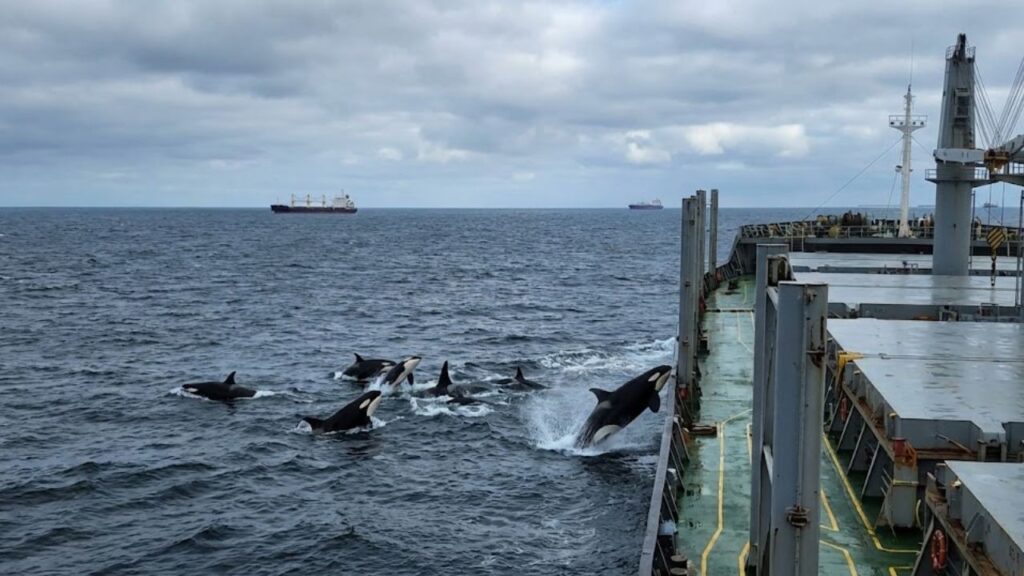
Above deck, the captain ordered the engine started, while the crew scrambled for life jackets. Despite the urgency, their eyes remained fixed on the water. Black-and-white shapes moved beneath the surface, then surfaced again, circling with an unnerving patience.
One orca emerged so close that its eye seemed to lock with theirs. For a moment, it appeared to be driven by curiosity.

Then, the boat lurched sideways, and the vastness of the North Atlantic felt smaller than ever.

Orcas Learning to Target Ships
What’s occurring in the North Atlantic now doesn’t seem like a random occurrence.
Since 2020, sailors and commercial captains from Gibraltar to the Bay of Biscay have reported an increasing and alarming pattern: orca pods deliberately targeting boats, especially their rudders, under calm seas and clear skies.
These aren’t careless bumps. Witnesses describe highly precise strikes, repeated over and over until the vessel loses control, drifting helplessly.
The striking part isn’t just the damage. It’s the coordination. Orca pods split into teams, circling, testing, retreating, and returning with a strategy that looks almost planned.
The Infamous “White Gladis” Pod
Off Spain and Portugal’s coasts, one particular pod has gained notoriety among sailors. Researchers refer to its leader, a female orca, as “White Gladis,” believed to be the driving force behind this new behavior.
Over the past few years, interactions between orcas and vessels in this region have shifted from a strange curiosity to a serious maritime risk. Over 500 encounters have been recorded, many involving significant damage. Several sailboats have even sunk after enduring sustained attacks on their rudders, prompting evacuations and emergency rescues.
Fishermen have reported watching as younger orcas mimic older ones, repeating the same tactics like a drill.
Humans Struggling to Adapt
Some crews have tried turning off their engines, blasting loud music, or even throwing objects into the water. Yet, most say the orcas adapt swiftly.
Marine biologists hesitate to call it an “attack,” but terms like “socially transmitted behavior” and “innovative foraging strategies” have become common in briefings for coast guards and shipping operators in the region.
How Orcas Learn to Adapt and Pass Down Skills
Orcas are apex predators with remarkable intelligence and strong family bonds. Known to develop local cultures, pods in different areas have been observed teaching each other how to hunt seals off ice floes, steal fish from longlines, and even ride wake waves for enjoyment.
When one orca begins interacting with boats in a new way, the behavior spreads—not by chance, but through teaching and imitation. Experts believe that something has shifted in the North Atlantic, and orcas are now paying attention.
Adapting to the New Threat
On commercial vessels, preparation starts long before anyone sees a dorsal fin. Shipping companies and yacht captains are now updating passage plans, incorporating new “orca interaction hotspots” off Spain, Portugal, and the Strait of Gibraltar.

Instead of merely choosing the fastest route, many crews now account for where orca sightings have been reported, water depths orcas prefer, and times of day with fewer encounters.
Sharing real-time information with other boats has become the new norm—vessels now focus on gathering updates, not just prioritizing speed.
Handling Encounters with Orcas
When orcas appear, the recommended approach may seem counterintuitive. Official advice now suggests slowing or cutting the engine, avoiding abrupt maneuvers, and not shouting or throwing objects at the orcas.
Crews are instructed to keep calm, stay safe, and avoid making sudden movements. Some sailors now carry emergency rudder kits or reinforce vulnerable parts of their boats before entering known orca zones.
Captains with experience say staying predictable—rather than reacting with panic—is key to survival.
Reevaluating the Relationship with Orcas
There’s a growing recognition that orcas are not targeting humans specifically. Marine experts urge sailors, shipowners, and the public to resist framing these incidents as “revenge attacks.” Instead, experts suggest that the behavior is likely a learned response within a stressed environment.
Common factors include: increased boat traffic and underwater noise in orca territories, changes in prey availability (especially bluefin tuna), and the possibility of one or more orcas having had a traumatic encounter with a vessel.
“We’re dealing with a species smart enough to change the rules faster than our manuals can be updated,” says a marine researcher tracking Iberian orcas.
A New Chapter in the Human-Orca Story
From a ferry deck or cargo ship’s bow, the ocean still appears vast and unchanged—deep blue with the same curve of the horizon that humans have admired for centuries. But beneath the surface, a new dynamic is unfolding between us and the ocean’s top predator.
The North Atlantic’s orcas are no longer simply wildlife observed from passing ships. They’ve become actors in a new, evolving narrative—interacting, adapting, and, in some cases, pushing back against a world of noisy, steel-hulled vessels that cut through their hunting grounds.
For sailors, this is unsettling and humbling. For scientists, it’s an ongoing real-time experiment: What happens when a super-social species starts to treat human technology as a target, a toy, or even a threat?
Some view this as a warning—proof that industrial shipping, overfishing, and constant noise have prompted a response from the deep. Others see it as another chapter in the long, complicated history of human-wildlife coexistence.
One thing’s certain: the next time a ship loses its rudder off Cape Finisterre and the crew hears that unmistakable thud, the questions about shared space, responsibility, and risk will feel all too real.

Key Points
- Rising Orca–Ship Interactions: Hundreds of encounters reported in the Iberian and North Atlantic regions since 2020, with repeated damage to rudders and steering systems. This highlights the growing scale and seriousness of the phenomenon.
- Coordinated, Learned Behavior: Pods, led by identifiable individuals, are teaching younger orcas to target boats in coordinated ways, showing that the behavior is intelligent and deliberate, not random.
- Evolving Human Response: Shipping companies and sailors are adjusting to this new threat with route changes, safety protocols, and an emphasis on preparedness rather than panic.
