
The lawn had long since lost its vibrant green, turning the color of stale toast. Pots that once looked healthy now sat neglected in the corner, their leaves crisping up like overcooked chips.
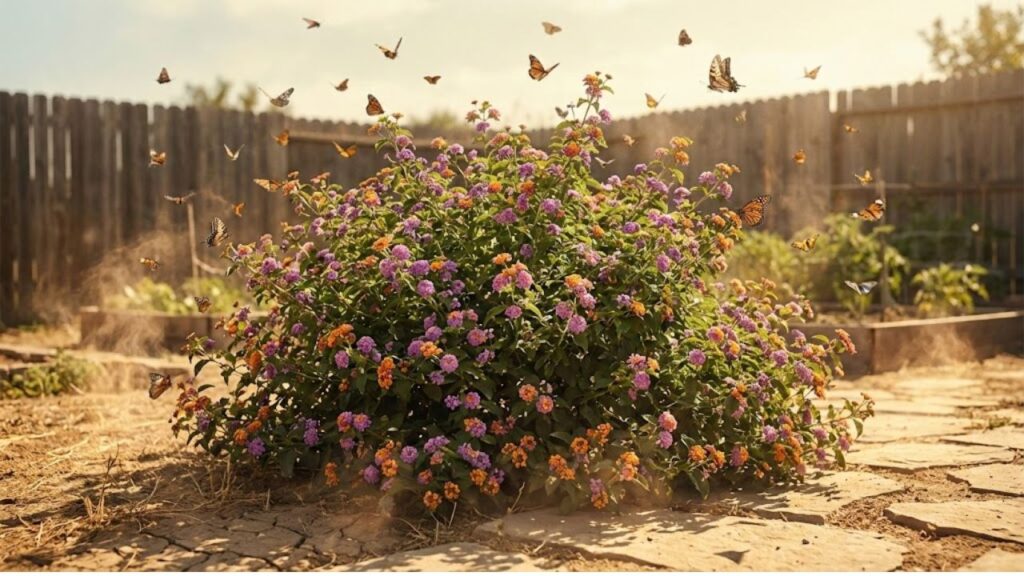
Amidst all of this, one plant stood defiant.
Its tall, graceful stems, adorned with tiny purple blooms, shimmered in the heat. Every few seconds, a butterfly would appear, hover for a moment, and then settle delicately like a piece of stained glass. A red admiral, a tortoiseshell, and a worn white butterfly with a torn wing. Even as the temperature crept past 95°F, this single plant was still hosting a garden party.

Later, as the sun set and the air began to cool, the plant was still alive with movement, almost unreal in its persistence. And that’s where the story of this plant gets truly interesting.

Meet Verbena Bonariensis: The Plant That Refuses to Quit
Introducing verbena bonariensis, a hardy, tall verbena that thrives in heat and attracts butterflies like no other. At first glance, this plant doesn’t seem like much. It has thin stems and small flower clusters that could easily be overshadowed by flashy roses or hydrangeas. However, once summer hits and the searing heat arrives, verbena bonariensis steps into the spotlight.
Its secret lies in its design. The long, slender stems don’t droop under the weight of the heat, and the flower heads hover just at the right height for pollinators. While other plants wilt under the summer sun, verbena bonariensis continues to bloom, quietly outshining its fussier neighbors. It’s like the quiet guest who becomes the star of the party.
A few years ago, an urban gardener in Seville planted three verbena bonariensis plants along a sun-drenched wall. The spot received full sun all day, often making the air feel like a hairdryer. Temperatures regularly topped 104°F, and most plants would have surrendered by mid-July. Yet, verbena bonariensis not only survived but thrived, growing to shoulder height and blooming until the first chill of October.
By late summer, neighbors were leaning over the railing, curious about the “purple clouds” filling the space. Butterflies swarmed so thickly around the flowers that they almost disappeared behind the wings. With just one deep soak a week and a layer of mulch, this plant had transformed a scorching, neglected area into a wildlife haven.
Why Verbena Bonariensis Thrives Where Others Fail
Verbena bonariensis is native to the sun-baked landscapes of South America, where it evolved to withstand tough conditions. Its roots dig deep to find moisture, and its narrow, sparse leaves reduce water loss in hot, dry air. Most of its energy goes into producing flowers that grow high above the ground, where they can be accessed by pollinators, and where the heat isn’t as intense.
This plant is what gardeners call a “short-lived perennial but generous reseeder,” meaning it might only last a few years, but it leaves behind new seedlings every season. In a changing climate, this built-in “Plan B” makes verbena bonariensis a vital survivor, especially in tough growing conditions.

How to Grow Your Own Butterfly Magnet in Extreme Heat
If you’re ready to invite butterflies into your garden, verbena bonariensis is easy to start. Simply plant it in the sunniest, toughest part of your garden and leave it to grow. Choose a spot that gets at least six hours of direct sunlight (more is better) and prepare the soil by digging a hole that’s about twice the size of the plant’s pot. Break up the soil slightly and plant at the same depth it was growing before.
Water the plant deeply for the first couple of weeks so the roots grow deep into the soil. After that, verbena bonariensis doesn’t need much attention. It thrives in less rich soil and doesn’t like to be watered too often, as overwatering can cause the plant to lose its hardiness.
By the second summer, you may notice little seedlings popping up in unexpected places—between pavers, in gravel, or along compacted paths. Some may not survive, but the strongest will carry on, adding a soft, purple haze to your garden. Over time, these plants will naturally self-seed and spread, filling your garden with color and life.
How to Keep Verbena Bonariensis Thriving
While verbena bonariensis is hardy, it still needs a little care to truly thrive:
- Water sparingly: One deep soak per week during hot spells is better than frequent light watering.
- Mulch: A thin layer around the plant will help retain moisture, but avoid smothering the stems.
- Well-drained soil: Ensure the plant isn’t sitting in heavy, waterlogged soil. If necessary, raise the planting area with extra soil or gravel.
- Deadheading: Leave a few seedheads standing so the plant can reseed, but trim those that block pathways or crowd other plants.
By year three, you may find yourself with a naturally flowing drift of verbena bonariensis flowers, blooming in waves from early summer to fall. No more buying butterfly feeders—the garden will do the work for you.
The Emotional Benefits of Growing Verbena Bonariensis
There’s a quiet, yet profound impact when you see something thrive in the heat while everything else struggles. Verbena bonariensis represents resilience—an enduring presence amidst challenging conditions. For gardeners in hot, dry climates, it’s a reminder that even when everything around you seems defeated, there’s still beauty to be found.
Growing this hardy plant isn’t just about attracting butterflies; it’s about finding hope and balance in the face of unpredictable weather. It becomes a gentle symbol of perseverance and adaptation, making your garden feel like a place of life and growth, even during the harshest seasons.

Key Takeaways for Growing Verbena Bonariensis
- Heat and drought resilience: Thrives in full sun with minimal watering once established, adding life to your garden even during heatwaves.
- Butterfly magnet: Its nectar-rich flowers are perfectly positioned for butterflies, turning your backyard into a wildlife haven with little effort.
- Low-maintenance gardening: Verbena bonariensis self-seeds and needs minimal care, making it ideal for busy gardeners who still want a vibrant summer garden.
