
The first time I spotted a bowl of cloudy salt water sitting on a windowsill in the dead of winter, I mistakenly thought someone had forgotten to clean up after defrosting fish. The glass was fogged, the radiator clicked softly below, and outside, the street gleamed with frost. Inside, however, the air felt surprisingly lighter than in my own apartment. There was no damp smell, no cold draft sneaking through the window—just a quiet, dry warmth.
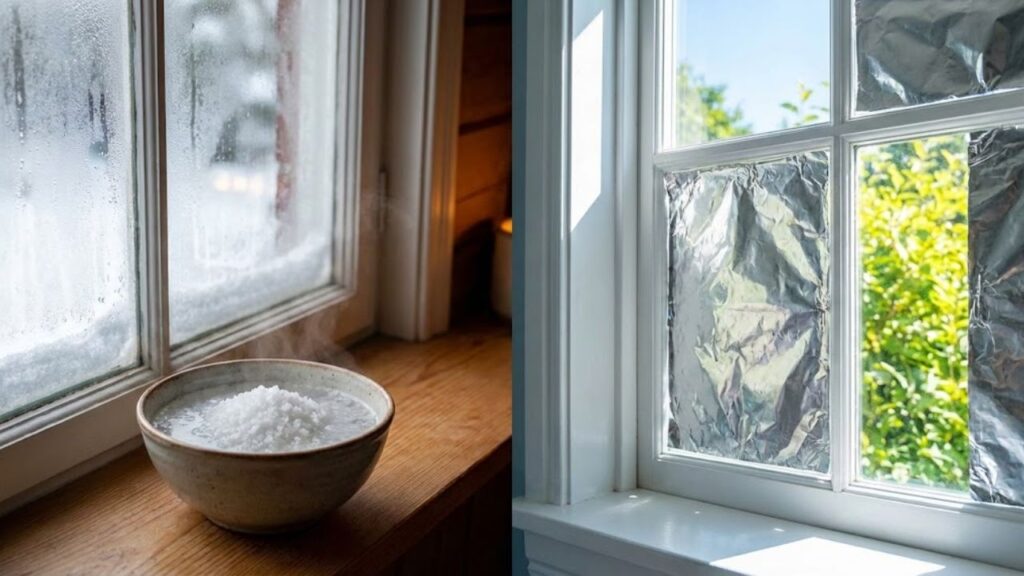
My friend shrugged and said, “It’s my winter trick. Same idea as the aluminum foil I tape up in summer. Low-tech, but it works.”
I went home and decided to give it a shot that same evening.

Something changed in the room overnight.

When Your Windows Steal Your Heat
Every winter, our windows turn into slow thieves. They leak heat, let in cold, and collect tiny droplets of moisture that slide down the glass and soak into the frame. You might wake up thinking your radiator isn’t working properly, but more often than not, it’s the window to blame.
Stand next to a window on a cold day and hold out your hand. You can practically feel the warmth leaving your skin. The room may be at 20°C, yet still feel chilly if the window is radiating cold back at you. This is the daily reality in thousands of homes right now.
A Parisian energy consultant shared that he starts every home visit the same way: walking straight to the windows, pressing his palm against the glass, examining the frame, and then checking the corners for small, dark stains. These are not yet signs of mold, but a warning that it’s coming.
In a small apartment he visited last December, a young tenant complained of “always feeling cold,” even though the heating bill was sky-high. The culprit was obvious: single-glazed windows, damp sills, and curtains sticking to wet glass every morning. The air felt thick and heavy. The consultant didn’t suggest replacing the windows, just a few small changes, including placing a bowl of salt water on each windowsill.
The Simple Physics Behind It
What happens on those cold panes is simple physics applied to everyday life. Warm indoor air hits the cold surface of the glass, releasing moisture that forms tiny droplets. This moisture cools the air around it and gradually seeps into wood, joints, and frames. Once the frame becomes damp, it conducts cold more efficiently, starting a vicious cycle.

Most people only notice when mold finally appears. The real story is the invisible buildup that happens in the days leading up to it, when condensation slowly erodes comfort and wastes energy. That’s exactly where a simple bowl of salt water can help.
How a Bowl of Salt Water Can Help
To make your own low-tech solution, take a medium-sized bowl or a wide glass jar. Fill it almost to the top with tap water, and add a generous handful of coarse salt. Stir until the salt covers the bottom of the container, leaving some grains undissolved.
Place the bowl directly on the windowsill, as close to the glass as possible (without touching the cold metal frame). For very damp windows, consider placing a bowl on each side of the frame. Leave the bowl there for a few days and observe the difference. The glass will still fog, but less than before, and the sill will stay drier. The room will feel less damp.
Most people make a mistake the first time by using a tiny espresso cup with only a few grains of salt, or they put the bowl behind a thick curtain where air circulation is minimal. Others forget about it for weeks, and the water turns into a salty swamp. Instead, treat this as a simple winter ritual: place the bowl where air naturally flows around the window. Use enough salt to properly saturate the water. Check it every two to three days, topping it up when the water level drops and the salt dissolves.
As Claire, a building engineer, explains, “Think of the salt water as a passive assistant. It won’t fix your windows, but it will reduce the amount of moisture that condenses on them. Just enough to slow down the issues people complain about every winter.”
Tips for Maximum Effectiveness
- Use a wide, shallow container for more surface area contact with humid air.
- Opt for coarse salt; table salt works, but larger grains last longer.
- Combine it with other small habits, like airing the room briefly, leaving curtains slightly open, and ensuring radiators aren’t hidden behind furniture.
- Refresh or replace the water when it turns cloudy or the salt crusts over.
- Consider this your winter counterpart to the aluminum foil you use in summer on radiators or windows.
Why This Low-Tech Trick Is So Popular
The real charm of placing a bowl of salt water on your windowsill isn’t just that it absorbs excess moisture. It gives you back a sense of control in a season that often feels dictated by the gas company and the weather app. You can’t change the outside temperature, nor can you replace all your windows, but you can start tonight by placing three bowls on your sills.
Those living in old houses, student studios, and rental apartments with outdated glazing all share the same quiet frustration: paying more to feel less comfortable. Simple, visible actions like this bring a sense of practical comfort. It’s not magic or a miracle—just a small step toward a drier, cozier room.

Key Points
- Salt water acts as a mini dehumidifier: It attracts moisture from the air near cold windows, reducing condensation and keeping the room warmer at the same temperature.
- Proper placement is essential: The bowl should be close to the glass with air moving around it, refreshed regularly for the best effect.
- It complements other low-cost fixes: Short, daily airing, adjusted heating, and simple insulation tweaks add to the comfort and may even lead to energy savings without major renovations.
