Behind their attractive orange blush, apricots found in supermarkets and markets often carry pesticide residues, dust, and hidden spores. A quick rinse under the tap might seem reassuring, but it rarely reaches what clings to the fuzzy skin, potentially affecting both your health and the fruit’s shelf life.
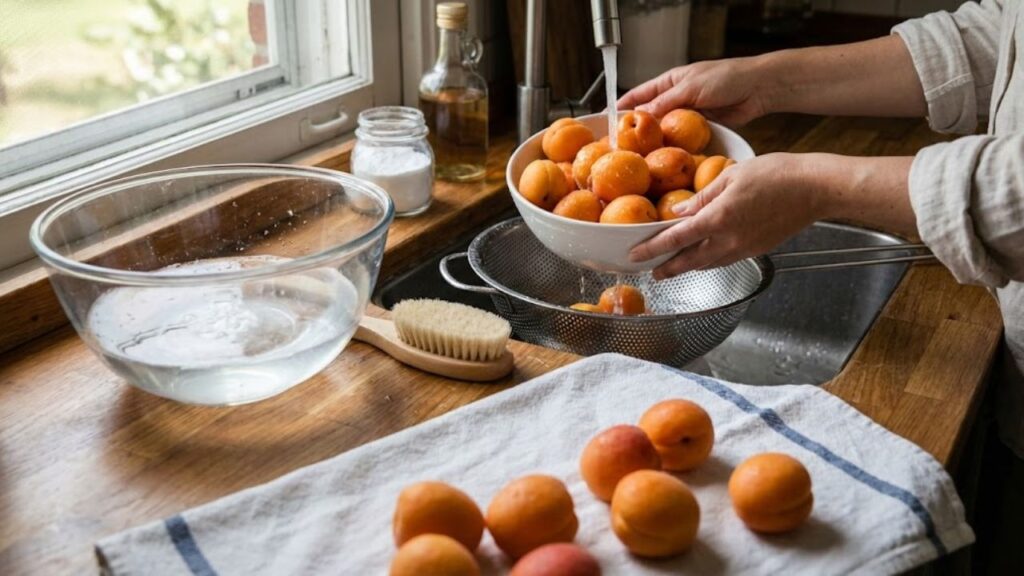
The Importance of Cleaning Apricots Correctly
Apricots grow low on trees, are handled numerous times throughout the supply chain, and are transported in crates that aren’t always spotless. During this journey, their skin picks up soil particles, bacteria from handling, and traces of agricultural sprays. Their thin, slightly fuzzy skin makes this worse by acting as a sponge, trapping pesticides, airborne pollutants, and fungal spores that can lead to mould growth.
Proper cleaning not only protects you from these residues but also helps extend the freshness of the apricots. Storing poorly washed apricots in the fridge or a fruit bowl creates a small humid environment that encourages bacterial growth. This is why one mouldy apricot can quickly spoil the others in the batch.

Why a Simple Rinse Isn’t Enough
Most people quickly rinse apricots under cold water, removing visible dirt, but many pesticide molecules are designed to stick to the skin and resist simple rinsing. These residues are often waxy or oil-based to withstand rain in the orchard. Running water does little against bacteria hidden in the skin’s tiny folds or around the stalk. For a more thorough cleaning, a little chemistry from your kitchen cupboard is required.

A Simple Two-Ingredient Solution
The most effective method involves using white vinegar and baking soda (bicarbonate of soda)—two common household ingredients known for their cleaning properties. A brief soak in diluted white vinegar with a pinch of baking soda helps to loosen pesticide residues and reduces microbial contamination on the skin.
How Vinegar Enhances Safety
White vinegar has an acidic pH that affects certain pesticide residues, especially those that are unstable in acidic conditions. It helps to loosen or break them down on the fruit’s surface. While it won’t remove all residues, it significantly improves the situation compared to water alone. Vinegar also leaves the fruit with a slightly acidic surface, which slows bacterial and mould growth after the fruit dries and is stored.
The Role of Baking Soda
Baking soda has a mildly alkaline pH, which works in contrast to vinegar’s acidity. This contrast may help disrupt the outer membranes of bacteria. Additionally, its slightly gritty texture helps dislodge dust and soil particles from the apricot’s fuzzy skin. When used together, these ingredients create an environment that is unwelcoming to microbes but gentle on the apricot flesh.
Step-by-Step Guide: The Best Way to Clean Apricots
This method takes under 20 minutes and works well for about ten apricots at a time:
- Rinse the apricots briefly under cool running water to remove visible dirt and debris.
- Fill a large bowl with three parts cold water and one part white vinegar.
- Add one teaspoon of baking soda to the vinegar water and stir to dissolve.
- Submerge the apricots in the bowl, ensuring they are fully covered.
- Let them soak for around 15 minutes, gently swirling them once or twice.
- Rinse the apricots thoroughly under cold water to remove any vinegar or baking soda taste.
- Pat them dry with a clean cloth or paper towel before storing.
Drying the apricots is a crucial step. Excess moisture left on the skin encourages mould growth. Aim for fruit that feels dry to the touch before storing it in the fridge or fruit bowl.
Comparison of Cleaning Methods
| Method | What it Does | Limitations |
|---|---|---|
| Plain Water Rinse | Removes loose dirt and some microbes | Leaves many residues attached to the skin |
| Vinegar Soak | Reduces bacteria and some pesticide residues | Less effective on trapped dust and soil |
| Baking Soda Soak | Helps remove dirt and destabilize microbes | Does not leave an acidic film to inhibit regrowth |
| Vinegar + Baking Soda Soak | Combines acidic and alkaline effects, improving cleaning and shelf life | Requires good rinsing to avoid off-flavors |
When Should You Wash Apricots?
Timing matters. Washing apricots too far in advance can shorten their shelf life, especially if they stay damp. The best approach is to wash them just before you plan to eat them or within 24 hours of consumption.

If you buy apricots in bulk for making jam or baking, wash them in advance but make sure to dry them thoroughly and store them in a shallow container lined with absorbent paper. Avoid sealing them tightly in plastic bags, as this traps moisture and speeds up mould growth.
Can This Method Work on Other Produce?
This vinegar and baking soda soak works well on many fruits and vegetables with edible skins, such as peaches, nectarines, plums, apples, grapes, peppers, and cucumbers. For delicate fruits like berries, a shorter soak of 5 to 7 minutes suffices. Hard-skinned produce like melons and citrus also benefit, as washing the exterior prevents surface microbes from being transferred into the flesh when cut.
What This Method Doesn’t Do
No home cleaning method can guarantee a completely pesticide-free apricot. Some pesticides are systemic, traveling inside the fruit where they cannot be reached by soaking or rinsing. However, this cleaning method significantly reduces surface residues and microbial load, providing a meaningful step toward food safety.
For those with compromised immune systems or young children, this extra care can help reduce the risk of foodborne illness from contaminated skins.
Practical Scenarios: From Market Stall to Plate
Imagine buying apricots from an open-air market. After being handled by multiple customers, they may have picked up dust, bacteria, and pesticide residues. Using this vinegar and baking soda soak at home helps remove much of what they picked up along the way.
Alternatively, when preparing a big batch of apricot jam or baking, washing the fruit properly not only makes them safer to eat raw but also helps prevent spoilage in your jam jars and extends the shelf life of your baked goods.
Extra Tips for Longer-Lasting Apricots
Once washed and dried, store ripe apricots in a single layer to prevent bruising. Overcrowding increases the risk of mould. If any fruit starts to soften excessively or shows spots, use it quickly in cooking or remove it from the batch to avoid spoilage.
By combining careful washing with thoughtful storage, you can dramatically reduce waste, save money, and enjoy apricots that last longer with better texture and flavour.