The familiar sight of dried edges on your plant leaves often leads to the assumption that you’ve “forgotten to water” them. However, brown tips are typically a symptom of an environmental imbalance, not just neglect.
What Brown Leaf Tips Really Indicate
On most plants, the leaf tip is the most vulnerable part. It’s the last area to receive water and nutrients, so stress tends to show up here first. Brown tips aren’t just cosmetic flaws—they’re early-warning signs of plant stress.
One brown leaf tip is often harmless, especially if it’s an older leaf. However, if multiple leaves, including fresh ones, start showing signs of stress at the tips, it’s a cause for concern.

Minor Issue or Major Concern?
Monitor the damage over a few weeks to assess the severity:

- Static brown tips on older leaves: Normal aging process.
- Tips spreading toward the center: Active stress.
- Multiple young leaves affected: Issue with care or environment.
- Brown tips with yellowing or drooping: Possible root or watering problems.
If the brown area expands or spreads, your plant may be depleting its energy reserves, which requires immediate attention and a change in care routine.
The Hidden Culprit: Dry Indoor Air
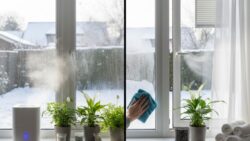
The most surprising cause of brown tips isn’t always under-watering—it’s the dry air inside your home. Central heating in winter and air conditioning in summer can drastically reduce indoor humidity levels, often dropping below 40%. Plants, especially tropical species, thrive in environments with higher humidity, usually around 70% or more.
Plants Most Affected by Dry Air
Some plants are particularly sensitive to low humidity:
- Prayer plants and calatheas with patterned leaves
- Delicate ferns
- Alocasias with large, thin leaves
- Monstera deliciosa near radiators or vents
- Ficus species with small foliage
Homes in colder climates often experience humidity levels as low as 30-35% during winter, which can dry out the tips of moisture-loving plants even if the soil stays damp.
Water Quality: A Silent Problem
Tap water may be safe for human consumption, but it can harm your plants over time. Hard water contains high levels of minerals like calcium, which can accumulate in the soil and harm the roots. In addition, chlorine and fluoride can irritate sensitive roots.
Signs of Water Damage
Look for the following signs of water-related stress:
- White, chalky crust on the soil surface or around the pot rim
- Consistent brown tips despite optimal humidity and light
- Burnt leaves after fertilizing, particularly in areas with hard water
One simple experiment is to water half your plants with rainwater or filtered water for a month and compare the results. If new growth looks healthier on the rainwater group, your tap water might be to blame.
Pot and Soil Issues: When Roots Run Out of Space
Even with proper watering and air quality, cramped roots in a too-small pot can limit your plant’s ability to take up moisture and nutrients. If the soil is compacted or doesn’t drain well, it can lead to dry tips.
Signs You Need to Repot Your Plant
Spring is the best time to repot your plants. Look for these signs:
- Roots circling the bottom or emerging from drainage holes
- Soil pulling away from the sides of the pot
- Water running straight through without soaking in
- Wilting shortly after watering
Most plants need a pot that’s 2-3 cm larger in diameter. Avoid choosing a pot that’s too large, as it can cause the soil to stay wet too long and create other issues.
Light Exposure: Too Much or Too Little?
Light is essential for plant growth, but too little light weakens growth, while too much light can scorch the leaves, starting from the edges and tips. Even plants labeled as “low light” often require bright, indirect sunlight.
Assessing Light Conditions
You can assess your plant’s light conditions by observing its leaves:
- Leaves leaning toward a window: Likely not enough light.
- Pale or crispy edges on the window side: Too much light.
- Slow growth, thin stems, and brown tips: Insufficient light combined with stress.
Keep in mind that light conditions can change seasonally. A plant thriving by a window in winter may burn when exposed to the same light in summer. Adjusting its position or using blinds can help mitigate this.

Watering Habits: Striking the Right Balance
While brown tips are often blamed on underwatering, over-watering can cause the same problem. Waterlogged roots suffocate and rot, preventing the plant from absorbing moisture and leading to dry, crispy tips despite wet soil.
Creating a Watering Schedule
There is no universal watering schedule for all plants. Instead, observe your plants’ needs:
- Lift the pot: A light pot means dry soil.
- Check the top 2-3 cm of compost with your fingers.
- Watch for slight wilting before watering, particularly in plants that tend to droop when thirsty.
Some owners track watering dates to spot patterns. Over time, you may notice certain plants need water more frequently in summer and less in winter.
Simple Fixes for Cleaner Leaf Tips
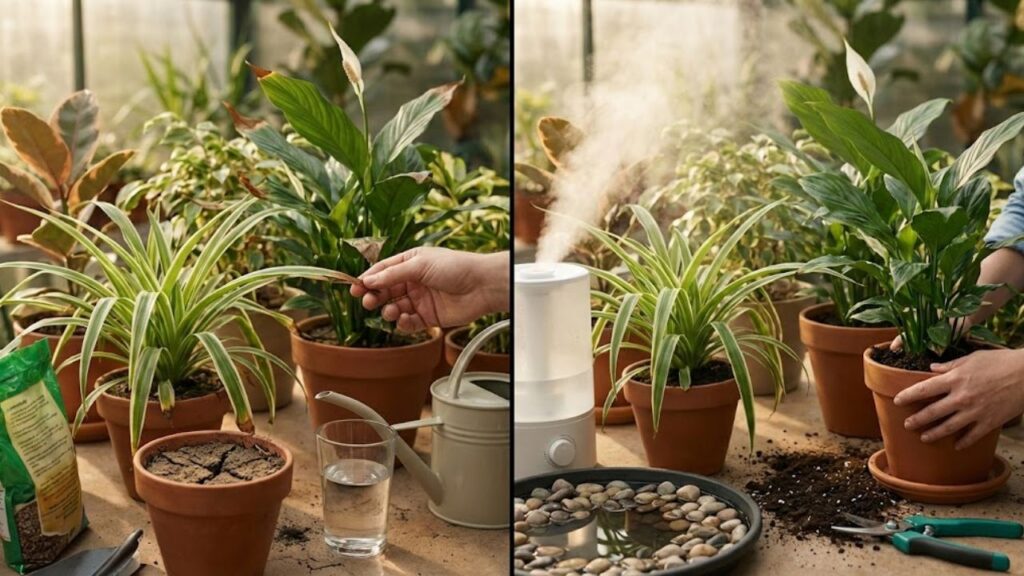
If you want to improve humidity, try grouping plants together or placing them on trays filled with damp pebbles. This helps create a “humidity island” in your home. Alternatively, using a small humidifier near sensitive plants is an efficient solution.
Improving Water Quality
To reduce the effects of hard water:
- Collect rainwater in a clean container.
- Let tap water sit for 24 hours before using to allow chlorine to dissipate.
- Use a basic water filter to remove impurities.
- Flush the soil with low-mineral water to rinse out excess salts.
Always use lukewarm water to avoid shocking your plant’s roots.
Dealing with Already-Browned Tips
Trim brown tips with sharp, disinfected scissors, following the leaf’s natural shape. This won’t fix the underlying issue but will allow the plant to focus on healthy growth and will make the damage less noticeable.
Preventing Future Damage with Better Care
Group plants with similar needs together. Place moisture-loving species near humidifiers and keep cacti or succulents in the brightest, driest spots. This minimizes stress and helps your plants thrive.
Track Your Plant Care
Keep a simple table in a phone app to track watering dates, fertilizing schedules, and any observations about your plants’ condition. This will help identify patterns and improve your plant care routine.
Regular Plant Check-ups
Take a few minutes each week to inspect your plants. Check for pests, feel the soil, and observe new growth. Early detection of stress will allow you to resolve issues before they become serious.
Understanding Humidity and Hard Water
Relative humidity refers to the amount of moisture in the air compared to how much it could hold at a given temperature. Lower humidity can cause rapid drying of plant leaves. Hard water, with its dissolved minerals like calcium, builds up in the soil, leading to slow nutrient absorption and burnt tips.
Real-Life Examples
Imagine a Boston fern in a centrally heated home. Low humidity and hot drafts cause brown tips on the leaves. Increasing humidity and moving the plant away from the radiator will help it recover.
Now picture a succulent on a dimly lit office desk. Brown tips appear due to insufficient light. Moving it to a brighter location will fix the issue.
Understanding these scenarios helps you identify the stress factors affecting your plants. Once you address the root cause, each new leaf becomes a sign of your plant’s health and care success.