
The kettle starts to whistle just as daylight creeps over the low stone wall outside her cottage. At 6:15 a.m., as she has done for decades, 100-year-old Margaret pads into her compact kitchen in soft slippers, quietly humming a tune from the 1940s. Her hands tremble slightly as she pours her tea, yet her voice rings out strong as she jokes toward the living room, “Well, legs, are you coming with me today or not?” She laughs, steadies herself on the counter, and straightens her back with a determination that feels almost ceremonial.
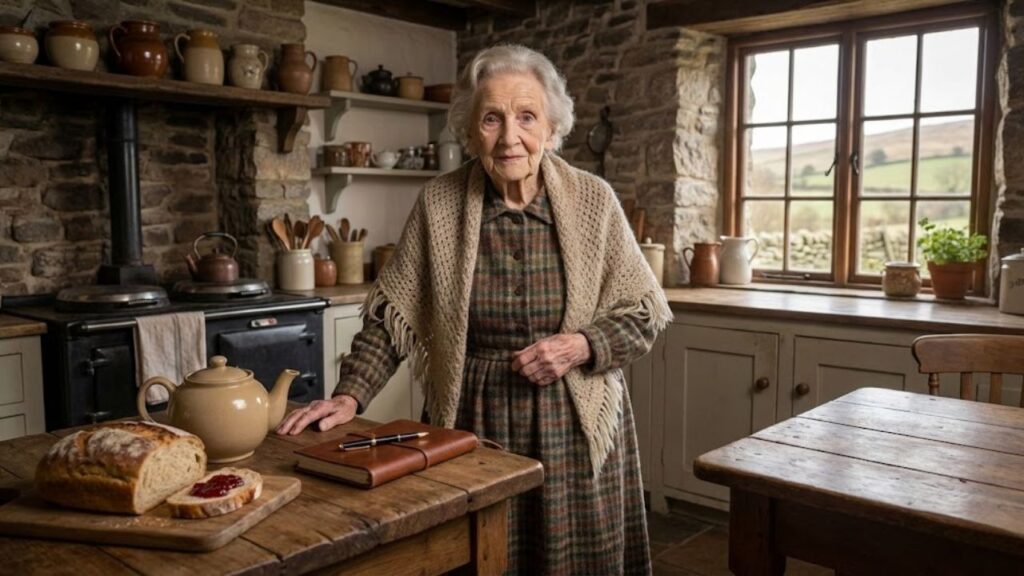
She lives on her own. There are no carers scheduled, no emergency cord around her neck. On the table lies a simple notebook listing medication times, friends’ birthdays, and one bold reminder written in blue ink: “STAY OUTSIDE CARE.” It is a promise she repeats daily, and every habit in her life quietly revolves around keeping it.
The Everyday Rituals That Keep a Centenarian Independent
From the outside, Margaret’s days seem ordinary. She doesn’t chase extreme diets or ambitious fitness goals. Her meals are simple, her walks slow, her gardening modest. Yet there is a quiet resolve in how she fills each hour. Every small action serves a purpose: keep moving, keep choosing, keep living independently.

She insists she isn’t “old-old,” just “stubborn and creaky.” Her GP describes her as “clinically impressive,” a phrase she shrugs off with an eye roll, even though she knows her routines are no accident.

A Question That Hardened Her Resolve
During a routine visit one autumn, a community nurse checked her blood pressure and heart, then gently asked if she had considered residential care. The mood shifted instantly. Margaret turned from the window, her expression sharp. “That’s what I’m fighting every day,” she replied.
Later, she pulled out a spiral notebook from 1999. Inside were her handwritten “rules for old age”: walk daily, keep gossiping, refuse lifts while her legs still work. They read like a personal manifesto against giving up control.
Why Her Habits Are About Choice, Not Youth
Margaret’s reasoning is clear and unsentimental. She has watched friends lose independence not only through illness, but as small freedoms slowly disappeared. Others began choosing their meal times, their bathing routines, their days. For her, daily structure isn’t about staying young. It’s about protecting her right to decide.
She understands that some events can’t be controlled. A fall or sudden illness could change everything. Still, she focuses fiercely on what remains within reach: physical strength, social bonds, and mental engagement. That steady discipline is her quiet resistance to losing herself to care.
Her Three Non-Negotiables for Staying Independent
When asked about her “secret,” Margaret shrugs before laying out three firm rules she follows without exception.
- Move every day. Not structured workouts, but constant gentle motion—walking the garden path, taking the stairs twice, standing during TV breaks.
- Make her own decisions. From meals to clothing to rest times, she insists on choosing for herself, even turning down well-meant help.
- Stay socially connected. Phone calls, church gatherings, and shop-corner chats are treated as essential, not optional.
Why Waiting to “Start Later” Doesn’t Work
Margaret laughs at the idea that healthy habits suddenly begin at 80. Her routines grew slowly, shaped by small adjustments made decades earlier. In her 70s, she added short balance exercises after seeing a neighbour fall. Years later, she swapped heavy gardening for lighter tasks so she could continue tending her roses alone.
Her life quietly challenges the habit of postponing self-care. There was no perfect moment to begin—just a steady choice to start.
The Science Quietly Supporting Her Instincts
Geriatric specialists describe a “dependency cascade”: reduced mobility leads to less activity, which weakens muscles and raises fall risk, often ending in care placement. A similar pattern appears socially, as missed interactions slowly erode confidence and motivation.

Margaret’s daily practices align closely with what research shows supports long-term independence: movement, mental engagement, and connection. Her phone calls aren’t just social—they stimulate memory and protect emotional health. Her insistence on choosing her routine helps preserve cognitive function. As she often says after a visitor leaves, “This is still mine.”
The Small, Stubborn Actions That Make the Difference
Her most reliable ritual begins after morning tea. Standing at the sink, hands resting lightly on the edge, she lifts one foot for ten slow breaths, then switches. She follows this with ten controlled sit-to-stands from her chair, no hands allowed. It takes under ten minutes, yet she treats it as non-negotiable maintenance.
She jokes that it’s “leg rent.” If her legs don’t earn their keep, she says, they’ll be evicted.
Progress, Not Perfection
Margaret dismisses the idea of perfect discipline. Some evenings she eats biscuits for dinner and watches television for hours. The difference, she says, is that she resets quickly and returns to her basics the next day.
What worries her more is how often older adults give up tasks too soon. Loved ones mean well, but taking over shopping, finances, or cooking can quietly erode confidence. Margaret accepts help when needed, yet fiercely protects the tasks she can still do, even if they take longer. Slower and messier keeps her capable.
Her Daily Anchors for Staying Out of Care
On a small scrap of paper, she keeps a checklist she reviews each day:
- Walk at least one indoor or outdoor lap before lunch
- Practice balance exercises twice daily
- Have one social interaction, by phone or in person
- Make at least three personal decisions about food, clothing, or schedule
- Learn one small thing, from news to a new word
Individually simple, together powerful, these habits form the framework that supports her independence.
The Question Her Life Quietly Asks
Time spent with Margaret subtly shifts how aging feels. It draws attention to the small efforts we give up early—avoiding stairs, skipping calls, outsourcing everyday tasks. She doesn’t claim perfection, and she rejects being idealized. Yet her life raises a challenging question: are we preparing to stay alive, or to stay in charge of ourselves?
Margaret knows the line between home and care can be crossed unexpectedly. That knowledge is exactly why she treats each day as a deliberate choice in favor of independence, guided not by fear, but by steady, stubborn hope.
 Hygiene After 65: Experts Say Neither Daily Nor Weekly Showers Best Support Aging Skin Health
Key Takeaways from Margaret’s Approach
- Daily movement protects independence through short, consistent routines.
- Personal decision-making preserves dignity and cognitive strength.
- Social connection acts as daily medicine for mental and emotional health.
