
On a dull Tuesday morning in a peaceful English cul-de-sac, a 100-year-old woman opens her front door before I can reach the bell. “You’re late,” she laughs, her blue eyes alert, cardigan intentionally half-buttoned. A radio murmurs softly, soup simmers on the stove, and a handwritten note nearby reads: “Move or rust.”
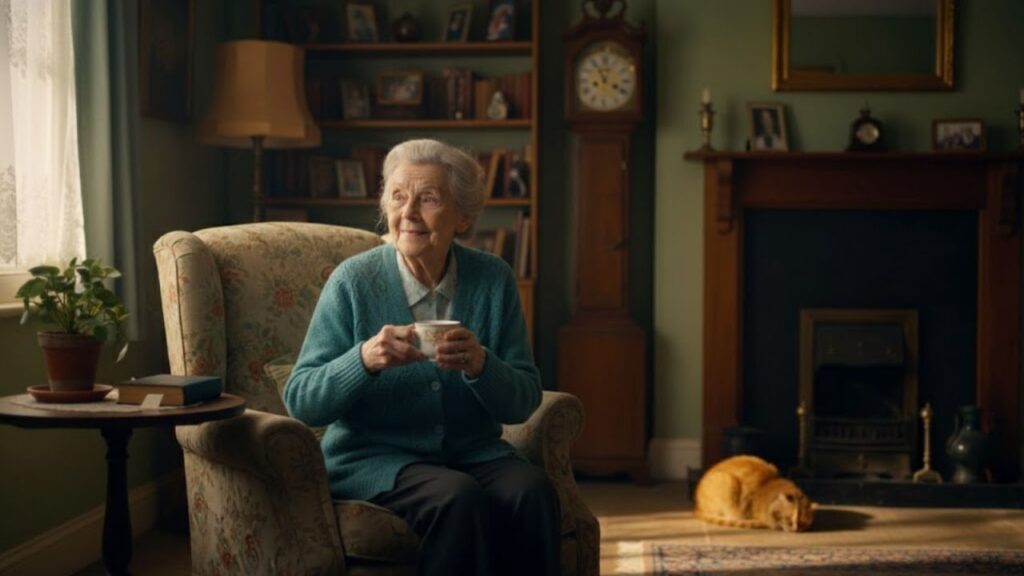
Her name is Margaret, and she lives alone. There’s no stairlift, no full-time carer, no colour-coded pill organiser spelling out the days. She waves me inside with energy. “Sit if you want,” she says. “I’m staying upright.” Then she tells me the one thing she fears more than death.
The Centenarian Determined Not to Disappear Quietly
Born in 1924, Margaret has lived through war, rationing, widowhood, and technology she still calls “pocket televisions.” What she refuses to live through is the loss of her independence.
 Trimming Every 6 Weeks Can Make Hair Look Longer - It Stops Split Ends From Crawling Up the Shaft
“The day they put me in a home is the day I haunt you all,” she jokes, though her tone is firm. She moves confidently through her house, steady hand brushing the wall, eyes catching dust along the skirting boards.

When asked about her secret, she doesn’t mention supplements, workouts, or miracle products. She talks about habits — small, human, repeatable ones.
Every morning at 7:15, she opens the curtains herself. Rain or shine, she opens the window to “let yesterday’s air out” and stands still, breathing, for one minute. Then come her “marching orders”: 100 steps around the living room, counted out loud.
She owns no smartwatch or gym clothes. The hallway wall helps her balance, the kitchen counter supports her slow squats and heel raises — exercises a physiotherapist showed her 15 years ago. “He thought I’d forget,” she smiles. “So I chose not to.”
The TV blares the news, the floor creaks, and a neighbour’s cat watches through the glass. It’s not graceful. But the consistency is there. So is the stubbornness.
Related Topics People Are Reading
- Parenting attitudes that lead to unhappy children, according to psychology
- Driving licence updates bringing good news for older motorists
- A simple homemade solution that revives old wooden furniture
- February direct deposit updates for U.S. citizens
- A rare polar vortex anomaly approaching this winter
- Why new mathematical proofs reject the simulation theory
- The plant everyone wants for a mosquito-free home in spring
- Things flight attendants notice the moment you board
Why Her Everyday Life Supports Long-Term Independence
Experts studying successful ageing often point to three key factors: regular movement, a sense of purpose, and social connection. Without ever reading the research, Margaret’s daily life covers all three.
When it rains, she walks indoors. Each day, she writes a birthday card or letter to someone she loves. On her kitchen table sits a handwritten list titled “Today I still can”, updated constantly.
This isn’t luck or genetics. It’s a deliberate resistance to what she calls “the slow slide into the armchair.” She refuses to hand her life over to a care system until her body leaves her no choice.
Simple Daily Rituals That Delay the Need for Care
On paper, Margaret’s mornings sound almost dull — and that’s exactly why they work. She rises, drinks a glass of water with lemon “to wake my mouth up,” then makes porridge with oats, chopped apple, and a spoon of peanut butter.
She eats at the table, never on the sofa. “If I eat on the sofa, I don’t get up again,” she says. The radio comes on, not the TV, and she starts what she calls “pottering with a purpose”: light dusting, washing cups, wiping counters.
“I’m not exercising,” she insists. “I’m just getting on with my day.” That mental framing, she believes, is half the effort.
Her walking stick stays by the back door, leading to the garden steps. Fresh herbs for lunch mean going down and back up. Friends phone at set times; if she doesn’t answer by the third ring, they know she’s out, not asleep.

Once a week, a neighbour drives her to a community centre, where she leads a small standing club for older women afraid of falling. They practice standing up without using their hands. “If you want to stay independent,” she tells them, “practice leaving a chair properly.”
The idea is simple: independence fades when everyday tasks become too hard. So she turns those tasks into daily training. Dressing becomes balance work. Laundry becomes stretching. Making tea adds extra steps while the kettle boils.
Doctors call this functional fitness. Margaret calls it “not stiffening up like an old gate.” Even on bad days, she does less — never nothing. The habit matters more than the numbers.
How She Protects Her Mind and Her Choices
For Margaret, staying independent isn’t only physical. It’s mental. Every afternoon at 3pm, she writes three things in a notebook: one new thing she learned, one person she thought about, and one problem she solved.
She reads library books, watches history programmes, and insists on paying her own bills, even if her son checks them later. “If I stop thinking,” she says, “someone else will start thinking for me.”
She’s compassionate toward others her age. “We’re not lazy,” she says. “We’re scared.” Fear of falling, forgetting, or being a burden can quietly turn into frailty.
Her advice is simple: choose one anchor habit. Maybe getting dressed by 9am. Maybe walking to the letterbox. Build slowly. Avoid doing too much on good days and crashing after. “You don’t climb stairs in one jump,” she reminds her group. “You take one step and celebrate it.”
“Yes, I’m stubborn,” Margaret laughs. “But that stubbornness lets me decide when I sleep, when I eat, and how I live.” Every day, she asks herself one question: what can I still do alone today that keeps tomorrow mine?
Practical Principles She Lives By
- Keep moving in small ways by turning chores into gentle activity throughout the day
- Protect everyday decisions like paying, choosing meals, and handling small responsibilities
- Stay socially visible through regular calls, clubs, and neighbourly connections
- Write “can still do” lists and use those abilities often
- Ask for help early so simple tools extend independence rather than limit it
The Quiet Defiance of Ageing on Your Own Terms
Watching Margaret sort her letters before walking me to the door, her story feels less like a miracle and more like a daily choice. Not a dramatic one — a quiet refusal to become a patient too soon.
She knows care may one day be unavoidable. What she rejects is the preventable decline that comes from giving up early. Her habits don’t promise outcomes. They simply tilt the odds.
As populations age, more people will face the same question she asks every morning: what can I do today that keeps tomorrow mine? Her answer lives in every step around that creaking room, every letter written, every plate returned to the sink.
Perhaps the lesson isn’t that she’s extraordinary. It’s that the small, ordinary actions we repeat daily are quietly deciding where and how we’ll live our final years.
 Never Cut a Child’s Bangs While Hair Is Wet - The “Shrinkage” Effect Can Make Them Way Too Short
What Her Approach Shows
- Movement built into daily life keeps strength and independence without formal workouts
- Mental and social routines protect mood, memory, and purpose
- Deliberate protection of autonomy helps extend independent living for longer
