Makeup tutorials often show influencers swiping on mascara in seconds, eyes fixed on their reflections. I do it differently. I apply mascara without a mirror.
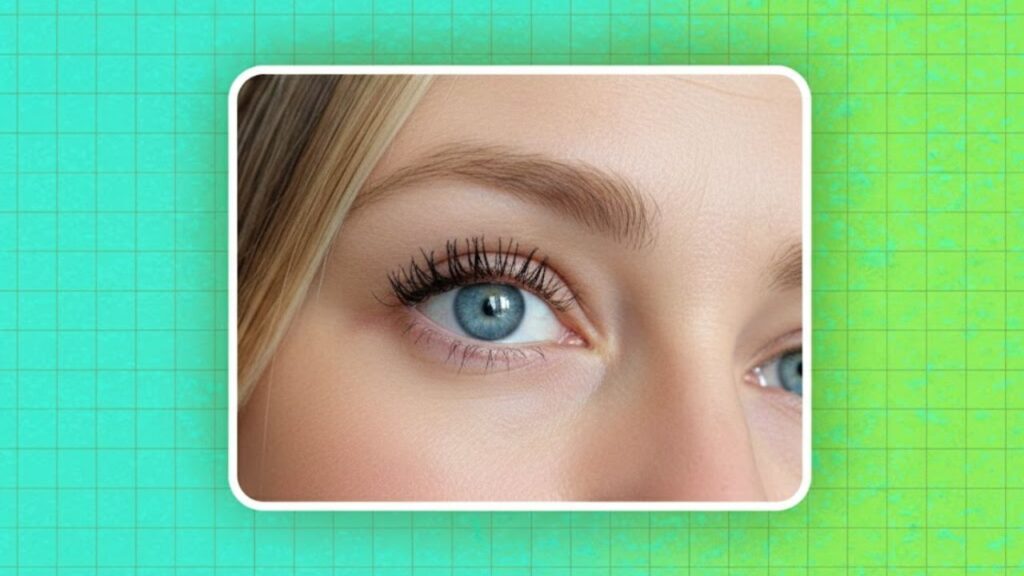
So why does this work for me?
How It All Started
The habit began with sibling logistics. In high school, my older sister always had first claim on the mirror, which meant I was often left waiting. One day, out of impatience, I sat at the kitchen table and applied my mascara without looking at myself. I expected a mess. Instead, it turned out fine. And then it kept turning out fine.
Over time, I realized that applying mascara by feel gave me more control. Rather than relying on a reversed image, I paid attention to the sensation of the brush moving through my lashes. The slight resistance between bristles and lashes told me how much pressure to use and where to guide the wand next.

I also noticed that my coordination improved. My hands seemed to know what to do, and my focus stayed on the movement and texture instead of checking my appearance after every stroke.
This isn’t meant as a universal technique. It’s simply what works for me. For the record, I still apply all other makeup in front of a mirror.
The Technique: Step-by-Step
1. Control the Amount of Product
Before starting, I wipe excess mascara from the wand, especially the tip. That area doesn’t pass through the tube’s wiper—the part that creates resistance and that familiar sound when the brush comes out—so it’s more likely to deposit too much product at once.
2. Keep Your Hand Steady
I usually rest my elbow on a table, though sometimes I brace my pinkie against my cheek, depending on the wand length. I keep my wrist relaxed and my grip light, using slow, controlled strokes. My outer lashes often look more defined this way, even though they’re the hardest to master.
 Goodbye Hair Dye for Grey Hair: The Conditioner Add-In That Gradually Restores Natural Colour
3. Let Touch Guide the Brush
While working on one eye, I gently open and close both eyes during application. When I want extra precision or plan to build layers, I close one eye while applying mascara to the other, almost like looking through a keyhole, and focus on the brush itself. This helps me angle the wand and judge pressure more accurately.
I’ve learned that my inner lashes need slightly more pressure because they’re shorter and harder to lift. I rely on the resistance of the lashes against the bristles, rotating the brush as I go to coat them evenly.
4. Use Both Hands
I apply mascara to my right eye with my right hand and to my left eye with my left hand. Reaching across my face or twisting my wrist never gives me the same level of control. When I use a mirror, I’m more likely to blink, tense up, and rush the motion.
5. Finish With a Mirror Check
Once I’m done, I do check the mirror. The reveal is always enjoyable. I’ll look for clumps or stray marks, though that’s rare. Because I can feel how much mascara I’m applying, I usually stop before adding too much. Still, the mirror is useful for a final inspection. And yes, I have mirrors now.
Final Thoughts
Old habits tend to stick. While this approach may seem counterintuitive, the motions are the same. Without a mirror, I’m simply more tuned into the process itself. It’s especially helpful when I test mascaras for work, since I can better judge how smoothly a formula moves through the fibers and how it layers before focusing on appearance.
For some people, fine motor skills benefit more from tactile feedback and muscle memory than from constant visual monitoring. In my case, paying attention to touch rather than instant reflection leads to a smoother, more precise, and less messy application. And I genuinely enjoy the experience.