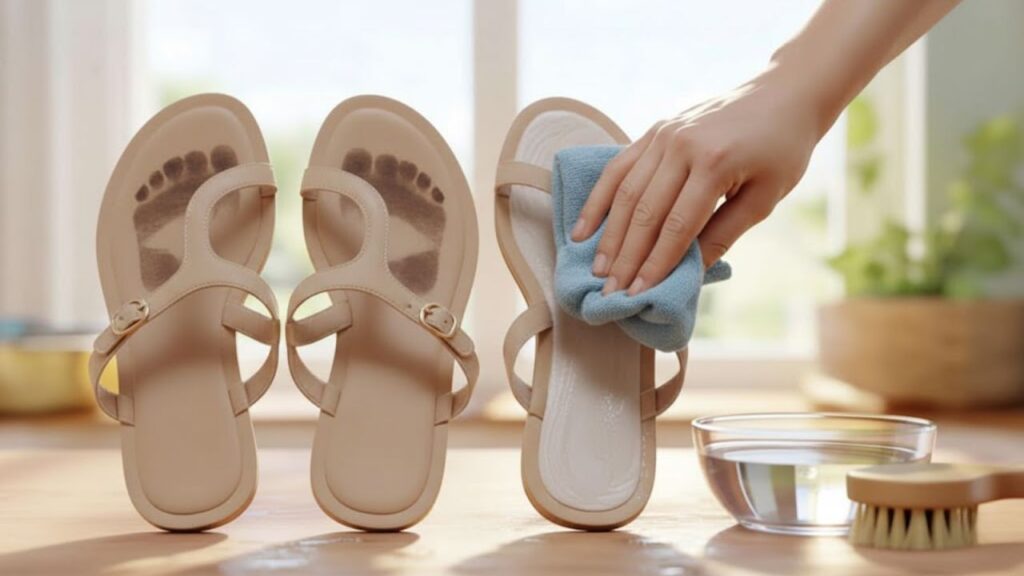
The straps were still charming, made from soft caramel leather. The problem sat beneath her feet. The insole carried a sharp toe outline, a darkened heel, and a faint mix of old sunscreen residue and city dust pressed deep into the material. When she noticed me staring, she laughed and shrugged, saying they had been beige once. That’s the quiet reality of summer sandals. They don’t wear out from puddles or accidents. They change simply through daily skin contact, step after step, until the foot leaves its unmistakable mark.
Why Dark Footprints Appear So Clearly
The moment you really see it is usually under unforgiving light. The straps still look seasonal, yet the insole feels older, marked by defined toes, a shadowed heel, and a darker ball of the foot. Feet naturally produce sweat and body oils, shed tiny skin particles, and collect traces of street dust and sunscreen. With every step, that mixture gets pressed deeper into porous materials. Brands prefer to highlight comfort features, but the truth is simple: the more the sandal adapts to your foot, the more visible the imprint becomes.
How Materials Lock In Those Marks
On a warm July day, you can read entire stories written into soles. Leather slides, cork beds, suede-like fabrics, and rope designs all respond differently. Porous insoles act like sponges, absorbing oils until pressure points darken dramatically. Lightly sealed footbeds resist stains longer, but once marked, they develop a grey haze. Water alone rarely solves the problem because oils bind the dirt in place. Dampness may briefly improve appearances, but once dry, the imprint returns unless the oils are addressed.
 Goodbye barbecues for good: Lidl unveils a unique appliance that will completely change everything
A Simple Overnight Trick That Softens Footprints
The most reliable solution is surprisingly modest. A fine, absorbent powder works as a gentle oil magnet. Baking soda or cornstarch quietly draw out sweat and oils when left overnight. Start by wiping away surface dust with a barely damp cloth, then allow the insole to dry. Sprinkle a generous, even layer of powder over the footprint area without rubbing. After several hours, brush it off gently. Repeating this once or twice can significantly lighten even stubborn marks, without stressing the material.

Why Gentle Care Works Better Than Aggressive Cleaning
Problems usually arise when people panic. Soaking sandals, harsh scrubbing, or using strong detergents often leads to tide marks, stiff leather, or warped footbeds. Suede fibres can roughen when rubbed wet, and cork may crack after excess moisture and heat. Specialists agree that sandals rarely fail from dirt alone. They suffer from over-cleaning habits. A slow, dry approach respects the structure of the insole while restoring a more balanced, lived-in look.

Building a Small, Sustainable Care Habit
Instead of dramatic cleanups, think in terms of a simple weekly ritual. Light brushing removes loose debris, and occasional powder treatments prevent deep staining. Spot-clean straps separately and always allow sandals to dry in the shade. Rotating between pairs helps each one fully air out. This quiet routine keeps footwear presentable and extends its life, sparing you the awkward moment of hiding worn soles or replacing sandals that still feel right.
What Changes When Sandals Look Fresh Again
There’s an unexpected lift in seeing a familiar pair look renewed. The footprint doesn’t disappear entirely, but it softens. The shoe feels less personal, more socially acceptable. Suddenly, those sandals return to everyday use instead of being reserved for quick errands. This small act of care aligns how you feel with how your shoes appear, letting you keep what already fits and feels comfortable.

Key Points at a Glance
- Absorbent powders draw out oils and sweat overnight, fading dark marks naturally.
- Repeated gentle cleaning protects leather, cork, and suede better than harsh scrubbing.
- Light weekly maintenance keeps sandals presentable for longer and reduces unnecessary replacements.