The broccoli was slowly giving up in the pot. What had started as a vivid green, almost crunchy-looking vegetable turned limp and khaki within minutes. It floated sadly in cloudy water while my friend prodded it with a fork, clearly disappointed. We had aimed for a healthy dinner, the kind that’s supposed to feel virtuous afterward. Instead, it looked like outdated hospital food. She finally said what we were both thinking: if the vitamins go down the drain, why bother? The steam kept rising, the color kept fading, and the whole scene felt like a small kitchen crime.
How Traditional Steaming Strips Broccoli of Its Best Parts
Once you notice it, you see it everywhere. Bright broccoli goes into a steamer, and by dinnertime it’s mushy and dull. Sauce becomes a cover-up, not an accent. Steaming sounds virtuous, but the end result often tastes like wet cardboard and lacks the nutrients people were trying to preserve. A study from the University of São Paulo found that long steaming and boiling ranked worst for retaining vitamin C and certain antioxidants. In contrast, short high-heat methods performed much better. That familiar cabbage-like smell from forgotten broccoli? It’s flavor and nutrients escaping into the air.
The Science Behind Nutrient Loss in Overcooked Greens
The explanation is straightforward. Broccoli contains many water-soluble vitamins, which leach out during extended contact with heat and moisture. Prolonged gentle heat also damages myrosinase activity, the enzyme linked to releasing sulforaphane, one of broccoli’s most discussed compounds. As cooking drags on, the cell structure collapses, color fades, and texture disappears. The longer broccoli sits in steam, the less remains on the fork. In this case, gentle heat isn’t gentle at all—it quietly takes away what makes the vegetable worthwhile.
A Faster, Hotter Method That Respects Flavor and Nutrients
The most effective approach is simple: high heat, short time, and minimal water. Cut broccoli into even pieces, rinse, and choose a quick method like a pan sauté, fast microwave, or hot roast. In a skillet, heat olive oil, add broccoli with salt, and cook over medium-high heat for a few minutes until bright green color appears. Add a small splash of water, cover briefly, and stop while there’s still gentle resistance. The goal is tender, not collapsed. Despite what many learned growing up, vegetables don’t need to be cooked until knife-soft to be safe or enjoyable.
Practical Cooking Methods That Actually Work
- Quick pan sauté followed by a short covered steam finish
- Microwave method using florets with a small amount of water for a few minutes
- Fast oven roast at high temperature with oil and salt
- High-heat stir-fry with constant movement
- Brief blanching followed by a hot pan finish
Simple Broccoli Dishes Worth Repeating
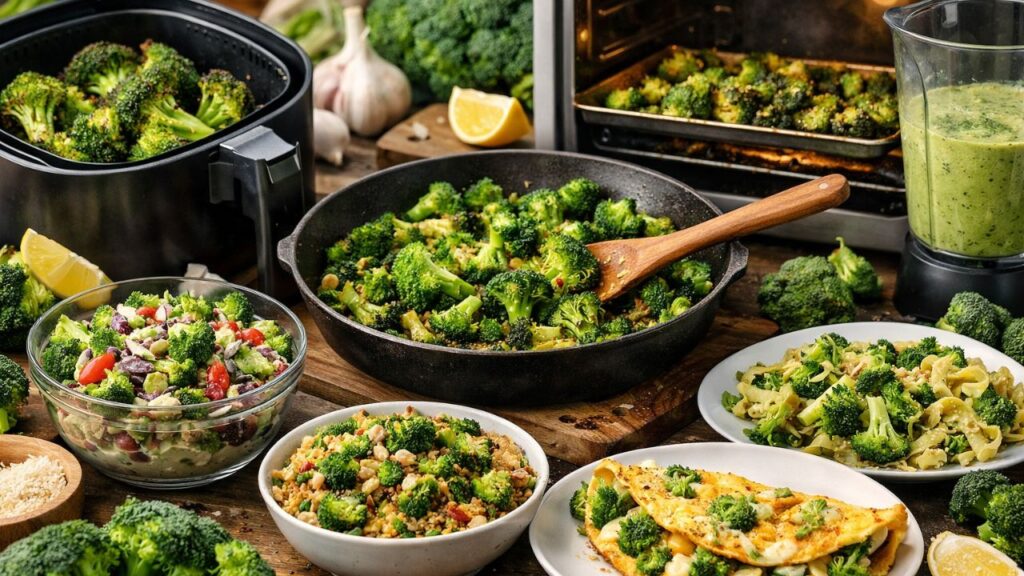
A fast lemon-garlic skillet version turns broccoli into something genuinely appealing. Cook it quickly with olive oil, garlic, and salt, then finish with fresh lemon zest and pepper. For comfort-focused meals, a high-heat roast with cheese and nuts creates crispy edges and balanced richness. Even blended preparations work when broccoli is only lightly cooked, producing a bright green sauce that pairs easily with grains or pasta. Preparing a batch ahead of time makes broccoli a flexible weekly staple, slipping into meals without effort.
From Healthy Obligation to Something You Want to Eat
When broccoli keeps its color, texture, and flavor, something shifts. Eating well stops feeling like self-discipline alone and starts feeling enjoyable. Instead of pushing limp vegetables around a plate, you reach for them willingly. This change doesn’t come from willpower, but from cooking in a way that delivers better results. Turning one vegetable into something satisfying sends a clear message: the effort matters. And when broccoli looks golden-edged and vibrant, people don’t ask why you’re eating it—they ask how you made it.
Key Takeaways for Better Broccoli
- Short, high-heat cooking: preserves color, texture, and vitamins
- Stop before softness: improves taste and makes broccoli easier to enjoy regularly
- Simple flavor additions: transform a plain side into a requested dish